Silent Due to Diplomatic and Economic Reasons
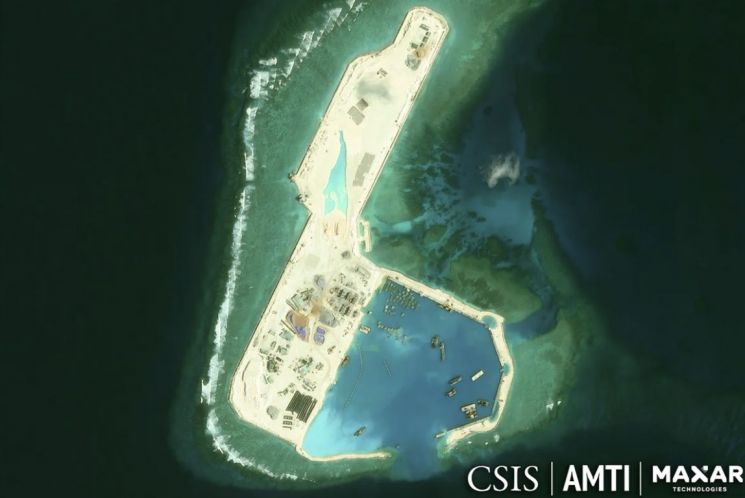 An artificial island constructed by Vietnam in the Spratly Islands (Chinese name: Nansha Islands) in the South China Sea. Source: Center for Strategic and International Studies (CSIS) website
Vietnam is attempting to strengthen its territorial claims in the disputed South China Sea by constructing dozens of artificial islands in areas contested with China. These islands are expected to soon surpass those built by China in number, but contrary to expectations, the Chinese government appears to be tolerating this expansion. This is considered unusual, given that China has previously responded immediately whenever Philippine Coast Guard vessels approached the area. Experts believe that while China is currently overlooking Vietnam's artificial island expansion due to its urgent need for diplomatic and economic cooperation with Vietnam, a clash will ultimately become inevitable if their territorial disputes intensify.
Vietnam Continues Expanding Artificial Islands in the South China Sea, Rapidly Catching Up with China
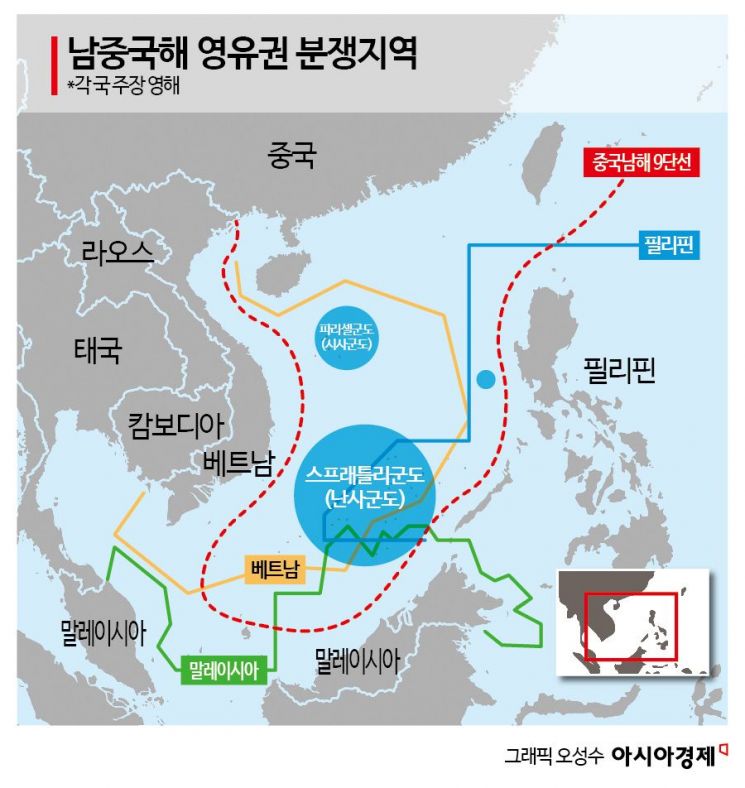
According to The Wall Street Journal (WSJ), Vietnam has built 21 artificial islands on reefs in the Spratly Islands (Chinese name: Nansha Islands) area of the South China Sea from 2021 to this year. China has constructed seven artificial islands there, meaning Vietnam has now far exceeded China in terms of the number of islands. However, when considering the total area of the artificial islands, China leads with 4,000 acres (approximately 16.18 square kilometers), while Vietnam’s artificial islands cover 2,200 acres (about 8.9 square kilometers), making China's artificial islands much larger. WSJ pointed out, "Since China has not built additional artificial islands since 2015, Vietnam may soon surpass China in total artificial island area."
The Spratly Islands are a region composed of over 70 reefs in the South China Sea, where neighboring countries such as China, Vietnam, the Philippines, Taiwan, Malaysia, and Brunei are engaged in territorial disputes. China claims the entire area as its territorial waters and has been constructing artificial islands and military bases there since 2013, while the other countries have continued to contest these claims. The Vietnamese government has asserted its claims over this area since 1978.
The Vietnamese government is using the same methods as China to expand exposed reefs and create artificial islands. WSJ reported, "Vietnam's artificial island construction methods are identical to China's, using massive dredgers," adding, "The dredgers suck up coral, rocks, and soil from the seabed and deposit them onto the reefs, after which concrete walls are built around the perimeter like embankments to form the islands."
China Frequently Clashes with Philippine Coast Guard, but Remains Silent on Vietnam’s Artificial Islands
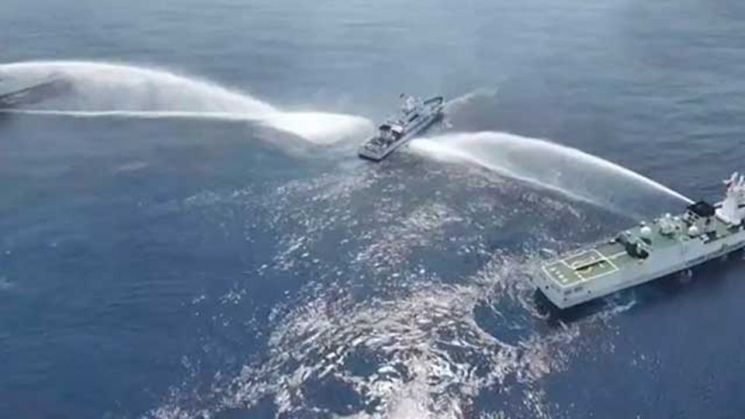 Last April, Chinese Coast Guard vessels surrounded Philippine Coast Guard vessels and sprayed water cannons during a clash in the Spratly Islands (Chinese name: Nansha Islands) area of the South China Sea. Photo by AFP Yonhap News
The Chinese government, which has been highly sensitive about the South China Sea territorial issue, is currently tolerating Vietnam’s artificial island expansion. This is an unusual response, considering incidents such as last month’s collision between a Chinese Coast Guard vessel and a Philippine Bureau of Fisheries and Aquatic Resources ship in the Spratly Islands, and last April’s water cannon attack by Chinese vessels on a Philippine patrol boat.
The Straits Times (ST), a Singaporean media outlet, cited experts as saying, "For China, which is embroiled in a trade dispute with the United States, maintaining friendly relations with Vietnam is extremely important both diplomatically and economically." The analysis continued, "Many Chinese manufacturers have relocated their factories to Vietnam to avoid tariffs imposed by the United States, and for China, which is internationally isolated, its relationship with Vietnam-a fellow communist state-has become strategically important."
Another reason for China’s tolerance is that Vietnam’s artificial island expansion is not seen as an immediate threat. China’s artificial islands are much larger and equipped with hangars, runways, and even missile bases, so Vietnam’s expansion is not currently regarded as a direct military threat.
However, it remains unclear how long China will continue to simply observe Vietnam’s ongoing expansion of artificial islands. Alexander Vuving, a professor at the Asia-Pacific Center for Security Studies (APSAS) under the U.S. Department of Defense, explained, "China’s tolerance does not mean it will simply stand by and watch Vietnam’s artificial island expansion," adding, "In reality, China has been intensifying its patrols near the areas of the Spratly Islands occupied by Vietnam."
Southeast Asian Countries Align with Vietnam, Heightening Concerns over Intensifying Territorial Disputes
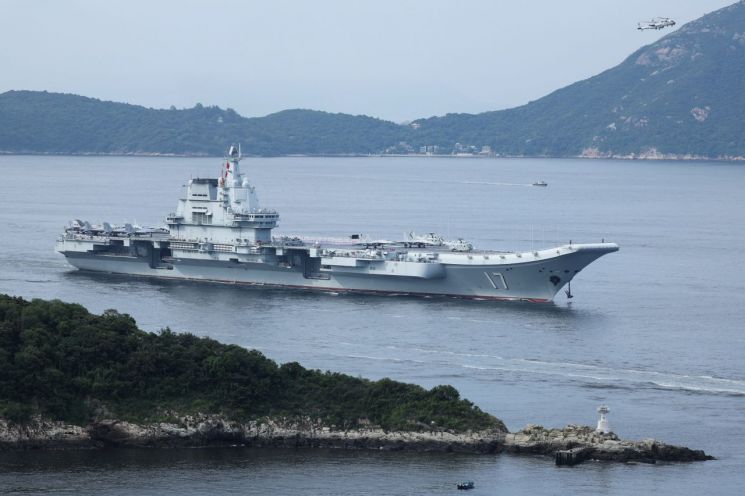
As Vietnam embarks on large-scale artificial island construction, Southeast Asian countries are instead aligning with Vietnam to counter China. Their priority is to confront China, which claims the entire Spratly Islands and the South China Sea as its own territory.
Justin Baquisal, an analyst at the Philippine think tank FactAsia, told ST, "The Philippines and other Southeast Asian countries prioritize collective deterrence against China’s coercion," adding, "Compared to China, Vietnam is neither hostile nor aggressive, so these countries are choosing cooperation over conflict with Vietnam." In fact, last year, the Philippines signed a maritime cooperation agreement with Vietnam, and the coast guards of both countries are reportedly strengthening ties through frequent sports events and other activities in border areas.
The United States is also expanding the scope of its military involvement in the region through its alliance with the Philippines, leaving open the possibility that territorial disputes will intensify. According to CNN, on November 1, the U.S. Department of Defense established a joint task force with the Philippines to strengthen military cooperation in the South China Sea. At the task force launch event, U.S. Secretary of Defense Pete Hegseth told Philippine Secretary of National Defense Gilberto Teodoro Jr., "China continues to engage in clashes with the Philippines in the South China Sea, and there are also concerns about military tensions with Australia over reconnaissance flights and activities around Taiwan," emphasizing, "We will share our determination to reestablish deterrence in this region with our partner countries."
© The Asia Business Daily(www.asiae.co.kr). All rights reserved.
![Clutching a Stolen Dior Bag, Saying "I Hate Being Poor but Real"... The Grotesque Con of a "Human Knockoff" [Slate]](https://cwcontent.asiae.co.kr/asiaresize/183/2026021902243444107_1771435474.jpg)


















