[Interview] Taehun Kim, Advisory Committee Member of the Korean Society of Emergency Medicine
"Urgent Need to Improve the Accuracy of Emergency Patient Triage in the Pre-hospital Stage"
"Legal Risks in Emergency Patient Treatment Must Be Minimized"
"The perception that 'emergency room ping-pong' occurs because hospitals are unwilling to accept patients will not solve the problem."
Taehun Kim, Advisory Committee Member of the Korean Society of Emergency Medicine, stated this in a phone interview with The Asia Business Daily on November 5. He emphasized, "Fundamentally, improving the accuracy of patient triage, revising evaluation criteria, and expanding the scope of legal exemptions for treating emergency patients are necessary." Kim, a board-certified emergency medicine specialist, graduated from Wonkwang University College of Medicine. Until last year, he served as Policy Director of the Korean Society of Emergency Medicine and is currently working as a duty physician at the Busan-Ulsan-Gyeongnam Regional Emergency Medical Situation Room.
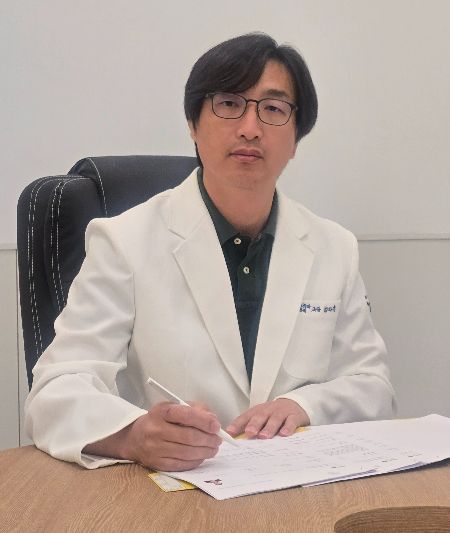 Taehun Kim, Advisory Committee Member of the Korean Society of Emergency Medicine. Korean Society of Emergency Medicine
Although a revised bill aimed at preventing 'emergency room ping-pong' passed the Cabinet meeting the previous day, there is criticism within the emergency medical community that the bill does not adequately reflect the opinions of those on the front lines. The main points of the amendment require emergency medical institutions to report their capacity to the National Emergency Medical Center, which must then make this information public through the emergency medical information network.
Kim pointed out that the core of the problem lies in the lack of accurate identification of the causes. He explained that insufficient understanding of on-site situations and misguided policy directions are exacerbating difficulties in the field and undermining the emergency medical system. He stressed the need to clarify the definition of 'emergency room ping-pong,' noting that there are misunderstandings about the term. He explained that 're-transfer,' which involves transporting a patient to a hospital capable of providing definitive treatment, is a normal part of emergency medical system operations.
Kim also highlighted issues with the plan currently under discussion in the National Assembly to strengthen the authority of the 119 Emergency Situation Management Center to select hospitals. He warned that this kind of forced acceptance of patients by emergency rooms "could signal the collapse of the emergency medical system." He added, "While 119 transfers may become more convenient, the mortality rate for patients is likely to rise, and the exodus of emergency room physicians may accelerate." He further noted, "This will only create a statistical illusion that transfer delays do not exist."
Kim particularly emphasized the urgent need to improve the accuracy of emergency patient triage in the pre-hospital phase. The emergency medical system is largely divided into the pre-hospital phase and the hospital phase. The pre-hospital phase covers all processes from the scene where the emergency occurs up to just before arrival at the emergency room. This stage is primarily managed by the 119 emergency response teams and is critical for increasing the survival rate of emergency patients.
If the severity of patients is not accurately assessed in the pre-hospital phase, patients with minor conditions who could be treated at lower-level institutions end up crowding into the emergency rooms of higher-level hospitals. As a result, critically ill patients may unnecessarily wander between multiple hospitals or be transferred to hospitals unable to provide definitive treatment, increasing the risk of missing the golden hour.
Kim also pointed out that, under the Korean Triage and Acuity Scale (KTAS), hospitals and medical staff may hesitate to accept patients because they could be held legally liable if an adverse event occurs while a patient, deemed untreatable and awaiting re-transfer, is left in their care. In conclusion, he argued that only by accurately triaging patients in the pre-hospital phase and establishing a system that ensures immediate transfer to an appropriate hospital capable of providing definitive treatment can the issue of emergency room ping-pong be resolved.
Regarding the evaluation of emergency medical institutions conducted by the Central Emergency Medical Center under the Ministry of Health and Welfare and the National Medical Center, Kim said, "It is evaluation for the sake of evaluation, with minimal real-world impact, and does not help at all with the acceptance or transfer of emergency patients in the field." He explained that the current evaluation criteria create a paradoxical situation where institutions receive higher scores for accepting easier cases or refusing patients, while those that accept and treat more patients receive lower scores.
He identified minimizing legal risks and expanding the scope of exemptions for treating emergency patients as the most important prerequisites for resolving 'emergency room ping-pong.' He explained that emergency room patients are often already in life-threatening situations, making healthcare providers highly susceptible to legal risks even when providing the best possible care. He emphasized, "Legal and social support is needed to expand the scope of criminal liability exemptions for medical staff in the process of treating emergency patients, so that they can provide active treatment."
© The Asia Business Daily(www.asiae.co.kr). All rights reserved.
![Clutching a Stolen Dior Bag, Saying "I Hate Being Poor but Real"... The Grotesque Con of a "Human Knockoff" [Slate]](https://cwcontent.asiae.co.kr/asiaresize/183/2026021902243444107_1771435474.jpg)
















