Hwabyung, a Uniquely Korean Disorder,
Now Scientifically Validated with Biological and Psychological Evidence
Following Official Inclusion in DSM-5-TR
'Hwabyung,' a condition once considered a uniquely Korean cultural disorder stemming from 'Han' (a deep-seated sense of grief or resentment) and emotional suppression, has now been established as a scientifically validated psychosomatic disorder.
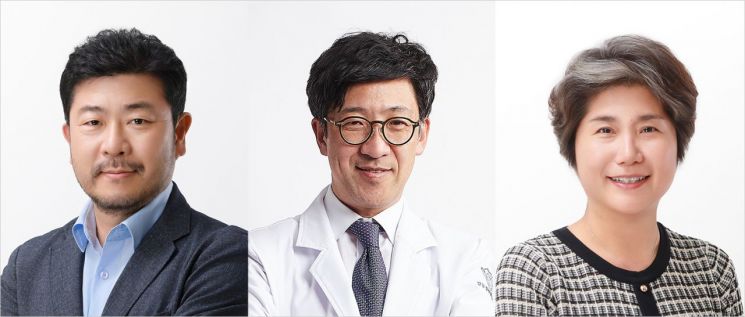
Pusan National University (President Choi Jaewon) announced on November 4 that a research team led by Professor Chae Han of the School of Korean Medicine has scientifically identified the psychopathological clinical features of Hwabyung. The team's findings were published in the October 30 online edition of the international journal 'BioPsychoSocial Medicine.'
This study was jointly conducted by Professor Chae Han's team at Pusan National University, Professor Kim Jongwoo's team at Kyung Hee University (Gangdong Korean Medicine Hospital), and Professor Lee Sujin's team at Kyungsung University. 'BioPsychoSocial Medicine' is an SSCI-listed international journal published by Springer Nature, focusing on the impact of biological, psychological, and social factors on disease.
'Hwabyung' is a disorder in which long-accumulated anger and suppressed emotions are internalized without resolution, resulting in both psychological and physical symptoms such as heat sensations, insomnia, depression, chest tightness, and headaches. Although it was officially included in the American Psychiatric Association's diagnostic criteria DSM-5-TR, revised in 2022, its psychopathological mechanisms had not been clearly identified, so it was largely regarded as a symbolic disorder.
The research team quantitatively analyzed behavioral, cognitive, and emotional response characteristics in 118 Hwabyung patients using the Sasang Personality Questionnaire (SPQ), which standardizes the Yin-Yang psychological theory of Korean medicine.
The results revealed unique patterns among Hwabyung patients: high behavioral hypersensitivity (SPQ-B), low cognitive rigidity (SPQ-C), and low emotional empathy (SPQ-E).
This profile was found to account for 26.0% of the psychological symptoms and 14.3% of the physical symptoms in Hwabyung patients. In other words, the study scientifically confirmed that behavioral hypersensitivity and low emotional empathy are mechanisms that lead to anger outbursts, anxiety, and depression.
Professor Chae Han of Pusan National University stated, "By identifying Hwabyung's unique psychopathological profile, it has become easier to distinguish it from other mental disorders such as depression. The Sasang Personality Questionnaire could also be utilized in designing personalized treatment plans for mental illnesses in the future."
Professor Kim Jongwoo of Kyung Hee University commented, "This is the first study to systematically present the worsening mechanism of Hwabyung, which progresses from emotional suppression to somatization to anger outbursts. When stress exceeds a certain threshold, even minor stimuli can trigger explosive anger."
Professor Lee Sujin of Kyungsung University suggested, "It is necessary to develop therapeutic approaches that use SPQ results to promote behavioral stabilization (reducing SPQ-B), positive cognition (enhancing SPQ-C), and emotional empathy (enhancing SPQ-E)."
This study is regarded as the first attempt to explain Hwabyung, which originates from the Korean emotions of 'Han' and emotional suppression, in the language of international academia.
The research team stated, "We have demonstrated that Hwabyung is no longer merely a cultural symbol but a scientifically validated disorder with clear psychopathological evidence. This is a meaningful achievement that introduces a new paradigm in the field of cultural psychiatry."
© The Asia Business Daily(www.asiae.co.kr). All rights reserved.
![Clutching a Stolen Dior Bag, Saying "I Hate Being Poor but Real"... The Grotesque Con of a "Human Knockoff" [Slate]](https://cwcontent.asiae.co.kr/asiaresize/183/2026021902243444107_1771435474.jpg)















