Transport of North Korean Coal and Iron Ore to China
Sanctions Sought for Seven Involved Vessels
Sanctions Move Follows Collapse of Kim Jong Un Meeting
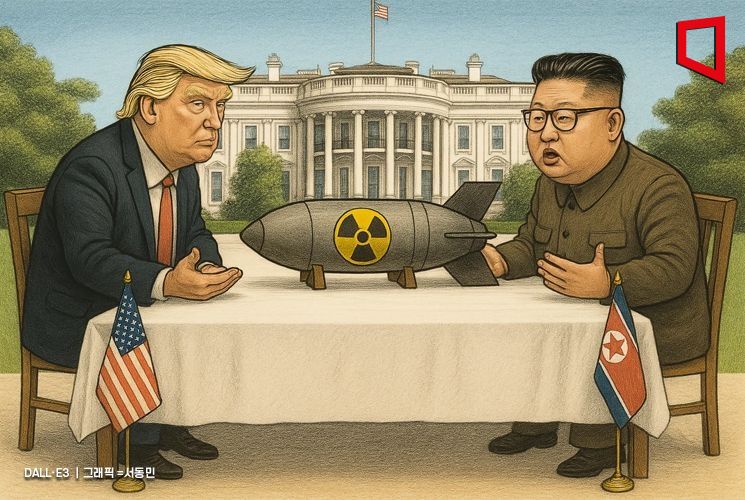
On November 3 (local time), the U.S. Department of State announced that it would push for the designation of ships that violated United Nations Security Council (UNSC) sanctions by transporting North Korean coal and iron ore to China as targets for UN sanctions. This marks the first time that the second Donald Trump administration has pursued UN sanctions related to North Korea. The move is interpreted as an effort to block North Korea's channels for securing funds for its nuclear and missile development through the export of coal and iron ore.
During a press briefing that day, a State Department official stated, "It has been confirmed that ships from third countries transported and unloaded North Korean coal and iron ore, which are banned for export under UNSC resolutions, at Chinese ports." The official added, "The UN North Korea Sanctions Committee (1718 Committee) should immediately designate the seven ships involved as targets for sanctions."
UN Security Council Resolution 2371, adopted in 2017, completely bans the export of major minerals such as coal and iron ore, which were key sources of foreign currency for North Korea. The State Department official emphasized, "Coal and iron ore are North Korea's most profitable exports and are essential resources for developing weapons of mass destruction," adding, "The purpose of UN sanctions is to cut off these financial lifelines."
According to the State Department's analysis of Automatic Identification System (AIS) data and other sources, the Sierra Leone-flagged ship 'Flyfree,' which departed from Russia, received coal from North Korean ships 'Tiantong' and 'Sinpyeong 6' in North Korean waters via ship-to-ship transfer on two occasions, May 29 and May 31. Flyfree then transported the coal to Weifang, China, where it completed unloading between June 3 and June 15.
Another vessel, 'Casio,' departed from Nampo Port in North Korea on January 31 and transported North Korean coal or iron ore to Beiyang Port in China. Satellite images also captured the vessel unloading piles of coal at Beiyang Port.
In addition, ships such as 'Mars,' 'Cartier,' 'Sofia,' 'Armani,' and 'YiLi 1' were also included in the request for sanction designation. These vessels were confirmed to have transported North Korean coal or iron ore to Chinese ports between September of last year and February of this year.
The State Department official stated, "These ships are the material means enabling North Korea's nuclear ambitions," adding, "Listing them for sanctions sends a strong message to the shipping industry, insurance companies, and flag states that there will be consequences for participating in North Korea's illegal smuggling activities."
According to procedure, if no member state raises an objection within five days after the 1718 Committee circulates the sanction proposal, it will be automatically adopted. However, if a permanent member of the Security Council-such as Russia or China, which have recently shown closer ties with North Korea-raises an objection, the proposal could be nullified. Regarding this, the State Department official pointed out, "Both countries were parties to creating these sanctions and, like other member states, are obligated to implement them."
This push for sanctions comes coincidentally right after the collapse of a summit between President Donald Trump and North Korean leader Kim Jong Un. President Trump had expressed his intention to meet with Kim several times during his Asian tour, including a visit to South Korea at the end of last month, but the meeting did not materialize.
When asked whether this measure was related to the failed meeting with Kim or part of a new pressure strategy against North Korea, the State Department official explained, "This action has been in preparation for several months and has been under review since spring," adding, "There is no particular connection with the current timing."
© The Asia Business Daily(www.asiae.co.kr). All rights reserved.
![Clutching a Stolen Dior Bag, Saying "I Hate Being Poor but Real"... The Grotesque Con of a "Human Knockoff" [Slate]](https://cwcontent.asiae.co.kr/asiaresize/183/2026021902243444107_1771435474.jpg)















