Human Rights Groups Highlight Symbolic Case
of Vulnerable Populations in Iran
A woman from Iran, who was married at the age of 12 and suffered abuse, is now facing the death penalty after becoming embroiled in her husband's death. If she cannot pay "blood money" of 1 billion toman (approximately 150 million won), she will be executed by hanging.
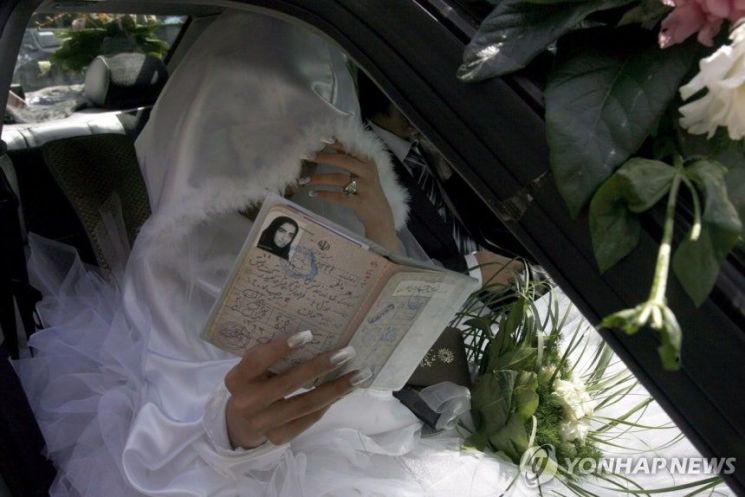
On November 3 (local time), the British daily The Guardian reported on the story of Goli Kouhkan, 25, who is on death row at Gorgan Prison in northern Iran. Kouhkan was arrested in 2018 at the age of 18 on charges of involvement in her husband's murder, sentenced to death, and is currently serving her sentence. She was sentenced under the Islamic principle of qisas (an eye for an eye, a tooth for a tooth), and if she fails to pay 1 billion toman (approximately 150 million won) in economic compensation (diya) to the victim's family by December this year, she is scheduled to be executed by hanging.
Kouhkan, a member of the Baluchi ethnic minority in Iran, was married to her cousin at the age of 12 and gave birth to a son the following year. Throughout her marriage, she suffered physical and emotional abuse from her husband. Unable to endure it any longer, she once fled to her parents' home, but her father told her, "A daughter sent away in a white dress can only return in a burial shroud."
On the day of her husband's death, Kouhkan witnessed her husband severely beating their then 5-year-old son and called another relative for help. A fight broke out between the relative who came to intervene and her husband, during which the husband died. Although she called an ambulance and explained the situation to the authorities, both Kouhkan and the relative were arrested together.
She underwent a coercive investigation without legal counsel and, despite being illiterate, signed a confession admitting to the crime. She was later sentenced to death by the court. Under Iranian law, her life can be spared if she pays compensation to the victim's family in exchange for their forgiveness. Prison officials negotiated with the bereaved family and set the compensation at 1 billion toman.
Human rights organizations have emphasized that this case symbolically illustrates the discriminatory treatment of women and ethnic minorities in Iran. Child marriage is legal in Iran, and legal protections against domestic violence are insufficient.
A representative of Iran Human Rights (IHR), a Norway-based human rights organization, stated, "Kouhkan is among the most vulnerable in Iranian society as a minority, a woman, and a member of the poor," adding, "The verdict against her symbolizes the Iranian authorities' use of the death penalty to instill fear, as well as the discriminatory laws and society that led to this situation."
A representative from a Baluchi women's rights organization commented, "Kouhkan is not an isolated case," and pointed out, "Women in Iran have no human rights. They must obey their husbands and are not allowed to attend school. Parents use poverty as an excuse to marry off their daughters."
© The Asia Business Daily(www.asiae.co.kr). All rights reserved.
![Clutching a Stolen Dior Bag, Saying "I Hate Being Poor but Real"... The Grotesque Con of a "Human Knockoff" [Slate]](https://cwcontent.asiae.co.kr/asiaresize/183/2026021902243444107_1771435474.jpg)















