Haewon Park Calls for the Promotion of a Digital Advertising City
Jaebong Jeong Demands Resolution of Discrimination Against Rural Districts
The Gwangsan District Council in Gwangju has recently put forward a series of policy proposals during its temporary session, aiming to enhance urban competitiveness and promote balanced regional development. Council member Haewon Park called for the designation of "free outdoor advertising zones" to create a smart city, while Council member Jaebong Jeong urged for the resolution of institutional inequality faced by farmers in urban-rural districts.
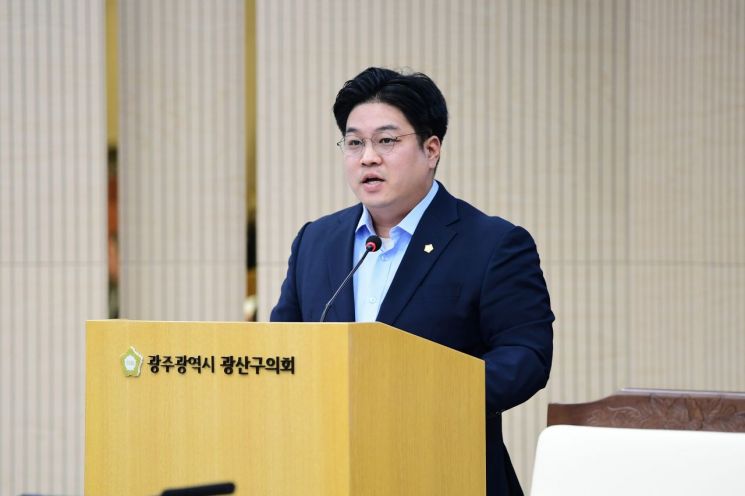
On October 30, Haewon Park stated during a five-minute free speech session, "The 18 LED media poles on Gangnam-daero in Seoul combine traffic information, disaster alerts, and advertisements, benefiting the administration, commercial districts, and citizens alike. Gwangsan District should also consider designating free display zones in promising areas such as Cheomdan, Songjeong, and Suwan districts."
She added, "Digital advertisements incorporating AI technology can become public information platforms that illuminate the city both day and night," and proposed, "We should promote a pilot project involving private sector participation through feasibility studies and ordinance revisions."
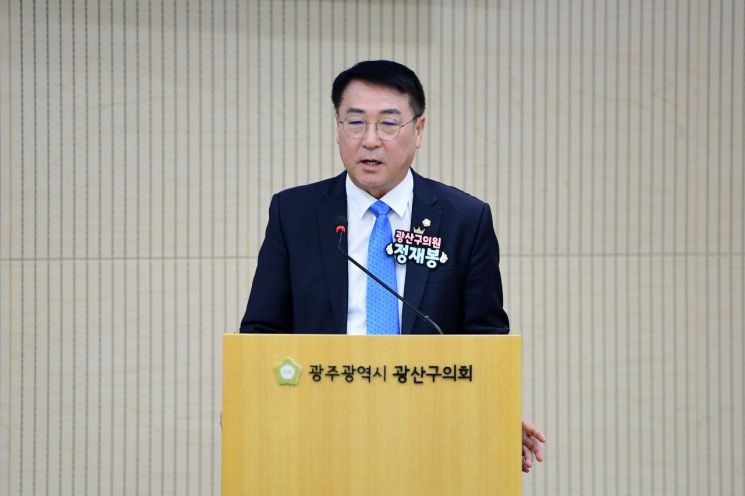
On the same day, Jaebong Jeong pointed out, "Although there are about 10,000 farmers in the rural districts of Gwangsan, they are excluded from various rural support systems simply because they are classified as 'dong' (urban neighborhood)." He emphasized the need for policy improvements, including health insurance premium reductions, special property tax exemptions for rural housing, and rural admissions quotas for university entrance exams.
Jeong also highlighted, "The public benefit direct payment standard is set at 1,000 square meters for eup and myeon (townships), but at 10,000 square meters for dong, which is unreasonable." He stressed, "Along with enacting a special law covering urban-rural complex areas, Gwangsan District should also pursue specialized policies such as revising the urban agriculture ordinance, expanding local food initiatives, and developing rural experience programs."
© The Asia Business Daily(www.asiae.co.kr). All rights reserved.
![Clutching a Stolen Dior Bag, Saying "I Hate Being Poor but Real"... The Grotesque Con of a "Human Knockoff" [Slate]](https://cwcontent.asiae.co.kr/asiaresize/183/2026021902243444107_1771435474.jpg)
















