Investigation Involved Technical Analysis and Expert Consultation
The painting "Self-Portrait (Portrait de l'artiste par lui-meme, 1903)" by French master Paul Gauguin, which had been at the center of a forgery controversy for nearly 100 years, has been officially authenticated as genuine.
The Basel Art Museum in Switzerland, which houses the work, announced on October 28 (local time), "When questions arose regarding the painting believed to be Gauguin's last self-portrait, the museum conducted an extensive investigation combining provenance research, technical art analysis, and consultations with international experts," explaining the authentication process.
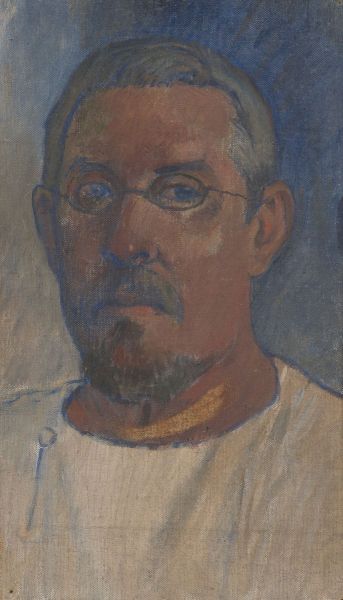
The painting depicts a figure wearing glasses and is known to be one of the self-portraits Gauguin created shortly before his death. However, its authenticity was disputed at an auction in 1924, and at the 1928 Kunsthalle Basel exhibition, it was labeled as a "presumed self-portrait."
In March of this year, Fabrice Fourmanoir, a collector and self-proclaimed art detective, intensified the controversy in interviews with various media outlets by claiming that all works attributed to Gauguin from 1903 are forgeries. Fourmanoir argued that Gauguin's health at the time was too poor for him to paint. He further speculated that the disputed self-portrait may have been created by Nguyen Van Cam, Gauguin's friend and nurse, based on a photograph of Gauguin.
In response to these controversies, the Basel Art Museum stated that it "takes the matter very seriously" and announced it would launch an investigation. The museum's conservation department conducted advanced technical examinations, including ultraviolet imaging, infrared reflectography, and radiography. In addition, the museum commissioned technical analyses from the Art Technology Research Institute at the Bern Academy of the Arts and sought official advice from the Gauguin Committee at the Wildenstein Plattner Institute in Paris, France.
The investigation confirmed that the pigments used in the painting were available in the region at the time the work was created and had also been used in other works by Gauguin.
However, the museum noted that "the face of the model in the painting-specifically the forehead, eyes, nose, beard, and neck-was later overpainted and modified." The overpainting is estimated to have occurred between 1918 and 1926. Nevertheless, the museum found no evidence of deliberate forgery and suggested that the modifications were likely made for the purpose of sale.
© The Asia Business Daily(www.asiae.co.kr). All rights reserved.

















