Ministry of Health and Welfare Expands Exam Eligibility
Conditional on "Faithful Completion of Training"
Additional National Medical Licensing Exam for Second-Half Graduates
Last month, the government decided to allow medical residents and medical students who returned to hospitals and schools to take the specialist exam and apply for residency recruitment early next year. While there are criticisms that this is an excessive special measure and concerns about fairness with residents who returned earlier, the government stated that it comprehensively considered the opinions from training and educational sites, the need for proper management of medical workforce supply and demand, ensuring the quality of training, and the fair and reasonable operation of the examination system.
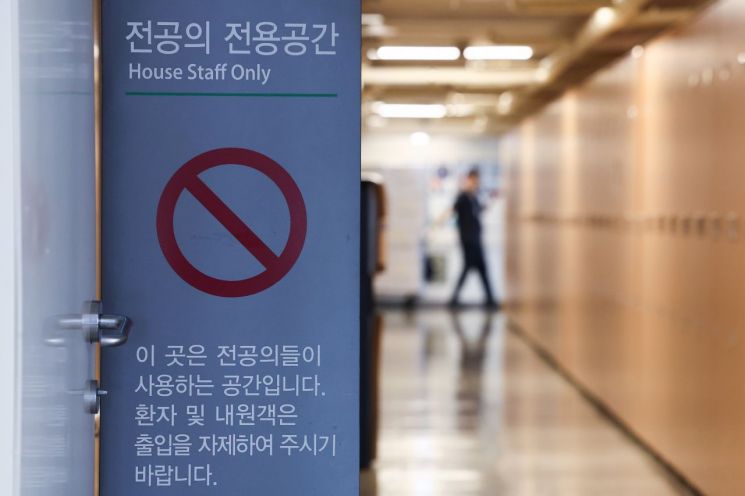
On October 29, the Ministry of Health and Welfare announced the implementation plan for next year's specialist qualification exam, first-year resident recruitment, and the national medical licensing examination. The ministry said it would reflect the current situation at the field level within the scope of what is administratively possible in exam operations, but would exclude any special privileges such as shortening the training period to ensure the training of competent specialists.
First, eligibility to take the specialist qualification exam scheduled for February next year will be expanded so that those who are expected to complete their training by the end of August next year can also apply.
General practitioners who have graduated from medical school, passed the national exam, and obtained a medical license, must complete one year of internship and three to four years of residency training before taking the specialist exam, which is held every February, to obtain specialist qualifications. Residents in their final year, who resigned in protest against the increase in medical school admissions in February last year but returned to training hospitals in September this year, will complete their training in August next year. Therefore, in principle, they are not eligible to take the specialist exam or apply for residency recruitment early next year. They would have to wait about six more months after completing their training and apply for the exam in early 2027. According to the original exam schedule, out of about 2,000 people expected to complete their training next year, about two-thirds, or roughly 1,300, will finish in August.
However, the government has expanded eligibility so that these individuals can also take the specialist exam. Currently, only residents who will complete their training by the end of May next year are eligible to take the specialist exam, but now those expected to finish by the end of August next year will also be allowed to take the exam.
Accordingly, the specialist exam in 2026 will be held only once in February, with no additional session in August. If a candidate passes the February exam but does not complete their training by the end of August, their pass will be canceled, and they will have to reapply for the exam after finishing their training the following year.
Interns expected to complete their training by the end of August next year will also be allowed to apply in advance for the first-half resident recruitment. However, after passing, they must finish their remaining internship at their current hospital and begin residency training in September. If they fail to complete their internship by the end of August, their acceptance will be canceled, and they will have to apply for the next recruitment after completing their training.
For first-year resident recruitment, hospitals and specialties are usually allocated annual quotas, with most residents recruited in the first half of the year and only vacancies in certain specialties filled in the second half. However, next year, a significant number of interns will complete their training in the second half, raising concerns that if they all apply for second-half recruitment at once, it could intensify the concentration of applicants in the Seoul metropolitan area and popular specialties during the first half.
The Ministry of Health and Welfare emphasized, "This expansion of eligibility is conditional on the faithful completion of training. If a candidate fails to complete training by the end of August after passing, their acceptance will be canceled."
The government also stated that, after gathering opinions from specialty societies, it will strengthen management systems to ensure training quality and will first apply this plan to the 2026 specialist qualification exam. Depending on the evaluation results, it will consider applying it to specialist exams from 2027 onward.
Meanwhile, the Ministry of Health and Welfare will also hold an additional national medical licensing exam for those expected to graduate from medical school in August next year. The ministry explained that this decision considered recommendations from the Council of Medical School Presidents for Medical School Advancement made when medical students returned in July, the need to ensure continuity between graduation, licensing, and residency training, and the necessity of proper medical workforce management.
According to the academic schedules for fourth-year students at each university, about 1,500 students are expected to graduate in the second half of next year, which is about two-thirds of all current fourth-year students.
Unlike the national exam for those graduating in February next year, the additional national exam for those graduating in August will be held with practical exams in March to April and written exams in July next year.
© The Asia Business Daily(www.asiae.co.kr). All rights reserved.
![Clutching a Stolen Dior Bag, Saying "I Hate Being Poor but Real"... The Grotesque Con of a "Human Knockoff" [Slate]](https://cwcontent.asiae.co.kr/asiaresize/183/2026021902243444107_1771435474.jpg)











