Pocheon Sets a National Precedent with Proactive Administration
Dormitory Installation Now Permitted in Manufacturing Businesses Under 500㎡
Easing Dormitory Regulations to Address Labor Shortages and Improve Workers' Rights
Legal Basis Established for Dormitory Installation, Offering a Solution to Workforce Challenges
Pocheon City in Gyeonggi Province (Mayor Baek Younghyeon) announced on October 29 that it will implement a measure-first of its kind nationwide-to allow the installation of dormitories within small-scale manufacturing businesses, aiming to address the severe labor shortage faced by local small and medium-sized manufacturers and to improve the living conditions of foreign workers.
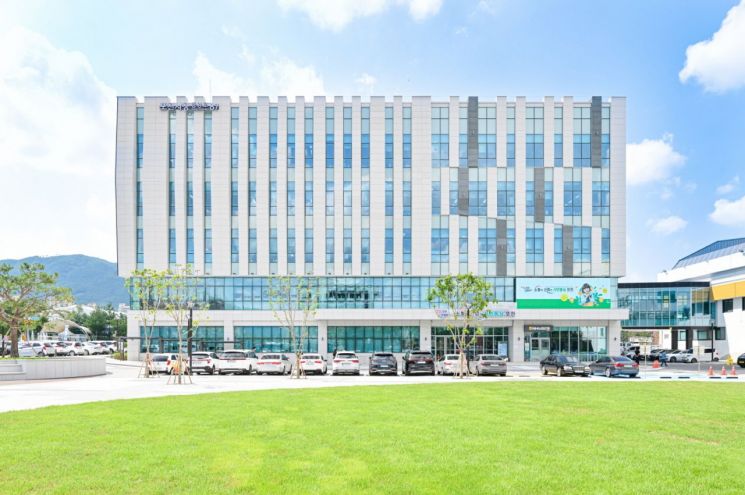
The city decided through the Active Administration Committee to permit the installation of dormitories (accommodations) as an ancillary use even at "Type 2 neighborhood living facility manufacturing businesses" with a total floor area of less than 500 square meters. This decision is intended to resolve a long-standing issue for small manufacturers who have struggled to employ foreign workers due to legal blind spots in the relevant laws.
Since 2021, the Ministry of Employment and Labor has significantly strengthened housing standards for the employment of foreign workers. As a result, business owners are now required to provide dormitories that are officially registered in the building register.
However, under the current Building Act, only "factories" with a total floor area of 500 square meters or more are allowed to install attached dormitories, making it impossible for small-scale manufacturing businesses with less than 500 square meters to do so. This restriction has hindered the employment of foreign workers, imposed significant constraints on business operations, and continuously raised concerns about fairness.
Pocheon City determined that such regulations have exacerbated the labor shortage for small manufacturers, especially when combined with the avoidance of so-called "3D" (dirty, dangerous, difficult) industries and the decline in the local population. The city has therefore taken proactive administrative action to address the issue.
The city secured the legal and public validity of this policy through a prior consulting audit by Gyeonggi Province and legal expert consultations.
Gyeonggi Province expressed the opinion that "dormitories are an essential use for manufacturing businesses and constitute a welfare facility, thus qualifying as an ancillary use." Legal experts further assessed that "installing accommodations for the employment of foreign workers may be allowed in a limited manner, under strict requirements to prevent the indiscriminate use of ancillary facilities, considering the public interest."
To enhance the effectiveness and safety of the system, Pocheon City has established detailed standards for dormitory installation.
First, to prevent the indiscriminate use of ancillary purposes, the dormitory area is limited to within 20% of the total floor area of the manufacturing business. If the business later changes its use to something like a restaurant, the dormitory cannot be used as accommodation. Additionally, submission of a structural safety confirmation is mandatory, and standards have been strengthened to ensure a safe living environment, including the installation of fire detectors and extinguishers, and the use of finishing materials with at least semi-noncombustible ratings.
With this measure, Pocheon City expects to provide practical help in resolving the labor shortage for approximately 8,000 small and medium-sized manufacturing businesses in the area. Stable workforce supply is anticipated to lead to increased productivity for companies and revitalize the local economy.
Furthermore, by providing foreign workers with safe and pleasant living environments that meet legal standards-instead of substandard accommodations such as containers or vinyl greenhouses-the city expects significant improvements in workers' rights and the prevention of industrial accidents.
The Pocheon City permit officer stated, "This decision is a model case of proactive administration that resolves the real difficulties faced by businesses within the framework of the law and protects the socially vulnerable. We will continue to listen to voices from the field and work to improve unreasonable regulations."
© The Asia Business Daily(www.asiae.co.kr). All rights reserved.
![Clutching a Stolen Dior Bag, Saying "I Hate Being Poor but Real"... The Grotesque Con of a "Human Knockoff" [Slate]](https://cwcontent.asiae.co.kr/asiaresize/183/2026021902243444107_1771435474.jpg)















