Copper Supply Shortage Expected Next Year
Copper Prices Climb Again
Hit 17-Month High
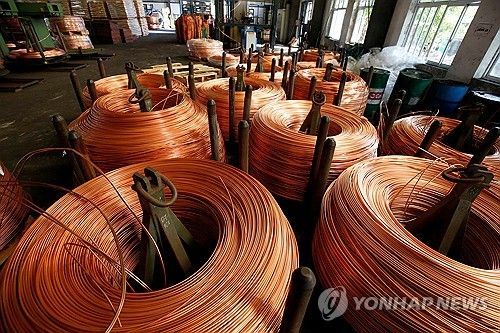
Following the rally in gold and silver, copper prices have also been on a steady upward trend recently. On October 27 (local time), the spot price of copper on the London Metal Exchange (LME) reached $11,094 per ton during trading, marking a 17-month high. On October 29, Meritz Securities released a report titled "There Are Reasons for Copper's Record High," diagnosing that copper prices are rising due to production disruptions at major mines and expectations of a copper supply shortage next year.
Concentrate Supply Shortage Due to Mine Production Disruptions
In the copper market, a major issue has been the historic plunge in the Treatment Charge/Refining Charge (TC/RC), which is the fee smelters pay to process copper concentrate purchased from mining companies. Traditionally, mining companies receive the price of ore minus the TC/RC when selling to smelters. When ore supply is abundant, TC/RC is high; when supply is tight, TC/RC drops.

Recently, the spot TC has plummeted to zero dollars or even below. In the futures market, contracts for next year's supply have emerged with a TC of zero dollars. This indicates that concentrate supply is failing to keep up with demand. Production disruptions are occurring at major copper mines in Chile, Peru, and Indonesia due to reasons such as labor strikes, rising energy costs, and operational shutdowns.
ICSG Revises Next Year's Outlook from 'Supply Surplus' to 'Supply Deficit'
The International Copper Study Group (ICSG), which publishes global copper market trends and outlooks, releases copper market forecast reports twice a year in April and October. In its latest October report, ICSG significantly revised its copper market outlook. For this year, the supply surplus forecast was lowered from 289,000 tons to 178,000 tons, a downward revision of 111,000 tons. Notably, next year's outlook was revised from a supply surplus of 209,000 tons to a supply deficit of 150,000 tons, a downward adjustment of 359,000 tons.
The main driver behind last May's surge in copper prices was "non-traditional" copper demand stemming from the expansion of artificial intelligence (AI) data centers and power grid upgrades. Currently, demand forecasts have been revised even higher compared to May of last year. Jang Jaehyuk, an analyst at Meritz Securities, commented, "The market's focus is on the upcoming 2026 benchmark TC negotiations. If the tight supply-demand situation continues and next year's benchmark TC is further sharply reduced, this will act as a key catalyst for exacerbating the copper supply-demand imbalance."
© The Asia Business Daily(www.asiae.co.kr). All rights reserved.
![Clutching a Stolen Dior Bag, Saying "I Hate Being Poor but Real"... The Grotesque Con of a "Human Knockoff" [Slate]](https://cwcontent.asiae.co.kr/asiaresize/183/2026021902243444107_1771435474.jpg)
















