WSJ Reports
China Expected to Resume Imports of U.S. Soybeans
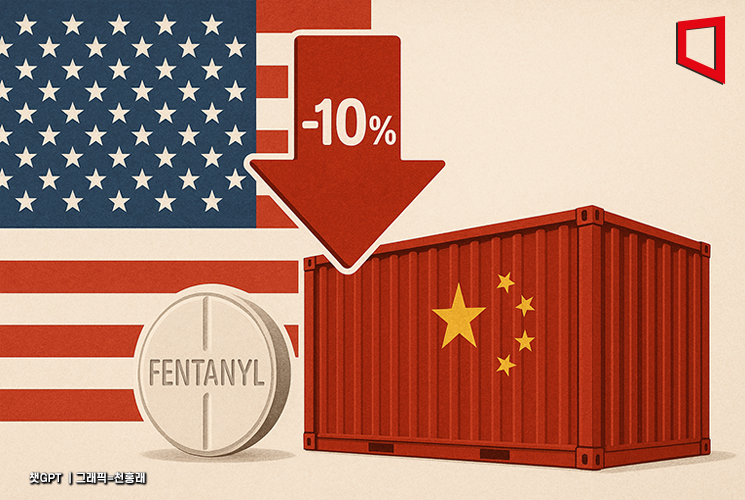
The United States and China are nearing a trade agreement ahead of the summit scheduled to take place in Busan on October 30. It has been reported that the U.S. is considering lowering the tariff on fentanyl imposed on China by 10 percentage points.
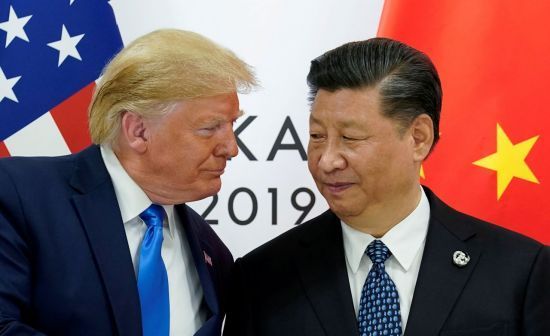 U.S. President Donald Trump (left) and Chinese President Xi Jinping are meeting for a bilateral talk at the G20 Summit held in Osaka, Japan, in June 2019. Photo by Reuters
On October 28 (local time), The Wall Street Journal (WSJ), citing sources, reported that the Donald Trump administration plans to reduce the current 20% tariff on fentanyl to as low as 10%-half the current rate-if China strengthens its crackdown on precursor chemicals used to produce fentanyl.
The United States currently imposes an average tariff of 55% on Chinese products. This consists of a 25% tariff imposed prior to President Trump's return to office, a 20% fentanyl tariff introduced during his second term, and a basic tariff of 10%. If the fentanyl tariff is reduced by 10 percentage points, the average tariff rate on Chinese products will drop to 45%.
The tariff reduction is expected to enhance China's access to the U.S. market while also serving as an opportunity to ease trade tensions between the two countries. Although a 45% tariff rate remains high, it is still lower than the 50% tariffs currently imposed on India and Brazil, respectively.
President Trump imposed a 20% tariff on China immediately after returning to office, citing insufficient regulation of fentanyl distribution. In retaliation, China imposed tariffs on U.S. soybeans and effectively halted imports. Until now, China has maintained its retaliatory tariffs and refused to resume imports of U.S. soybeans unless the U.S. withdraws the fentanyl tariff. However, if the U.S. officially announces a reduction of the fentanyl tariff at the upcoming summit, it is highly likely that China will promise to resume imports of U.S. soybeans.
The two countries are also reportedly discussing ways to reduce mutual port entry fees for ships.
Additionally, according to the U.S. negotiating team, China hopes that the U.S. will freeze measures unfavorable to China, including the software export controls currently under review. However, U.S. Treasury Secretary Scott Besant stated in a CBS interview on October 26 that export controls will remain in place, drawing a line against relaxing sanctions in the high-tech sector.
Previously, Secretary Besant announced after the high-level U.S.-China trade talks held in Kuala Lumpur, Malaysia, that the two countries had reached agreements on issues such as rare earth export controls and the proposed 100% additional tariffs on Chinese goods. He explained that China will defer its rare earth export controls for one year, and the U.S. will withdraw the 100% additional tariffs on Chinese goods that were scheduled to take effect in November. He also added that China had agreed to increase purchases of U.S. agricultural products such as soybeans and to strengthen its crackdown on fentanyl distribution.
As a result, there is a growing possibility that the leaders of the U.S. and China will reach a dramatic trade agreement at the summit on October 30, resolving existing conflicts and shifting from escalation to a truce.
© The Asia Business Daily(www.asiae.co.kr). All rights reserved.
![Clutching a Stolen Dior Bag, Saying "I Hate Being Poor but Real"... The Grotesque Con of a "Human Knockoff" [Slate]](https://cwcontent.asiae.co.kr/asiaresize/183/2026021902243444107_1771435474.jpg)
















