First Meeting with Prime Minister Takaichi on October 27
Talks with President Lee on the 29th, Xi Jinping on the 30th
40% of Police Force Deployed as Security Measures Tightened
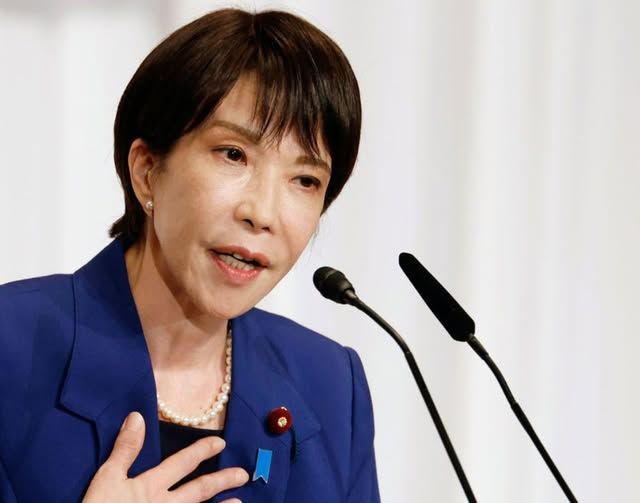
On October 27, local time, U.S. President Donald Trump, on his first Asian tour since beginning his second term, concluded a two-day, one-night visit to Malaysia and departed for his next destination, Japan. As Sanae Takaichi, Prime Minister of Japan, faces her first test on the diplomatic stage, global attention is focused on her actions. The Japanese government, meanwhile, has taken thorough measures, such as strengthening security in central Tokyo.
President Trump boarded Air Force One at Kuala Lumpur International Airport on the morning of October 27, heading to Tokyo, Japan. Upon his arrival in Japan, President Trump is scheduled to hold talks with Prime Minister Takaichi on October 28.
According to reports from outlets such as the Associated Press, during her first U.S.-Japan summit, Prime Minister Takaichi is expected to propose easing trade tensions by purchasing American-made Ford trucks and considering an increase in imports of soybeans and liquefied natural gas (LNG). She is also likely to actively highlight her status as the 'direct disciple' of the late former Prime Minister Shinzo Abe.
The reports further state that Prime Minister Takaichi is expected to strategically emphasize the purchase of Ford's F-150 trucks as she works to build a friendly relationship with President Trump. The Nihon Keizai Shimbun (Nikkei) reported that the Japanese government is considering displaying Ford trucks in locations where President Trump can see them directly, while the Ministry of Land, Infrastructure, Transport and Tourism is also reviewing plans to introduce the trucks for road and infrastructure inspections.
Previously, on October 25, while President Trump was in flight, the two leaders held a phone call. During this conversation, Prime Minister Takaichi reportedly emphasized her position as a disciple of former Prime Minister Abe and praised President Trump for his success in securing the release of hostages through brokering a ceasefire in Gaza.
With the major event of the U.S. President's visit to Japan, security in central Tokyo has been significantly heightened. According to Nikkei, up to 18,000 police officers will be deployed in Tokyo until President Trump departs on October 29. This represents about 40% of the entire Tokyo Metropolitan Police force and is on par with the scale deployed during President Trump's solo visit to Japan in 2019, during his first term.
Traffic controls have been implemented on some sections of highways and major city roads. Around 9 a.m., police installed barricades near the U.S. Embassy in Akasaka, Tokyo, to block vehicle access. Signs indicating 'enhanced security' have been placed around the National Diet Building. Nikkei reported that, following the shooting incident involving President Trump during last year's U.S. presidential campaign, Japanese police have also strengthened their surveillance and response measures, and major stations such as Tokyo Station are now under strict watch as potential targets for terrorism.
After completing his schedule in Japan, President Trump will arrive in South Korea on October 29 for the Asia-Pacific Economic Cooperation (APEC) summit, where he will meet with President Lee Jaemyung. On October 30, in Busan, he will hold the main event of this tour: the first U.S.-China summit in over six years with Chinese President Xi Jinping.
Meanwhile, during his brief stay in Kuala Lumpur, President Trump presided over the Thailand-Cambodia ceasefire agreement ceremony, held talks with Malaysian Prime Minister Anwar Ibrahim, attended the United States-ASEAN (Association of Southeast Asian Nations) summit, and met with Brazilian President Luiz Inacio Lula da Silva, among other engagements. He also signed trade and critical minerals cooperation agreements with Malaysia, a trade agreement with Cambodia, and a critical minerals cooperation agreement with Thailand. In addition, he reached a broad agreement on trade negotiations with Vietnam, achieving multiple outcomes in a single day.
© The Asia Business Daily(www.asiae.co.kr). All rights reserved.
![Clutching a Stolen Dior Bag, Saying "I Hate Being Poor but Real"... The Grotesque Con of a "Human Knockoff" [Slate]](https://cwcontent.asiae.co.kr/asiaresize/183/2026021902243444107_1771435474.jpg)















