Push for Purchase of American-Made Ford Trucks
Considering Expansion of Soybean and LNG Imports
Likely to Emphasize Ties as Abe's Disciple
Japanese Prime Minister Sanae Takaichi has chosen the American-made Ford F-150 pickup truck as a gesture to win favor with U.S. President Donald Trump. Ahead of the upcoming U.S.-Japan summit, Takaichi, who is facing her first diplomatic test, is considering not only purchasing Ford trucks to ease trade tensions, but also expanding imports of American soybeans and liquefied natural gas (LNG). She is also expected to actively promote her status as the “direct disciple” of the late former Prime Minister Shinzo Abe.
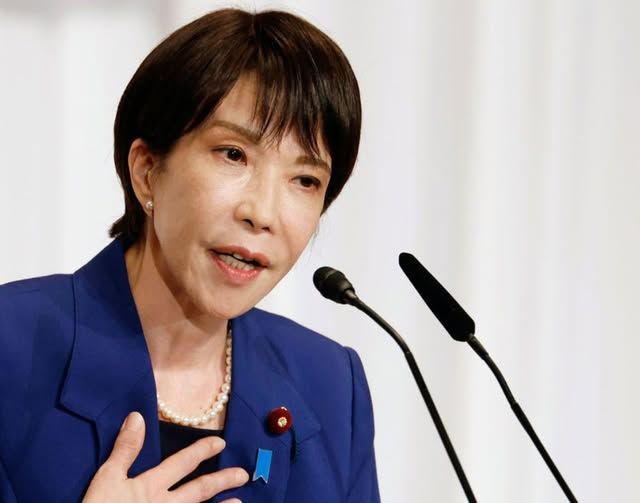
According to AP and other foreign media on October 27, Prime Minister Takaichi is putting everything on the line to build a friendly relationship with President Trump, with “the purchase of Ford F-150 trucks” cited as a key element of this strategy. Nihon Keizai Shimbun (Nikkei) reported that the Japanese government is considering displaying the Ford trucks in a location where President Trump can see them directly, and is also exploring the possibility of the Ministry of Land, Infrastructure, Transport and Tourism introducing the trucks for road and infrastructure inspections. However, AP noted that there are concerns about the Ford trucks’ suitability for Japan’s narrow roads and the potential for increased traffic congestion.
President Trump, currently on an Asian tour, responded to the Japanese government’s truck purchase plan aboard Air Force One, saying, “She (Takaichi) has good taste. It’s a great truck.” The two leaders held a phone call on October 25 while President Trump was in flight, during which Prime Minister Takaichi emphasized her status as a prot?g? of former Prime Minister Abe and praised President Trump for his role in brokering a ceasefire in Gaza and securing the release of hostages.
This visit marks President Trump’s first diplomatic test for Prime Minister Takaichi since taking office. Having assumed the premiership last week with the backing of an unstable coalition government, she now faces the task of finalizing investment policies toward the U.S. and stabilizing U.S.-Japan relations. Previously, the Shigeru Ishiba administration had pledged $550 billion in investments in the United States, and in response, the Trump administration lowered tariffs on Japanese products from 25% to 15%.
While the Ford truck purchase is a diplomatic gesture aligning with the Trump administration’s “Buy American” slogan, the main agenda items for the upcoming U.S.-Japan summit are expected to include the implementation of the $550 billion investment commitment, cooperation in advanced technology and shipbuilding, and an increase in defense spending.
According to Reuters, the Japanese government is coordinating to present candidate projects for investment or equity participation in nine sectors, including semiconductors, pharmaceuticals, critical minerals, shipbuilding, and energy. Japan is also considering signing a memorandum of understanding (MOU) to expand investment in shipbuilding. Additionally, Reuters reported that Japan plans to inform the U.S. that it will achieve its defense spending target of 2% of GDP-originally set for fiscal year 2027-within this year. The government is also reviewing ways to increase imports of American soybeans, LNG, and automobiles, in addition to purchasing Ford trucks.
AP analyzed, “Such gestures, along with Prime Minister Takaichi’s connection to former Prime Minister Abe, are expected to help build a relationship with President Trump.”
President Trump’s visit to Japan comes just before his scheduled meeting with Chinese President Xi Jinping, giving it the character of a strategic move to counter China. Both the U.S. and Japan recognize that China’s expanding manufacturing presence in electric vehicles, artificial intelligence (AI), and advanced semiconductors could threaten their own economies. Christopher Johnstone, Japan Chair at the Center for Strategic and International Studies (CSIS), commented, “On the eve of the Trump-Xi summit, President Trump may be seeking to demonstrate the strength of U.S.-Japan relations to bolster his negotiating position.”
Meanwhile, President Trump is scheduled to arrive in Japan on October 27, pay a courtesy call on Emperor Naruhito, and hold talks with Prime Minister Takaichi on October 28. On October 29, he will attend a dinner with Japanese business leaders before departing for South Korea.
© The Asia Business Daily(www.asiae.co.kr). All rights reserved.
![Clutching a Stolen Dior Bag, Saying "I Hate Being Poor but Real"... The Grotesque Con of a "Human Knockoff" [Slate]](https://cwcontent.asiae.co.kr/asiaresize/183/2026021902243444107_1771435474.jpg)















