National Assembly Passes Eight Employment and Labor-Related Bills
"Workers' Day" Renamed as "Labor Day" After 61 Years

On May 1, the name 'Labor Day' will be restored for the first time in 61 years, replacing 'Workers' Day.' The government is also considering designating Labor Day as an official public holiday, drawing significant attention. Next year, May 1 falls on a Friday, so if Labor Day becomes a public holiday, taking just one day of annual leave on Monday the 4th would allow people to enjoy a five-day golden holiday stretching through the weekend and Children's Day on Tuesday the 5th.
"The autonomy of labor and its value as a human right must be reflected"
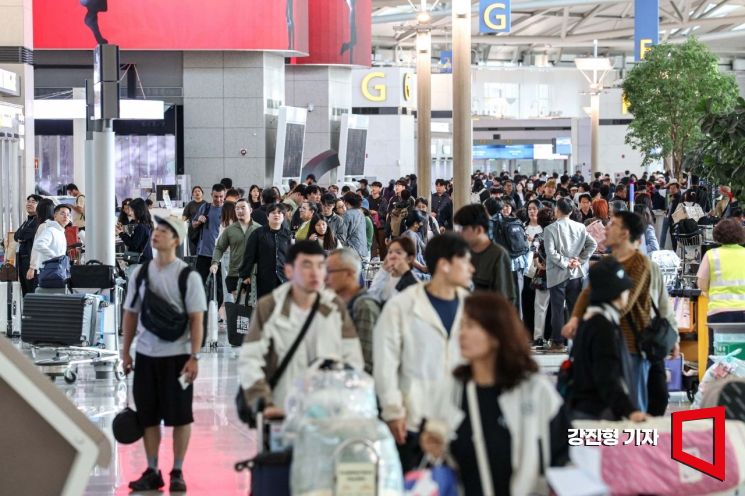
On the 26th, the Ministry of Employment and Labor announced that eight bills under its jurisdiction, including the 'Act on the Establishment of Labor Day,' were passed at the National Assembly plenary session. May 1 is internationally known as 'May Day,' commemorating the 1886 struggle by American workers to secure an eight-hour workday. In Korea, it has been observed as 'Labor Day' since 1923, but in 1963, with the enactment of the 'Act on the Establishment of Workers' Day,' the name was changed to 'Workers' Day.' When the Workers' Day Act was first enacted, the date was March 10, but a 1994 amendment moved it to May 1.
Supporters of the term 'Labor Day' argue that 'worker' is a term used since the Japanese colonial era and, during the period of industrialization, carried a 'controlling and passive meaning,' failing to fully reflect the autonomy of labor and its value as a human right. They also point out that, even according to dictionary definitions, 'geullo' (work) means 'to work diligently,' while 'nodong' (labor) means 'to work physically,' making 'labor' a more 'value-neutral term.'
Some argue, "Is there really a need to change it?"
However, there are also objections to changing the name. Some argue that "'worker' is not a remnant of Japanese colonial rule but is a native Korean word that even appears in the Annals of the Joseon Dynasty and is used in the Constitution of the Republic of Korea," and therefore, "there is no real need to change it." Others point out that "improving actual working conditions should take precedence over changing terminology."
The Ministry of Employment and Labor stated that it will coordinate with relevant ministries and actively support discussions in the National Assembly to ensure that Labor Day can be designated as a public holiday. Currently, a bill to designate Labor Day as a public holiday has been introduced and is pending in the National Assembly's Public Administration and Security Committee. If the bill passes, Labor Day will gain the status of a legal public holiday.
Labor-related bills passed in succession
On the same day, the National Assembly also passed an amendment to the 'Guarantee of Workers' Retirement Benefits Act,' which removes the application of the crime subject to complaint (ban-uisa-bulbeol) for employers who have already been publicly named for wage arrears and then fail to pay retirement benefits or other wages. This means that if an employer who has been publicly identified for wage arrears commits another wage violation, the crime subject to complaint will no longer apply, and this will now also cover retirement benefits and similar payments.
Other bills that passed include an amendment to the Wage Claim Guarantee Act, which allows the government to recover payments made on behalf of employers to workers who have not received their wages, following the same procedures as collecting overdue national taxes; and an amendment to the Employment Insurance Act, which enables the government to increase employment retention subsidies in the event of a nationwide deterioration in employment conditions.
Additionally, the National Assembly passed an amendment to the 'Act on the Promotion of Employment and Vocational Rehabilitation of Persons with Disabilities,' which relaxes regulations on the establishment of standard workplaces for people with disabilities, as well as amendments that clarify the legal basis for appointing worker directors to the Korea Workers' Compensation and Welfare Service, the Korea Occupational Safety and Health Agency, and the Human Resources Development Service of Korea.
© The Asia Business Daily(www.asiae.co.kr). All rights reserved.
![Clutching a Stolen Dior Bag, Saying "I Hate Being Poor but Real"... The Grotesque Con of a "Human Knockoff" [Slate]](https://cwcontent.asiae.co.kr/asiaresize/183/2026021902243444107_1771435474.jpg)
















