2017 Lawsuit
"Work Performed Under Substantial Direction and Supervision"
The Supreme Court has ruled that workers from partner companies who conducted commercial prototype vehicle driving tests at Hyundai Motor Company's Namyang Research Center were subject to illegal dispatch.
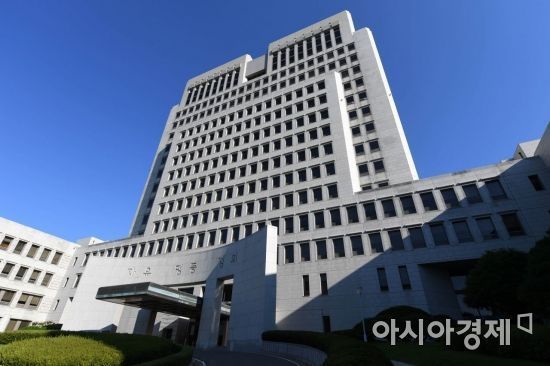
According to the legal community on October 27, the Supreme Court's Second Division (Presiding Justice Eom Sangpil) upheld the lower court's ruling, which partially sided with 16 employees from partner companies in a lawsuit against Hyundai Motor Company seeking confirmation of their employee status.
These employees were responsible for durability driving tests, which involved operating prototype trucks, buses, and other commercial vehicles produced by the Namyang Research Center under specific conditions to assess their durability. Hyundai Motor Company entered into a service contract in 1997, and the partner companies changed several times. The 16 employees continued to work through employment succession at these partner companies, which totaled three in number.
When Hyundai Motor Company designated the test vehicles and issued an order, the team leader from the partner company determined the daily driving distance and assigned the drivers. The workers submitted driving test logs, and the team leader reported the status of the test vehicles to Hyundai Motor Company every day.
In 2017, the 16 partner company employees filed a lawsuit, claiming that Hyundai Motor Company had illegally dispatched them in violation of the Act on the Protection, etc. of Dispatched Workers (Dispatch Act). Under the Dispatch Act, dispatched workers cannot be used in the production process of manufacturing industries.
The district and appellate courts both determined that the workers were in fact under the direction and supervision of Hyundai Motor Company. The first trial court stated, "The partner companies had little discretion over the number of workers assigned, daily workload, or working hours, and the workers had few independent rights. The prototype vehicles and test tracks belonged to Hyundai Motor Company, and the partner companies did not have independent business organizations or facilities."
The appellate court also found, "It is reasonable to conclude that Mr. A and others were substantially incorporated into Hyundai Motor Company's business, and that Hyundai Motor Company exercised significant direction and supervision over the performance of work."
The Supreme Court concurred. It dismissed Hyundai Motor Company's appeal, stating that the appellate court had not misunderstood the legal principles regarding worker dispatch.
© The Asia Business Daily(www.asiae.co.kr). All rights reserved.
![Clutching a Stolen Dior Bag, Saying "I Hate Being Poor but Real"... The Grotesque Con of a "Human Knockoff" [Slate]](https://cwcontent.asiae.co.kr/asiaresize/183/2026021902243444107_1771435474.jpg)















