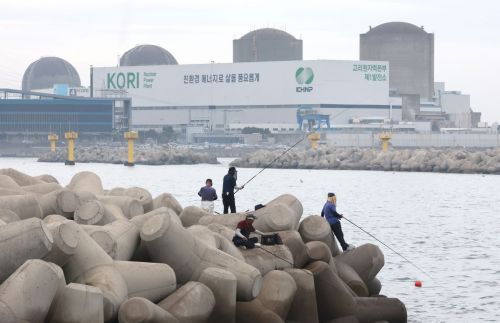
The Nuclear Safety and Security Commission held its second review on October 23 regarding the continued operation of Unit 2 at the Kori Nuclear Power Plant in Gijang-gun, Busan. However, it decided to continue deliberations at the next meeting due to the need for further discussion on regulations related to the radiological environmental impact assessment.
On this day, the Commission convened its 223rd meeting and addressed the continued operation approval as an agenda item for review and resolution. However, in order to allow for sufficient discussion, it decided to resubmit the agenda at a future meeting. Previously, at its 222nd meeting on September 25, the Commission discussed the approval of the accident management plan and continued operation for Unit 2 at Kori, but decided to revisit the matter later. The accident management plan, which was resubmitted for review on this day, was put to a vote and approved at 4 p.m.
However, regarding the continued operation approval, disagreements persisted among the commissioners over the phrase "radiological environmental impact assessment reflecting changes after the operating license" as stated in the notice. The radiological environmental impact assessment evaluates the impact of nuclear plant operations on the surrounding environment. At the time of construction and initial operation approval for Unit 2 at Kori, this assessment was not required as part of the licensing documents, but following a revision of the relevant law in 1982, it became mandatory.
Accordingly, Korea Hydro & Nuclear Power conducted a new radiological environmental impact assessment and submitted the report. However, the commissioners were unable to narrow their differences. Korea Hydro & Nuclear Power has requested continued operation reviews for a total of 10 nuclear units, but since the radiological environmental impact assessment was not a required licensing document at the time of their construction permits, it is assessed that if the current disagreement is not resolved, similar issues could arise in the review of other nuclear plants as well.
© The Asia Business Daily(www.asiae.co.kr). All rights reserved.
![Clutching a Stolen Dior Bag, Saying "I Hate Being Poor but Real"... The Grotesque Con of a "Human Knockoff" [Slate]](https://cwcontent.asiae.co.kr/asiaresize/183/2026021902243444107_1771435474.jpg)















