"Filing a Claim Lawsuit Is the Debtor's Right"
"Participation of Collection Creditors in Lawsuits Is Not Unreasonable"
Supreme Court En Banc Changes Precedent After 25 Years
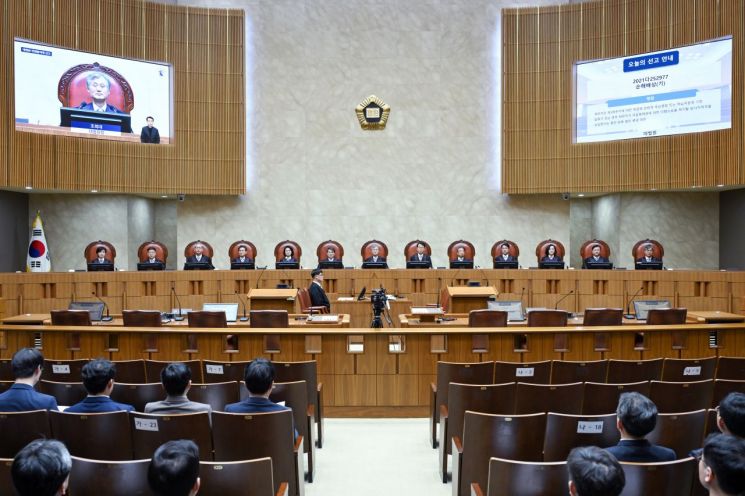
The Supreme Court has issued a new ruling stating that "even if a debtor is subject to a collection order or seizure, they can still file a lawsuit against a third-party debtor to claim money." Until now, it was understood that debtors were not qualified to file such lawsuits, but this precedent was overturned in 2025.
On October 23, the Supreme Court en banc (Presiding Justice Lee Heungku) changed its precedent in a retrial of a damages claim lawsuit filed by construction company A against Mr. B. The case began when construction company A sued Mr. B for unpaid construction fees and other payments. The courts of first and second instance ruled that "Mr. B must pay approximately 39 million won to company A." However, the situation became complicated when company C, a creditor of company A, obtained a collection order against company A, and the tax authorities also imposed a seizure due to tax arrears.
According to the previous precedent, once a collection order was issued, the person entitled to receive the money was no longer considered qualified to claim it directly. However, the Supreme Court en banc has now ruled that "the debtor can still file a lawsuit."
The Supreme Court explained that a collection order does not mean the claim is 'transferred' to the collecting creditor, and that the debtor filing a lawsuit is simply asserting 'their own rights' and does not actually receive the money. Therefore, it does not violate the seizure or collection order, and this interpretation is appropriate. The Court also noted that, from the perspective of "judicial economy," this change is reasonable. If a collection order were to disqualify the debtor from filing a lawsuit, any ongoing litigation would become invalid, requiring the case to start over from the beginning.
There was a dissenting opinion. Justice Noh Taeak pointed out, "This could restrict the rights of the collecting creditor," and argued, "There is no need to change a precedent that has been maintained for a long time."
The Supreme Court stated that the significance of this ruling is that it "corrected the previous position of denying the debtor's standing to sue without clear legal grounds," and described it as "a decision that balances the interests of creditors, debtors, and third-party debtors."
© The Asia Business Daily(www.asiae.co.kr). All rights reserved.
![Clutching a Stolen Dior Bag, Saying "I Hate Being Poor but Real"... The Grotesque Con of a "Human Knockoff" [Slate]](https://cwcontent.asiae.co.kr/asiaresize/183/2026021902243444107_1771435474.jpg)















