Board of Audit and Inspection Analyzes Social Disasters
Announces Results of Disaster and Safety Management System Inspection
Proposes Introduction of Innovative Personnel System
On the 23rd, the Board of Audit and Inspection proposed introducing innovative personnel policies for effective disaster response, including offering more than double the standard salary to those in charge. While emphasizing the importance of disaster management, the board also pointed out insufficient treatment and support for on-site personnel.
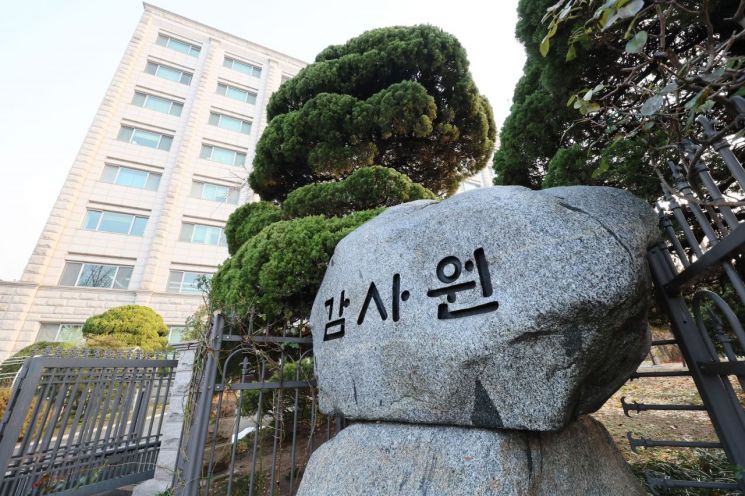
The Board of Audit and Inspection announced the main findings of its "Inspection of Disaster and Safety Management Systems." This audit was conducted to explore why social disasters have continued to recur despite improvements to disaster management infrastructure since 2014. To this end, the board conducted in-depth analyses of the 2022 Itaewon disaster, the 2022 wildfires in North Gyeongsang and Gangwon provinces, and the 2018 Miryang hospital fire.
In its report, the board emphasized, "It is necessary to provide incentives to attract both internal and external experts, such as offering more than double the standard compensation to heads of disaster management departments, who are responsible for on-site disaster response and play a decisive role in the success of initial response. For field personnel, presenting a growth blueprint through active personnel exchanges with related agencies and expanding recruitment are also needed to encourage retention."
The board's recommendations are based on a lack of attention to those carrying out disaster management. The conclusion is that, while the importance of disaster management has been highlighted, efforts have focused solely on expanding systems and infrastructure, with insufficient investment in the people responsible for implementation.
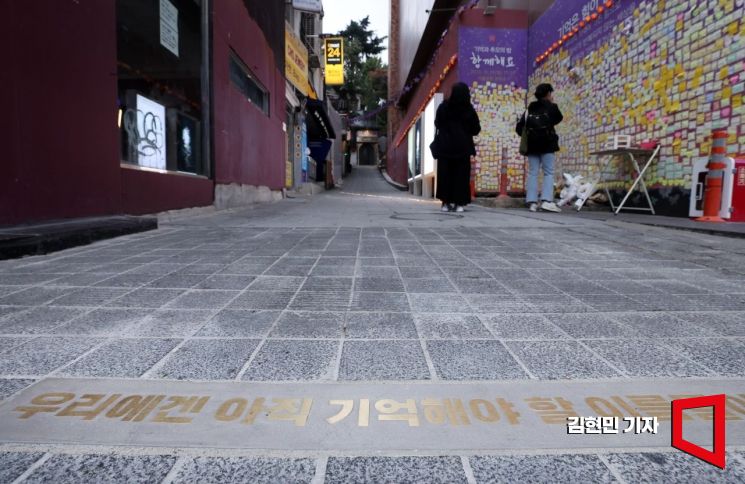 On October 27, 2023, citizens are mourning the victims at the "10·29 Path of Memory and Safety" established at the disaster site in Yongsan-gu, Seoul. Photo by Hyunmin Kim kimhyun81@
For example, in the case of the Itaewon disaster, none of the disaster management officials in Yongsan-gu-including the district mayor, deputy mayor, and heads of disaster management divisions-had actual disaster response experience. Except for the deputy mayor, no one had completed the legally required disaster training, and the 2021 Safe Korea Exercise (a comprehensive disaster response drill) was replaced by a discussion session, resulting in a failure to mount a swift initial response. Although communication infrastructure was in place, it was not effectively utilized at the disaster scene due to a lack of familiarity with its operation.
There is also a shortage of disaster management personnel. According to the Ministry of the Interior and Safety, the situation room in Yongsan-gu was inadequately operated during the Itaewon disaster, prompting the ministry to announce that all local governments would assign dedicated personnel on a 24-hour basis. However, 5 out of 10 local governments still have not assigned dedicated staff, instead having on-duty personnel handle disaster response as an additional responsibility. Among 1,289 on-duty staff, only 17.1% (221 people) have completed disaster training.
In particular, the Board of Audit and Inspection pointed out that disaster management departments are often avoided, resulting in inexperienced newcomers being assigned, and frequent personnel changes make it difficult to accumulate experience due to short tenures. According to the board, 81.6% of disaster management field supervisors are assigned to the role despite not wanting it, indicating clear limitations in fostering a sense of responsibility and mission.
© The Asia Business Daily(www.asiae.co.kr). All rights reserved.
![Clutching a Stolen Dior Bag, Saying "I Hate Being Poor but Real"... The Grotesque Con of a "Human Knockoff" [Slate]](https://cwcontent.asiae.co.kr/asiaresize/183/2026021902243444107_1771435474.jpg)
















