Unprecedented Policy Directives Issued on Prime Minister's First Day
"Komeito as the 'brake,' Innovation Party as the 'accelerator'"
Three Pillars: Economic Power, Defense Capability, and Diplomatic Strength
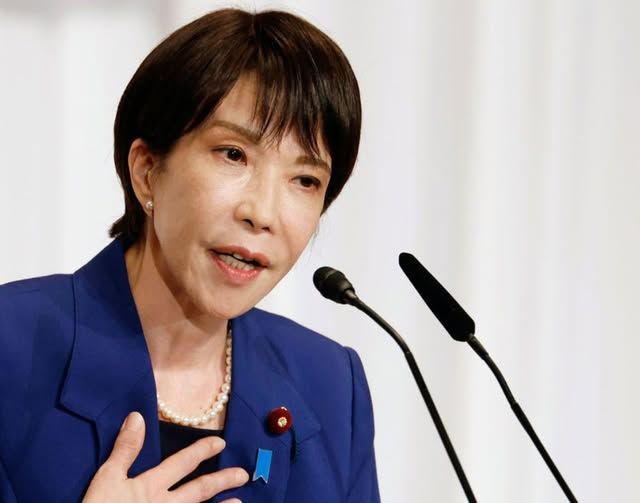 Sanae Takaichi, the new Prime Minister of Japan, was elected as the 104th Prime Minister in the Prime Minister designation elections held separately in the House of Representatives and the House of Councillors on the 21st.
"I am willing to give up 'work-life balance'."
Sanae Takaichi, the new Prime Minister of Japan, has been pushing policies at an unusually rapid pace from her very first day in office, in line with her declared determination. She identified economic power, defense capability, and diplomatic strength as the three pillars of her administration and demanded swift policy implementation from each ministry. The participation of the right-leaning Japan Innovation Party as a coalition partner, replacing the centrist Komeito Party that had been allied with the ruling Liberal Democratic Party for 26 years, has also been analyzed as one of the driving forces behind the conservative Takaichi Cabinet.
According to local media on October 23, Prime Minister Takaichi, during her first Cabinet meeting held on the night of her inauguration on the 21st, instructed the preparation of comprehensive economic measures and presented three policy pillars: responding to high inflation, building a strong economy through crisis management and growth investment, and strengthening defense and diplomatic capabilities.
Following these guidelines, the heads of each ministry presented specific policy directions at their respective inauguration ceremonies or press conferences the following day. For example, Shinjiro Koizumi, the new Minister of Defense, stated that he had received instructions and expressed the need to review the three major security documents.
The three major security documents refer to the "National Security Strategy," which outlines the basic guidelines for diplomacy and security; the "National Defense Strategy," which details the role of the Self-Defense Forces and the direction for building defense capabilities; and the "Defense Buildup Program," which sets out the procurement policy for specific defense equipment.
Satsuki Katayama, the first woman to lead the Ministry of Finance, emphasized on the same day that Japan must not pass on a stagnant economy to future generations, pledging to pursue "responsible and proactive fiscal policy." Norikazu Suzuki, Minister of Agriculture, Forestry and Fisheries, also suggested a possible shift from the previous administration's rice production increase policy, stating that rice prices should be determined by the market.
Yomiuri Shimbun reported that it was unusual for such policy instructions to be issued at the Cabinet meeting on the very day of inauguration. In fact, Prime Minister Takaichi has been emphasizing speed, telling the press corps at the official residence the previous day, "We will work harder and faster."
According to local media, based on the draft of her speech, Prime Minister Takaichi is expected to announce in her policy speech at the extraordinary Diet session scheduled for the 24th that she will aim to revise the three major security documents by the end of next year. She will also declare her intention to bring forward by about two years the target for defense spending to reach 2% of GDP by fiscal 2027. The draft speech also reportedly includes plans to establish a "National Conference" composed of lawmakers from both ruling and opposition parties and experts to reform the social security system, as well as a "Japan Growth Strategy Conference" to promote economic growth led by advanced industries.
Yomiuri Shimbun further analyzed that, "If Komeito, which participated in the coalition for 26 years before leaving, acted as a 'brake' on the administration, the Japan Innovation Party is expected to serve as the 'accelerator,' and hopes that Prime Minister Takaichi will use this leverage to accelerate reforms."
The centrist Komeito Party played a checking role by expressing opposition during the 2022 revision of the three major security documents, which allowed for counterstrike capabilities, and during the revision of the "Three Principles on Transfer of Defense Equipment and Technology," which regulates arms exports. The Liberal Democratic Party-Komeito coalition, formed in 1999, was dissolved this year after 26 years. Although Prime Minister Takaichi, then president of the Liberal Democratic Party, faced a critical moment with the breakup of the coalition, she overcame it by bringing in the Japan Innovation Party as a new coalition partner.
© The Asia Business Daily(www.asiae.co.kr). All rights reserved.

















