Millions of Dollars Exchanged in Six Countries Including South Korea and Thailand
Michelin: "Funding Is for Operations... No Impact on Evaluations"
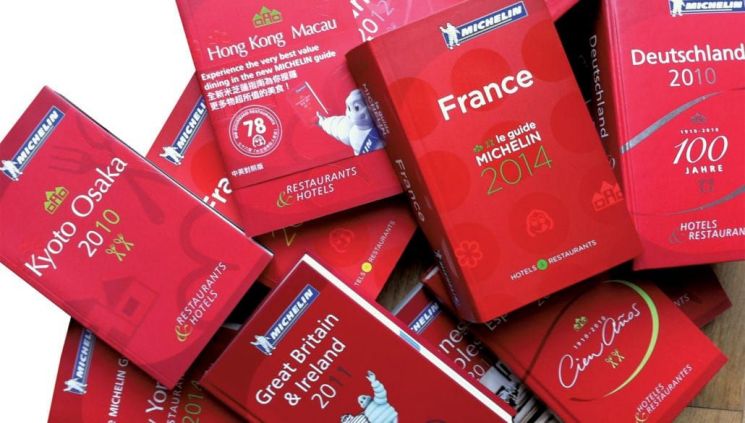
The "Michelin Guide," regarded as the global standard for fine dining, has come under scrutiny for its independence and credibility, built over more than a century, after it was revealed that the guide has published local editions with substantial financial support from various governments.
On October 22, the UK’s Daily Mail reported that, for the past 15 years, the Michelin Guide has received millions of dollars from the tourism boards of several countries-including Thailand, Singapore, Malaysia, the United Arab Emirates (UAE), Israel, and the United States-to publish guides for those nations.
These countries partnered with Michelin to promote their national cuisines worldwide and boost their tourism industries. However, concerns have been raised that such arrangements could ultimately undermine the fairness of restaurant evaluations.
According to the report, South Korea is no exception. The Korea Tourism Organization paid the Michelin Guide a total of more than 1 million dollars (approximately 1.4 billion won) over four years starting in 2016, during which time 24 domestic restaurants were awarded stars. CNN also reported that the Tourism Authority of Thailand partnered with Michelin in 2017, providing 4.4 million dollars (approximately 6.3 billion won) in support, after which 17 restaurants received stars.

Food critic Andy Hayler commented, "If a tourism board pays money, they will inevitably expect stars in return," adding, "This is actually happening." Thomas Frake, the 2020 winner of the BBC’s "MasterChef," also pointed out, "A street food stall in Vietnam and a high-end restaurant in London both receive the same 'one star,'" and noted that "if the evaluation criteria are unclear, it can be confusing for users."
Tourism Board Partnerships as a Response to Financial Strain... "No Impact on Evaluations"
Michelin has denied these allegations, emphasizing that "partnerships with tourism boards do not influence restaurant evaluations." The Michelin Guide adopted "tourism board partnerships" as a revenue model after 2010, explaining that this was a response to worsening finances as print book sales declined.
Juliana Tweeks, Michelin’s partnership manager, explained to the Daily Mail, "Not every contract leads to the publication of a guidebook; these are simply collaborations to cover travel and research expenses."
Chris Watson, a former Michelin Guide inspector, also defended the practice, stating, "The number of stars awarded is determined by the level of the local dining scene in each country," and added, "Michelin also contributes to culinary tourism in various countries as part of its business."
The Michelin Guide was first published in 1900 by the French tire manufacturer Michelin as a travel guide for drivers. In 1926, it began awarding stars to restaurants with outstanding cuisine, and today it has evolved into a prestigious dining guide that awards up to three stars based on the quality of the food.
Originally focused on Europe, the Michelin Guide expanded into Asia and North America with the launch of its New York edition in 2006 and Tokyo edition in 2007. It is now published in 25 countries, with more than 3,000 restaurants having received stars.
© The Asia Business Daily(www.asiae.co.kr). All rights reserved.
![Clutching a Stolen Dior Bag, Saying "I Hate Being Poor but Real"... The Grotesque Con of a "Human Knockoff" [Slate]](https://cwcontent.asiae.co.kr/asiaresize/183/2026021902243444107_1771435474.jpg)
















