ACRC Investigation Reveals Improper Payment of Lunch and Work Allowances
Kwon Hyungyup Criticizes: "Government Guidelines Treated as Less Valuable Than Scrap Paper"
The Korea National Oil Corporation (hereinafter referred to as KNOC), which is currently in a state of complete capital erosion, created unauthorized "self-allowances" in disregard of government guidelines, improperly spending a total of 1.50362 billion won, including 1.24604 billion won for lunch expenses and 257.58 million won for special location allowances. This was revealed in a fact-finding investigation conducted by the Anti-Corruption and Civil Rights Commission (hereinafter referred to as the ACRC).
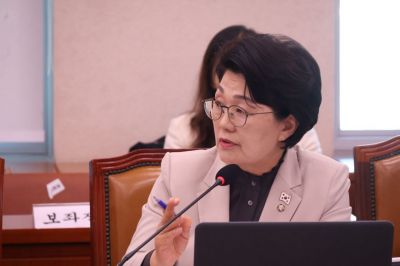
According to the "Fact-Finding Results on Overseas Duty Dispatch Operations at Public Institutions" submitted by the ACRC to Hyungyup Kwon, a member of the Democratic Party of Korea (representing Suncheon, Gwangyang, Gokseong, and Gurye in South Jeolla Province), on the 23rd, KNOC was found to have violated government guidelines in two areas: improper payment of welfare benefits to dispatched employees and improper payment of special location allowances.
KNOC established a new lunch expense (a salary-type welfare benefit) in its internal "Overseas Employee Compensation Regulations" without a board resolution, even though such an allowance is not stipulated in the "Civil Servant Allowance Regulations." Furthermore, from January 2021 to June last year, the company paid all overseas dispatched employees 15 dollars per working day, regardless of the country of dispatch. As a result, a total of 1.24604 billion won in lunch expenses was paid to 180 employees.
The government's "Budget Operation Guidelines for Public Enterprises and Quasi-Governmental Institutions" clearly state that when public institutions pay allowances to overseas dispatched employees, they must comply with the Civil Servant Allowance Regulations.
KNOC designated the Almaty region in Kazakhstan as a "Byeong" grade special location in accordance with the Ministry of Foreign Affairs' "Regulations on the Payment of Allowances to Overseas Civil Servants," and was required to pay the corresponding special location allowance. However, the company arbitrarily raised the grade to "Eul." As a result, 15 employees received approximately 257.58 million won in excessive special location allowances from January 2021 to June 2024.
According to the company's internal regulations, it is stipulated that the special location grade can only be determined through internal review for regions not already designated as special locations under the "Regulations on the Payment of Allowances to Overseas Civil Servants." However, the Ministry of Foreign Affairs had already designated the Almaty region in Kazakhstan as a "Byeong" grade special location. Despite this, KNOC ignored this and applied a higher grade.
Assemblywoman Kwon criticized, "Not only did they recklessly provide 35.7 billion won in 'imperial loans' at low interest rates and beyond the credit limit, but they also disregarded government guidelines and bypassed the board to create 'self-allowances.' In a state of complete capital erosion, I question whether the perception that 'this is not my asset' is causing them to treat government guidelines as less valuable than a scrap of paper, no matter how much debt accumulates."
© The Asia Business Daily(www.asiae.co.kr). All rights reserved.
![Clutching a Stolen Dior Bag, Saying "I Hate Being Poor but Real"... The Grotesque Con of a "Human Knockoff" [Slate]](https://cwcontent.asiae.co.kr/asiaresize/183/2026021902243444107_1771435474.jpg)
















