Chairman Lee Eogwon Announces Measures to Strengthen Regional Preferential Finance
Regional Preferential Finance Roundtable for Local Economic Revitalization Held in Busan
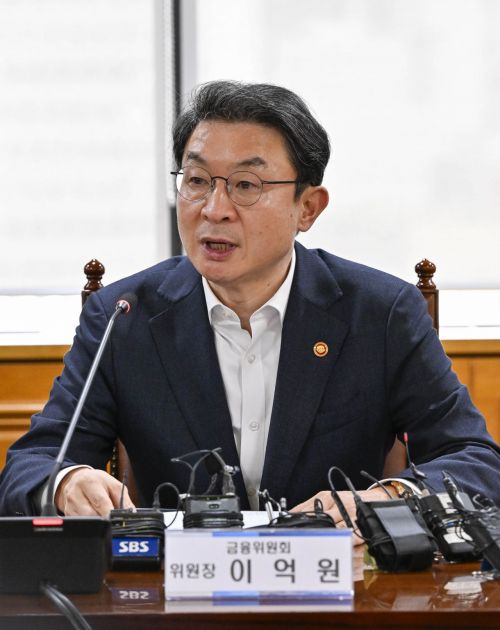
Lee Eogwon, Chairman of the Financial Services Commission, announced plans to strengthen regional preferential financial policies to revitalize local economies.
On the morning of October 22, at the headquarters of Busan Bank in Busan Metropolitan City, Chairman Lee held a "Regional Preferential Finance Roundtable for Local Economic Revitalization." He stated, "It is no exaggeration to say that almost every problem in South Korea stems from the concentration in the Seoul metropolitan area, which has resulted in numerous side effects." He added, "In this process, we must objectively reflect on whether the financial sector has deviated from its original purpose of efficient resource allocation and fostering future industries, and instead contributed to the concentration of capital in the Seoul metropolitan area."
He explained, "The share of total corporate loans (36.6%) and venture investments (24.7%) in local regions, as well as the funding provided by policy financial institutions established for policy purposes (40.0%), all fall short of the local population (49.4%) and regional GDP (47.6%)."
He further emphasized, "For the future of not only the Seoul metropolitan area but the entire nation, it is time for both the government and the financial sector-policy finance and private finance alike-to make a broad and strategic decision for balanced regional development." He added, "Through this, financial consumers should be able to feel the benefits of 'regional preference,' and local businesses should be empowered to once again serve as a dynamic engine for South Korea's growth."
Chairman Lee Introduces Key Initiatives for Transitioning to Regional Preferential Finance
Chairman Lee introduced key initiatives for transitioning to regional preferential finance. First, policy finance will increase the total supply of funds to local regions and significantly expand region-specific products to maximize regional preference. Starting next year, a "Regional Finance Supply Expansion Target System" will be introduced for four policy financial institutions, raising the proportion of funds supplied to local regions from about 40% this year to 45% by 2028, an increase of more than 5 percentage points. As a result, the annual supply of funds to local regions is expected to increase by 25 trillion won, reaching 120 trillion won by 2028.
Policy financial institutions will work to achieve these targets by introducing new regional-exclusive loan and guarantee products with preferential limits and interest rates for companies relocating to local areas, local key industries, and businesses facing regional management challenges. They will also enhance existing preferential items to provide more funds at lower interest rates, helping to alleviate funding shortages for local companies. In addition, the "National Growth Fund," a symbol of productive finance, plans to invest about 40% of its total capital in local regions to support advanced strategic industries, which are future growth drivers.
Second, regulations will be improved so that private financial institutions-including banks, mutual finance, and savings banks-can provide more funding to local regions. The government is considering lowering the loan-to-deposit ratio regulation for loans to small and medium-sized enterprises based in local areas, with plans to implement this next year. The "Regional Reinvestment Assessment" will also be made more effective by strengthening incentives, in collaboration with relevant ministries. To overcome the limited branch networks of regional banks and strengthen the competitiveness of the local financial ecosystem, active cooperation will be promoted, such as joint lending between internet banks and regional banks and the activation of agency services among regional banks.
Third, the regional base system of policy financial institutions will be expanded and reinforced to ensure that financial services tailored to local needs are more proactively provided. The functions and capabilities of regional headquarters of policy financial institutions, such as Korea Development Bank, will be strengthened so that young people and entrepreneurs in local regions can access important loans and investment reviews without having to travel to the main office. With investment review functions equivalent to the headquarters, regional headquarters like the Southern Investment Banking Division of Korea Development Bank, which can independently provide most region-specific financial services, will be expanded to other regions such as the Chungcheong area.
Chairman Lee stated, "We will combine the efforts of private and policy financial institutions to fully support the industrial capabilities that each region possesses, so they become the driving force of our economy." He added, "Based on the feedback received, we will collaborate with relevant ministries, institutions, and local governments to meticulously craft and implement regional preferential policies that can be felt in the field."
Meanwhile, this roundtable was the second meeting of the Productive Finance Grand Transition Conference, launched in September. It was attended by public financial institutions such as Korea Development Bank, Industrial Bank of Korea, Korea Credit Guarantee Fund, Korea Technology Finance Corporation, as well as the Korea Federation of Banks, Busan Bank, Busan Metropolitan City, Busan Tech Startup Investment Institute, and local companies.
© The Asia Business Daily(www.asiae.co.kr). All rights reserved.
![Clutching a Stolen Dior Bag, Saying "I Hate Being Poor but Real"... The Grotesque Con of a "Human Knockoff" [Slate]](https://cwcontent.asiae.co.kr/asiaresize/183/2026021902243444107_1771435474.jpg)
















