Achievement in Unraveling the Mechanisms of Neural Information Processing
Seoul National University of Science and Technology announced on the 24th that Professor Hyobin Han of the School of Convergence Liberal Arts, together with Professor Earl Miller's research team at the Department of Brain and Cognitive Sciences at MIT and Professor Tim Buschman of Princeton University, has identified the causes and operating principles of the limitations of working memory through joint research.
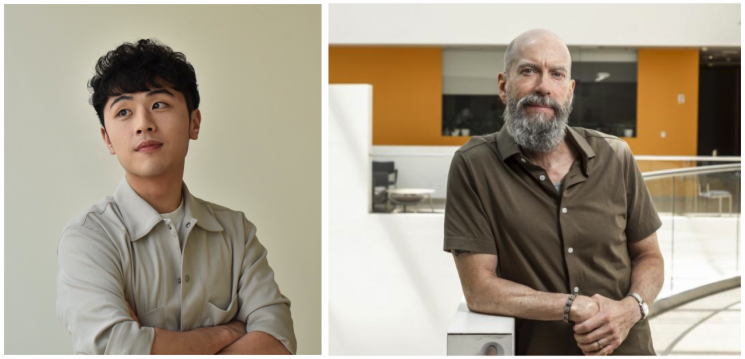 Professor Hyobin Han of Seoul National University of Science and Technology and Professor Earl Miller of MIT. Seoul National University of Science and Technology
This research achievement is scheduled to be published in Neuron, the most prestigious journal in the field of neuroscience (https://doi.org/10.1016/j.neuron.2025.09.031), which ranks 5th out of 314 journals in the Neurosciences category according to the latest Clarivate JCI ranking (top 1.43%).
Just as one might quickly forget a phone number or address that was just memorized, working memory has limits in both capacity and duration.
The research team identified the cause in the theta wave (4-8 Hz), a relatively slow brain rhythm. Theta waves are a representative brainwave associated with concentration and memory. By precisely recording and analyzing neural activity in the prefrontal cortex of monkeys, the team discovered that the retrieval of working memory is maintained or blurred according to a specific phase of the theta wave.
Theta waves appear in the form of traveling waves in the frontal eye field, an anatomical region where spatial information is projected, and these waves orchestrate the activity of cells representing working memory. The team confirmed that this forms the structure underlying the spatiotemporal constraints of working memory. In other words, they discovered the physiological conditions under which information stored in working memory can be successfully retrieved. Furthermore, through brain stimulation experiments that artificially manipulated theta waves, the foundation was established for enhancing human working memory.
This achievement is the result of the combination of the MIT research team's precise measurements and Professor Hyobin Han's original analysis. This study marks a turning point by moving away from the traditional view of working memory as 'static information stored somewhere in the brain' and instead understanding it as a process that is continuously refreshed within the dynamic waves of brain activity. Simply put, just as the flow of a dance can be smooth or disrupted depending on the rhythm of the music, the performance of working memory also varies according to the real-time state of the brain.
This discovery provides a new perspective for understanding the neuroscientific mechanisms underlying working memory impairment, such as aging, dementia, or ADHD. Furthermore, it could serve as a starting point for technologies that reverse aging by targeting theta brain waves with non-invasive brain stimulation techniques (such as tES).
Professor Hyobin Han, who led the research, stated, "Working memory is often compared to a desk. While the brain can store vast amounts of information like a library, the amount that can be retrieved and examined at once is extremely limited, much like the number of books that can be spread out on a desk. This study is significant because it provides answers to where that desk is and how it can be observed, thereby revealing the biological reality of working memory."
Meanwhile, this research was supported by the Industrial Technology Alchemist Project of the Ministry of Trade, Industry and Energy, the Excellent Young Researcher (Seed) Project of the National Research Foundation of Korea, the National Research Foundation of Korea, and research funding from Seoul National University of Science and Technology.
© The Asia Business Daily(www.asiae.co.kr). All rights reserved.
![Clutching a Stolen Dior Bag, Saying "I Hate Being Poor but Real"... The Grotesque Con of a "Human Knockoff" [Slate]](https://cwcontent.asiae.co.kr/asiaresize/183/2026021902243444107_1771435474.jpg)















