Supreme Court: "Residents Under Training Contracts Are Employees... Must Be Paid Overtime Allowances"
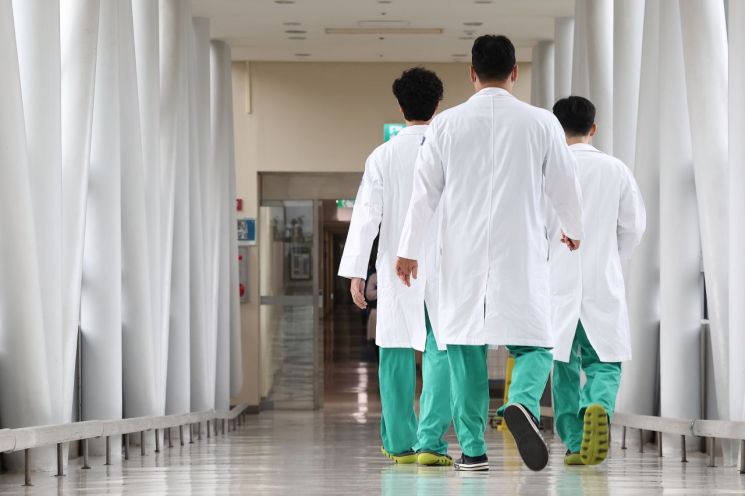
The Supreme Court has ruled that emergency medicine residents must be paid overtime and night shift allowances for work exceeding 40 hours per week. The court determined that an implicit comprehensive wage agreement is difficult to establish without a separate contract.
The Supreme Court’s Third Division (Presiding Justice Oh Seokjun) on September 11 upheld a lower court ruling ordering the Asan Foundation to pay approximately 169 million to 178 million won each to three emergency medicine residents, including Bae, who worked at Asan Medical Center in Seoul. The court dismissed the defendant's appeal, finalizing the decision in favor of the plaintiffs.
The three emergency medicine residents at Asan Medical Center in Seoul, including Bae, claimed that they worked over 80 hours per week during their training from 2014 to 2017 but did not receive additional compensation for the extra work. They demanded overtime and night shift allowances. The hospital argued that the residents were not employees but rather "trainees" or "students," and therefore the Labor Standards Act did not apply to them. The hospital also claimed that a comprehensive wage system was in place.
The key issues were whether the residents qualified as employees and whether an implicit comprehensive wage agreement could be recognized. Both the first and second instance courts found that the residents were employees under the Labor Standards Act, as they provided work according to the hospital’s medical plans and received wages in return, even though they were also in training.
Additionally, the courts found that there were no specific provisions regarding a comprehensive wage system in the training contract, and thus the comprehensive wage system did not apply. The appellate court determined that overtime should be calculated based on a 40-hour workweek, not 80 hours, and ordered approximately 169 million won to be paid to Bae and 178 million won each to the other two residents.
The Supreme Court also found no legal error in the lower court’s decision and dismissed the appeal. The court stated, "The residents continuously examined patients at intervals as short as a few minutes during their working hours," and held that, since there was no contract, the lower court was correct in not recognizing an implicit comprehensive wage agreement.
© The Asia Business Daily(www.asiae.co.kr). All rights reserved.
![Clutching a Stolen Dior Bag, Saying "I Hate Being Poor but Real"... The Grotesque Con of a "Human Knockoff" [Slate]](https://cwcontent.asiae.co.kr/asiaresize/183/2026021902243444107_1771435474.jpg)















