A Festival of Light, Art,
and K-Drama Enjoyed by Citizens and Visitors Alike
Jinju City in South Gyeongsang Province announced on October 20 that its 16-day autumn festival season, which began with the opening of the Jinju Namgang Yudeung Festival on October 4 and continued through the Gaechun Arts Festival and the Korea Drama Festival, has concluded successfully.
This year’s festival, themed “Light, Art, and Drama,” attracted countless visitors from both Korea and abroad, once again proving Jinju’s status as the “capital of autumn festivals in Korea.” The Yudeung Festival focused on enhancing its content by integrating advanced technology with the traditional beauty of yudeung (lanterns).
In particular, the exhibition became even more diverse with newly produced lanterns and expanded exhibition themes, including displays both on water and land. The nighttime scenery, harmonized with the lighting of Jinju Fortress, received an enthusiastic response. The festival venue was transformed into a stage of light where tradition and modernity coexisted, featuring 3D hologram lanterns installed on the Namgang River and Jinju Fortress, citizen-participation lanterns, lanterns of Hamo and Ayo waving their hands, and lanterns greeting visitors with Cheongsachorong (traditional Korean lanterns).
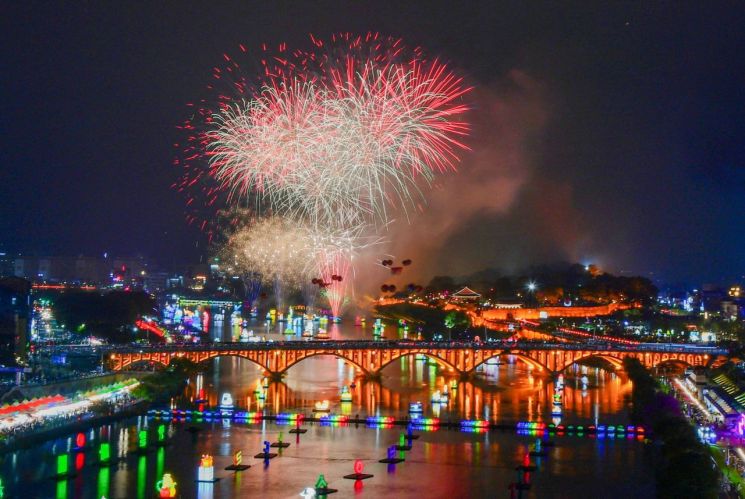
This year, the newly renovated First Section Bridge, known as the “New Baedari,” became the central space of the festival against the backdrop of the Namgang nightscape. Floating lanterns reproducing the artworks of global artists, also installed here, elevated the overall artistic quality of the exhibition and provided visitors with a wide variety of high-level attractions, garnering a positive response.
The “Minecraft” and “Darth Vader Corps” lanterns, installed on the hill of Yeongnam Pojongsa at Jinju Fortress, were special exhibitions targeting children and teenagers, naturally becoming popular photo spots for families. By incorporating familiar characters and storytelling, these exhibitions not only brought joy to children but also strengthened the festival’s customized content for different generations.
The silk lantern tunnel installed at the Jinju Battle History Park became a signature photo zone of the festival. The vibrant silk lanterns attracted visitors to stop and take photos, making it a popular spot especially among families and younger generations for sharing on social media. This space further enriched the festival atmosphere and served as a key nighttime attraction.
The fireworks drone show, introduced for the first time this year, added depth and brilliance to the existing drone show, creating breathtaking scenes in the sky and leaving a lasting impression on the audience.
Celebrating its 74th year, the Gaechun Arts Festival took a leap forward as an arts festival embracing Jinju’s tradition, modernity, and the sensibilities of new generations. The festival harmonized the depth of traditional arts with the emotions of young artists, establishing itself as a “festival connecting generations through art.”
This festival, held throughout the Jinju Fortress area, brought together artists from across the country for national-level competitions in literature, fine arts, Korean traditional music, and dance, turning Jinju into a stage for a grand celebration of the arts.
Notably, by introducing preliminary rounds outside Jinju-such as the National Calligraphy Competition (Suncheon), Namgaram Song Festival (Mungyeong), and National Poetry Recitation Contest (Daegu)-the Gaechun Arts Festival solidified its status as a comprehensive arts festival of Korea. The literature category also expanded its preliminary rounds outside Jinju, fostering exchanges with artists from various regions and contributing to the expansion of the cultural arts base.
Efforts to improve visitor satisfaction were also evident. The number of booths was significantly reduced to create a more comfortable environment, and the “Circus” performance revived the nostalgic atmosphere of the traditional marketplace.
The cultural and artistic performances were more abundant than ever. Each association in Korean traditional music, dance, music, and entertainment presented unique planned performances. In particular, stages recreating the music of composers closely connected to Jinju showcased the city’s pride as a cultural and artistic hub and received high praise.
Busking performances continued in front of the well plaza at Jinju Fortress and at the Jinju Battle History Park, offering audiences a variety of stages.
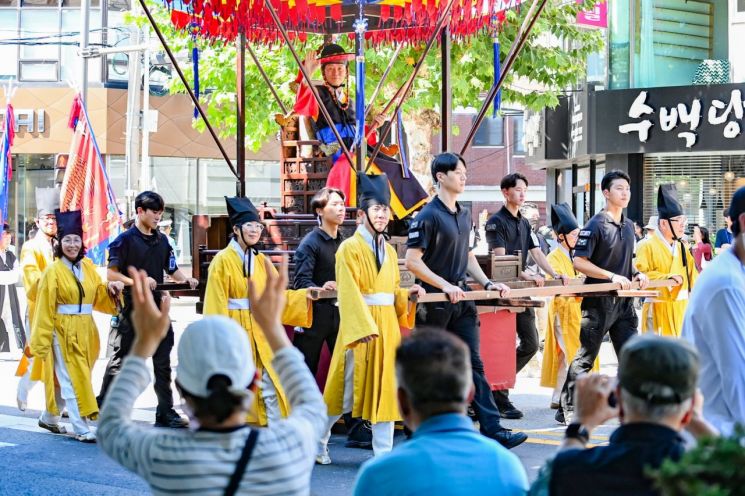
The 18th National Parade Contest was held on the largest scale ever, with 38 teams participating (including 7 teams from outside Jinju and 11 new teams), an increase from last year. The addition of university arts clubs and professional cosplay teams brought youth and vitality to the festival.
In addition, the festival offered 17 types of traditional activity experiences, such as Jinju Fortress Time Travel, making straw lucky bags, making saekki gogi (traditional rope), weaving, and archery, transforming it into a participatory festival that could be enjoyed by children and families alike.
At the Seoje and Gaeje ceremonies, the “Military Marching Order and Departure Declaration Ceremony” and the reenactment of the lighting of the beacon fire at Mangjinsan Beacon Mound were held, reminding visitors of Jinju’s historical symbolism and cultural heritage, and leaving a deep impression. The Gaechun Arts Festival is now evolving beyond a traditional arts festival into a venue for cultural exchange connecting generations. This year’s festival, blending the resonance of tradition and the passion of youth, made Jinju’s autumn nights more vibrant and dynamic, demonstrating new possibilities for “Jinju united through art.”
In April, Jinju City was selected for the “2025 Culture and Tourism Festival Task Support” project hosted by the Korea Tourism Organization and, for the first time during the festival, introduced a “smart map” service that allowed real-time checking of crowd density and event information at a glance.
This service guided visitor movement and provided easy access to event information, greatly enhancing convenience for first-time festival attendees. Notably, about 74% of users were identified as out-of-town tourists, making it a valuable information gateway for those visiting the region for the first time.
Jinju City also mobilized more than 16,000 personnel, including police, firefighters, and volunteers, to ensure safety as the top priority in festival operations. This year, the operation of the “Jinju October Festival Integrated Situation Room” was further systematized, strengthening safety management capabilities.
Even in the autumn rain, Jinju City swiftly mobilized all administrative resources to ensure the “October Festival” could proceed safely. When mud and puddles formed in some areas of the festival due to rain, heavy equipment such as excavators and dump trucks, along with personnel, were deployed to repair walkways. Non-slip mats were installed and additional safety personnel were assigned to prevent accidents.
A city official stated, “The safety of citizens and visitors is our top priority,” adding, “We are thoroughly managing safety by monitoring weather conditions in real time during the festival, operating alternative programs and recovery systems in case of rain, and maintaining strict safety management.”
Mayor Jo Gyu-il said, “Jinju’s festivals have now grown into celebrations enjoyed by the world, beyond just Korea,” and added, “Just as the lanterns convey the light of peace, Jinju will continue to develop as a city that connects with the world through culture.”
Meanwhile, Jinju’s October festival was not just a local event, but a stage that showcased Jinju as a cultural city on the global stage. Several international delegations-including those from Brazil, Thailand, the city of Tourette in France, and the Dortmund Youth Choir from Germany-visited Jinju, expressing great interest in the uniqueness and cultural value of Jinju’s lanterns, arts, and drama.
© The Asia Business Daily(www.asiae.co.kr). All rights reserved.
![Clutching a Stolen Dior Bag, Saying "I Hate Being Poor but Real"... The Grotesque Con of a "Human Knockoff" [Slate]](https://cwcontent.asiae.co.kr/asiaresize/183/2026021902243444107_1771435474.jpg)
















