King Charles III, the nominal head of the Church of England, will pay a state visit to the Vatican from October 22 to 23 (local time) and meet with Pope Leo XIV.
On October 17 (local time), Buckingham Palace announced that King Charles III and Queen Camilla will make a state visit to the Vatican from October 22 to 23 and attend an ecumenical prayer service at the Sistine Chapel on October 23. According to British media, this will be the first time in about 500 years that the head of the Church of England will pray together with the Catholic Pope. The official split from the Roman Catholic Church occurred in 1534 when King Henry VIII of England issued the Act of Supremacy.
Since the Reformation, the first official visit to the Vatican by a British monarch was made by Queen Elizabeth II, the mother of Charles III, in 1961.
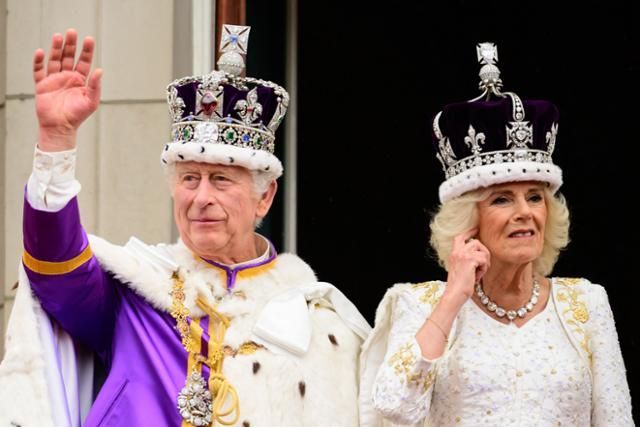
King Charles III had originally planned to visit the Vatican in April of this year, but the trip was postponed due to health issues of Pope Francis, who has since passed away. Instead, Charles III visited Italy and paid a brief visit to Pope Francis. During this visit, King Charles III will focus on environmental issues together with Pope Leo XIV. The service will be held under the theme of "Protection of Creation," and both will also attend a conference on sustainability. The service will be co-officiated by Pope Leo XIV and Stephen Cottrell, the Archbishop of York.
During this visit, King Charles III will also visit the Basilica of Saint Paul Outside the Walls in Rome. This basilica was historically supported financially by the kings of England. There, King Charles III will receive the title of "Royal Confrater" and will be presented with a special chair adorned with his coat of arms. This chair will be preserved in the basilica for future British monarchs.
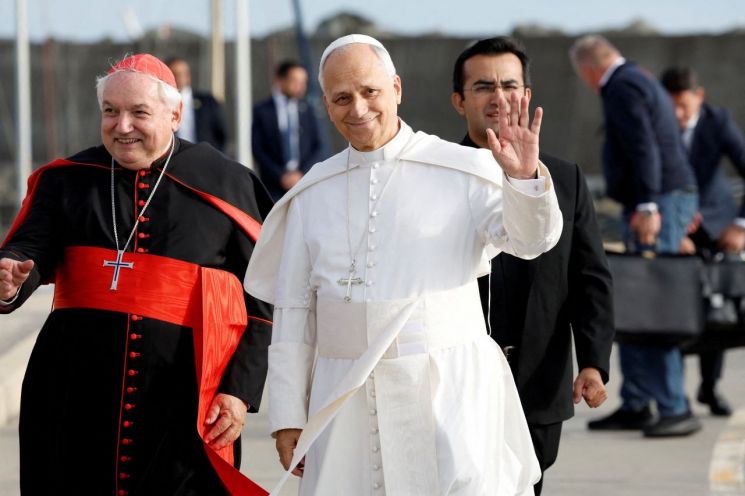
A spokesperson for the Church of England explained, "The title to be conferred this time does not impose any obligations on the King and does not change his status as head of the Church of England," adding, "It is a tribute to his efforts to bring together believers and people."
Meanwhile, the Catholic Church and the Church of England differ in several doctrines, including the ordination of female priests, clerical celibacy, and papal authority. In the 16th century, Henry VIII of England broke with the Roman Papacy after the Pope refused to grant him a divorce. Henry VIII issued the Act of Supremacy, declaring that the supreme authority of the church in England belonged not to the Pope but to the King himself. As a result, all control over church property, appointments, and doctrinal matters was transferred to the monarch. This led to the birth of the Church of England, also known as the Anglican Church.
© The Asia Business Daily(www.asiae.co.kr). All rights reserved.


















