Stabilization in the Field as Medical Residents Return
Monthly 200 Billion Won in Subsidies to End with Dissolution of Emergency Medical System
Legal Basis for Telemedicine to Disappear
The government will lower the "Severe" alert level for healthcare disaster emergencies, which was issued due to conflicts between the medical community and the government, to either "Caution" or "Attention." This decision is based on the assessment that the medical field is regaining stability, as a significant number of medical residents returned to their training programs last month. However, hospitals are expressing concerns that they may face operational difficulties if the health insurance subsidies and other financial support, which have been provided to maintain the emergency medical care system, are discontinued.
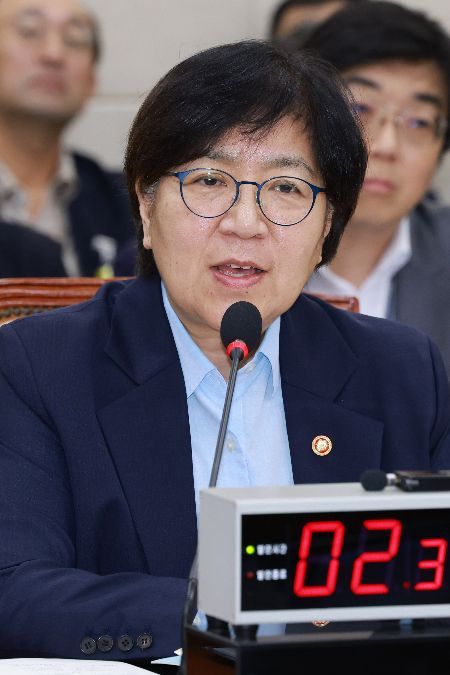 On the 14th, at the National Assembly in Yeouido, Yeongdeungpo-gu, Seoul, during the Health and Welfare Committee's audit of the Ministry of Health and Welfare, Minister of Health and Welfare Jung Eun-kyung is responding to lawmakers' questions. Photo by Yonhap News
According to the Ministry of Health and Welfare and the medical community on October 16, Minister of Health and Welfare Jung Eun-kyung stated at the National Assembly’s Health and Welfare Committee audit on October 14 that a crisis evaluation meeting is planned for this week or next week, in response to a question from Assemblywoman Nam Insoon of the Democratic Party of Korea about the timing of lowering the healthcare disaster emergency alert. Minister Jung also mentioned that plans have been prepared for actions to be taken once the alert is lifted.
The Ministry of Health and Welfare raised the healthcare disaster emergency alert to the highest level, "Severe," in February last year after medical residents collectively resigned in protest against the policy to increase medical school admissions by 2,000. This highest alert level has been maintained for about one year and eight months. The healthcare emergency alert system consists of four levels: Attention, Caution, Warning, and Severe. Excluding infectious disease situations such as COVID-19, this was the first time the "Severe" level had ever been issued.
During this period, the government established the "Central Disaster and Safety Countermeasures Headquarters for Collective Action by Doctors," chaired by the Prime Minister. All relevant ministries and the 17 metropolitan and provincial governments nationwide launched an all-out government response system, focusing on minimizing medical service gaps. Emergency medical care systems were activated for hospitals experiencing reduced outpatient, inpatient, and surgical volumes. To support critical and emergency inpatient care and maintain the emergency medical system, reimbursement rates were temporarily increased. Approximately 200 billion won (about 200 million USD) per month from health insurance funds and various budgets were invested on a large scale. According to Assemblywoman Kim Mi-ae of the People Power Party, a total of 1.806 trillion won was allocated to tertiary and general hospitals from February last year to June this year.
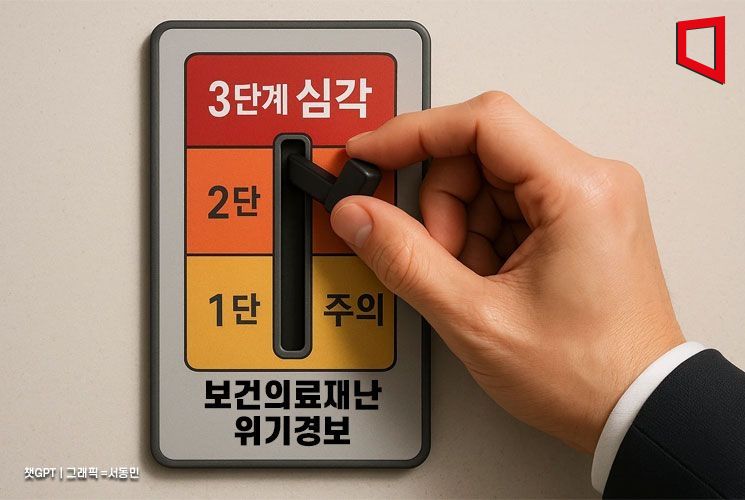
If the healthcare emergency alert level is downgraded, the first step will be the dissolution of this Central Disaster and Safety Countermeasures Headquarters, and the weekly meetings will also be discontinued. Once the government's emergency medical care system is lifted through a resolution of the Health Insurance Policy Deliberation Committee, the various subsidies and additional reimbursements that have been provided to alleviate hospital management difficulties will also be discontinued. A representative from a tertiary hospital pointed out, "Some hospitals in the provinces have not yet had all their residents return, and even hospitals in Seoul and the metropolitan area are incurring additional labor costs due to improvements in resident training environments and the expansion of physician assistant nurses. If the subsidies are discontinued, we will be significantly affected."
There will also be changes to telemedicine services, which had been fully permitted without any separate designation or application process. Under current law, telemedicine between doctors and patients is only temporarily allowed during healthcare emergency situations. If the "Severe" alert level is lifted, the legal basis for this temporary full permission will also disappear. Patients who have been using telemedicine, such as those living in remote areas or elderly individuals with mobility issues, may face inconvenience as they will be required to return to in-person consultations.
A Ministry of Health and Welfare official stated, "There have been calls in the National Assembly to end the emergency medical care system due to the continued injection of health insurance funds. We also assess that the volume of medical services has recovered to a considerable extent, and that the emergency medical system operated stably during the Chuseok holiday period." The official added, "We are reviewing ways to continue supporting essential areas such as critical and emergency medical care that are absolutely necessary for maintaining the essential healthcare system."
© The Asia Business Daily(www.asiae.co.kr). All rights reserved.


















