All of Seoul and 12 Areas in Gyeonggi Designated as Land Transaction Permit and Regulated Zones
Democratic Party: "We Will Support Government Measures... Need to Monitor Their Effectiveness"
People Power Party: "A Policy That Harms Youth and Ordinar
The announcement of the October 15 real estate policy by the Lee Jaemyung administration has prompted cautious and concerned responses from both the ruling and opposition parties.
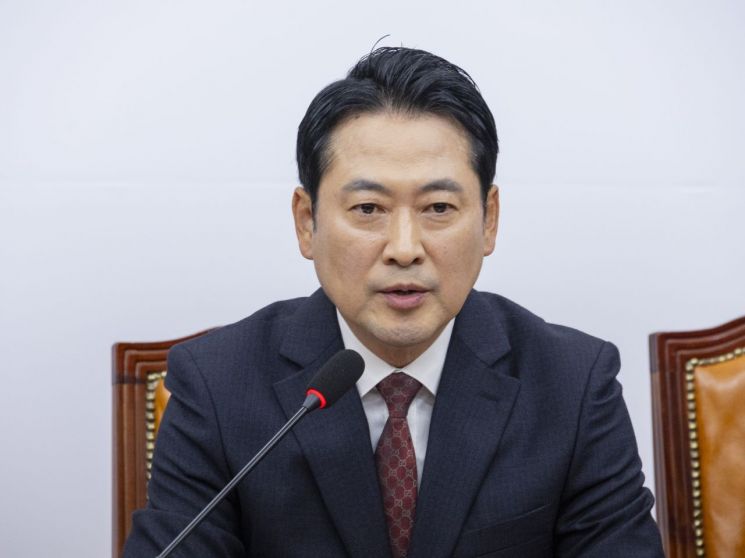
On October 15, Jang Donghyeok, leader of the People Power Party, held an emergency press conference at the National Assembly, labeling the new real estate measures as "Moon Jae-in administration Season 2, housing price surge Season 2." He criticized the policy, stating, "This is not a measure to control housing prices, but rather a measure that will ruin them."
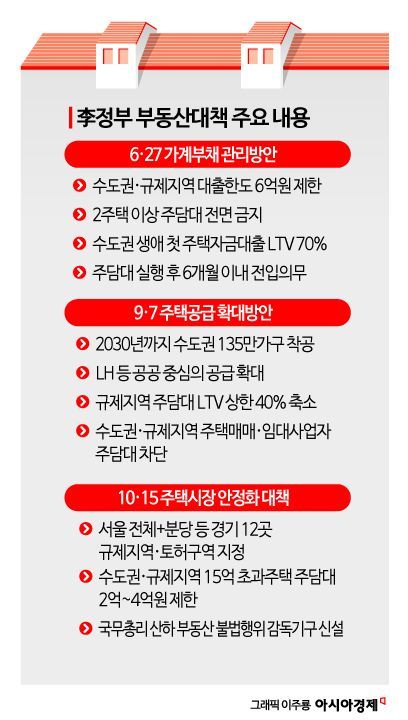
On this day, the government designated all of Seoul and 12 areas in southern Gyeonggi Province as land transaction permit zones, regulated areas, and speculative overheating districts. This move aims to reduce real estate lending and impose various restrictions during transactions. The limit for mortgage loans was lowered to 400 million won for homes priced over 1.5 billion won and up to 2.5 billion won, and to 200 million won for homes priced over 2.5 billion won.
Jang argued, "The core issue is the distorted perception of the leftist administration, which views real estate policy not as an economic pillar but as speculation and a game of hot potato," adding, "This will result in a record of 31 losses out of 31 attempts."
He specifically predicted that these measures would completely block the housing ladder for ordinary citizens. A People Power Party official remarked, "Loan restrictions will not significantly affect high-end homebuyers, so the damage will fall on ordinary people," and criticized, "Through the most stringent regulation, the so-called 'final boss' of the land permit system, the housing ladder for those without homes will be completely cut off."
There are also predictions that this real estate policy will have a significant impact not only on the sales market but also on the rental and monthly lease markets. With various tax disadvantages such as increased acquisition and capital gains taxes for multiple home owners, and the exclusion from long-term holding special deductions, analysts believe this could lead to a shift from lump-sum deposits to monthly rent or increases in monthly rent. A People Power Party official pointed out, "This is entering another vicious cycle, just like during the Moon Jae-in administration."
The opposition also cited the lack of housing supply measures as a problem. With all of Seoul now designated as a regulated area, expectations for private sector-led redevelopment and reconstruction have diminished. An opposition official observed, "Through these strong regulations, the government has effectively admitted there will be no housing supply during its term," and predicted, "Since this blocks opportunities for asset accumulation among the younger generation, the political repercussions will be significant, especially among centrist voters."
The Democratic Party of Korea is taking a cautious stance. Some predict that the outcome of next year's local elections will hinge on the results of this real estate policy, so the party is closely monitoring the market reaction. Moon Geumjoo, floor spokesperson for the Democratic Party, said, "We will do our utmost to support the government's measures so they can be implemented effectively," but refrained from further comment. A Democratic Party lawmaker on the National Assembly's Land, Infrastructure and Transport Committee stated, "Introducing the land permit system does not mean transactions will not occur," and added, "Since the government has put forward these measures, we need to watch closely to ensure they are implemented properly."
© The Asia Business Daily(www.asiae.co.kr). All rights reserved.
![Clutching a Stolen Dior Bag, Saying "I Hate Being Poor but Real"... The Grotesque Con of a "Human Knockoff" [Slate]](https://cwcontent.asiae.co.kr/asiaresize/183/2026021902243444107_1771435474.jpg)
















