"China’s Suspension of U.S. Soybean Imports Is an Act of Economic Hostility"
Tensions Escalate Ahead of Leaders’ Summit at the End of the Month
U.S. President Donald Trump strongly criticized China's suspension of imports of American soybeans and warned of possible retaliation. Just two days after stating, "Everything will be fine with China," Trump has once again issued a hardline message toward Beijing. As he prepares for trade talks with Chinese President Xi Jinping at the end of this month, tensions are escalating in a fierce battle to strengthen negotiating positions.
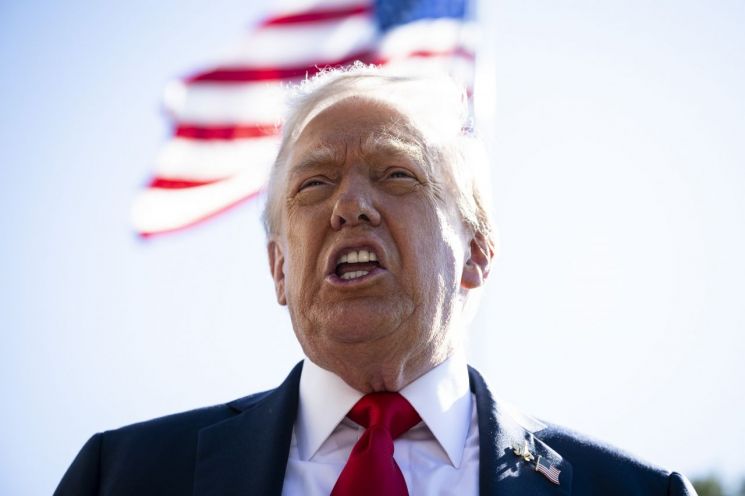
On October 14 (local time), President Trump posted on his self-created social networking service, Truth Social, "China's deliberate refusal to purchase our soybeans is an act of economic hostility that makes life difficult for American farmers," and warned, "As a retaliatory measure, we could suspend business with China related to edible oil and other trade items."
He further emphasized, "We can easily produce edible oil ourselves," adding, "There is no need to purchase it from China."
Previously, after China imposed export controls on rare earth elements targeting the United States, President Trump immediately responded on October 10 by announcing a 100% additional tariff on Chinese products starting in November. The conflict between the two countries has also spread to the shipbuilding and shipping sectors. On October 14, the Chinese Ministry of Commerce banned domestic companies and individuals from engaging in transactions or cooperation with five U.S. subsidiaries of Hanwha Ocean, citing the move as a measure to strengthen national security. As both the U.S. and China have raised port fees in an effort to curb each other's shipbuilding and shipping industries, tensions have also spilled over to Korean companies strengthening cooperation with the U.S. in shipbuilding. With the U.S.-China summit scheduled at the end of this month during the Asia-Pacific Economic Cooperation (APEC) summit in Gyeongju, South Korea, analysts say both sides are fiercely competing to secure the upper hand in trade negotiations.
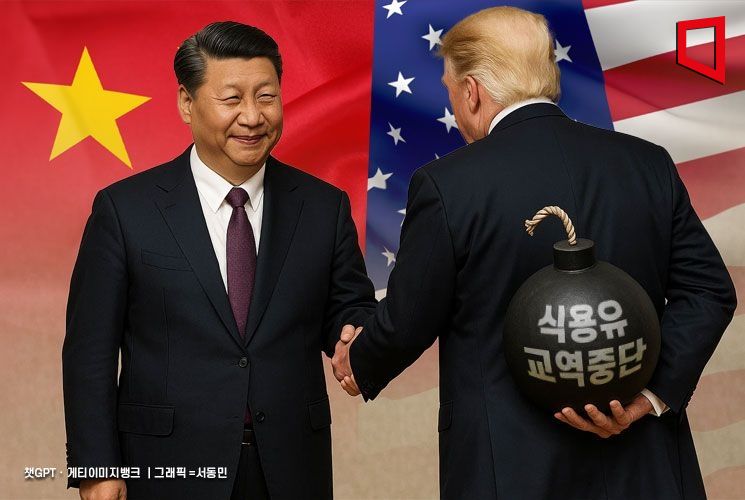
Just two days after announcing additional tariffs on China, President Trump shifted to a conciliatory tone on October 12, saying, "We are trying to help China, not hurt it." However, only two days later, he returned to a hardline stance. This is seen as a strategic move to both appease his core supporters among farmers and to strengthen his negotiating position ahead of the summit with President Xi.
Nevertheless, President Trump also expressed hope that U.S.-China negotiations could conclude smoothly. During a summit with Argentine President Javier Milei at the White House that day, he said, "We must be cautious with China, but we have a fair relationship with them. In the end, everything will be fine."
Trump administration officials also worked to ease concerns about a renewed escalation in trade tensions between the two countries. Jamieson Greer, the U.S. Trade Representative, said in a CNBC interview that senior working-level officials from both countries had met the previous day in Washington, D.C., stating, "We believe we can resolve these issues." He also indicated the possibility of a summit, saying that both leaders have "set aside time" for a meeting at the end of this month during the APEC summit.
Meanwhile, as President Trump alternates between tough rhetoric and conciliatory gestures in his characteristic hard-and-soft strategy against China, the markets have also experienced volatility. Following his conciliatory statement over the weekend that "everything will be fine," the New York stock market surged the previous day, but after his hardline remarks were reported, the gains were completely erased by the end of the session. On the New York Stock Exchange, the S&P 500 index and the Nasdaq index fell by 0.16% and 0.76%, respectively, while only the Dow Jones index rose by 0.44%, resulting in a mixed close.
© The Asia Business Daily(www.asiae.co.kr). All rights reserved.
![Clutching a Stolen Dior Bag, Saying "I Hate Being Poor but Real"... The Grotesque Con of a "Human Knockoff" [Slate]](https://cwcontent.asiae.co.kr/asiaresize/183/2026021902243444107_1771435474.jpg)
















