China Sanctions Hanwha Ocean's U.S. Subsidiaries Citing National Security
U.S.-China Power Struggle Intensifies Ahead of Gyeongju Summit
Stock Market Swings Between Confrontation and Conciliation
All three major indices on the New York Stock Exchange fell simultaneously on October 14 (local time). Investor sentiment was shaken after the Chinese government imposed sanctions on the U.S. subsidiaries of Hanwha Ocean, a company leading Korea-U.S. cooperation in shipbuilding, bringing U.S.-China trade tensions back to the forefront. As both countries exchange direct confrontations and conciliatory gestures ahead of their summit in Gyeongju at the end of this month, the stock market is also fluctuating between extremes.
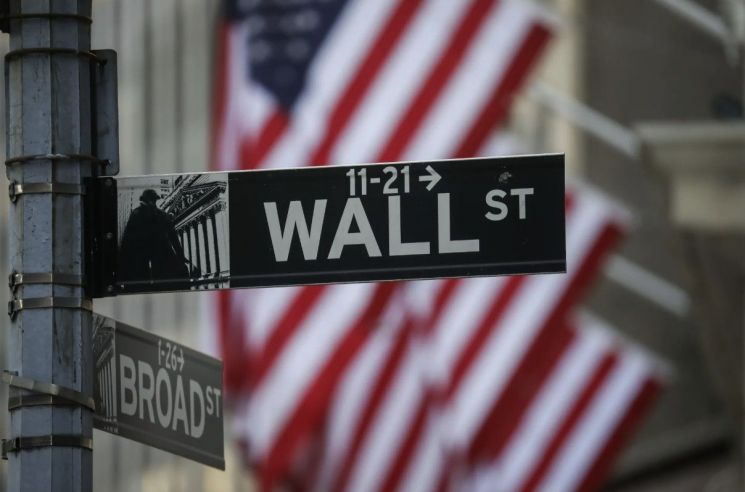
As of 9:42 a.m. on the New York Stock Exchange that day, the Dow Jones Industrial Average, which focuses on blue-chip stocks, was down 504.16 points (1.09%) from the previous trading day at 45,563.42. The S&P 500 Index, which tracks large-cap stocks, was down 84.5 points (1.27%) at 6,570.22, while the Nasdaq Composite Index, which focuses on technology stocks, had dropped 425.766 points (1.88%) to 22,268.841.
On this day, China’s Ministry of Commerce announced that it would prohibit its domestic companies and individuals from trading or cooperating with five U.S. subsidiaries of Hanwha Ocean. China explained that this measure was to strengthen national security. A spokesperson for the Ministry of Commerce claimed, “Hanwha Ocean’s U.S. subsidiaries supported and cooperated with U.S. government investigations, thereby harming China’s sovereignty, security, and development interests.”
Scott Besant, U.S. Treasury Secretary, criticized the move in an interview with the Financial Times, saying that China’s sanctions against U.S. subsidiaries signal a vulnerable economy and that China “wants to bring down all other countries together.”
This action by China comes amid renewed escalation of trade tensions between the U.S. and China. The U.S. implemented additional tariffs and port entry restrictions starting today under Section 301 of the Trade Act, claiming that Chinese shipping and shipbuilding companies are engaging in unfair competition through government subsidies. In response, the Chinese government imposed special entry fees on U.S. vessels.
With the U.S.-China summit scheduled in Gyeongju at the end of this month, the two countries are engaged in a fierce standoff, causing the stock market to experience sharp fluctuations with every major statement or measure. Previously, on October 10, President Trump announced 100% additional tariffs on Chinese rare earth exports starting next month in retaliation for China’s export controls, resulting in a $2 trillion drop in market capitalization in a single day on the New York Stock Exchange. However, when President Trump issued a conciliatory message on October 12, stating, “I want to help China, not hurt it,” all three major U.S. stock indices rose by more than 1-2% the following day, October 13.
Wall Street expects market volatility to remain high going forward. Florian Ielpo, Chief Macro Strategist at Lombard Odier Investment Managers, said, “This dramatic reversal shows how quickly sentiment can change,” and predicted, “Volatility will persist as the market remains vulnerable due to already high valuations.”
U.S. financial firms, which have entered the third-quarter earnings season this year, reported results that exceeded market expectations. JP Morgan announced that its third-quarter revenue reached $47.12 billion and net income was $14.39 billion (earnings per share (EPS) of $5.07), up 9% and 12%, respectively, from the same period last year. This surpassed expert forecasts compiled by LSEG (revenue of $45.4 billion, EPS of $4.84). Wells Fargo and Goldman Sachs also posted results that beat market expectations.
By sector, financial stocks are showing mixed trends despite strong earnings. Wells Fargo is up 2.88%, while JP Morgan and Goldman Sachs are down 3.61% and 4.98%, respectively. Technology stocks are also weak, with Nvidia down 3.96% and Oracle down 4.19%.
Government bond yields are falling. The yield on the 10-year Treasury note, the global benchmark for bond yields, is down 2 basis points (1bp = 0.01 percentage points) from the previous day at 4.03%. The yield on the 2-year Treasury note, which is sensitive to monetary policy, is also down 2 basis points from the previous day, trading at 3.49%.
© The Asia Business Daily(www.asiae.co.kr). All rights reserved.
![Clutching a Stolen Dior Bag, Saying "I Hate Being Poor but Real"... The Grotesque Con of a "Human Knockoff" [Slate]](https://cwcontent.asiae.co.kr/asiaresize/183/2026021902243444107_1771435474.jpg)















