Hyunjeong Lee of Sejong City Council Urges Immediate Action
on School Violence Against Students with Borderline Intellectual Functioning
Calls for Stronger Institutional Support
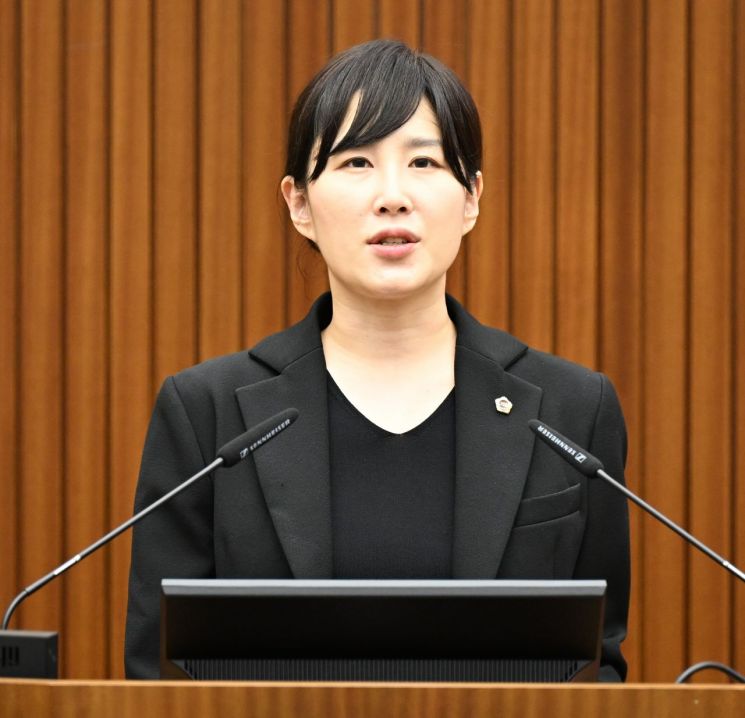
The urgency of strengthening institutional support and addressing school violence against students with borderline intellectual functioning has been raised.
Hyunjeong Lee, a Sejong City Councilor and licensed social worker (Level 1), stated in a free speech session on October 13, "Students with borderline intellectual functioning fall within the IQ range of 71 to 84, placing them in a gray area where they are neither classified as disabled nor non-disabled. However, since they are not legally recognized as eligible for special education, most of them remain in regular classrooms," she pointed out. "Despite facing significant difficulties in academic performance, forming relationships, communication, and emotional regulation, institutional protection remains insufficient."
According to a survey by the Ministry of Education, 4.6% of elementary school students were identified as having borderline intellectual functioning, and among them, 67.9% were found to fall short of basic academic achievement standards.
Assemblywoman Lee emphasized, "This is not simply a matter of academic achievement; it is an indicator revealing overall vulnerability in social and emotional development. The characteristics of borderline intellectual functioning make these students more susceptible to severe harm when school violence occurs. There are also blind spots in the system for remedying damages, which fail to encompass these students."
She also pointed out the limitations of the current school violence response system. "Although a seven-day separation measure can be implemented immediately after a school violence report, afterward, the victim must wait for either an emergency measure by the principal or a decision by the school violence review committee. As a result, there are cases where the victim and perpetrator remain in the same classroom for several months," she explained. "In particular, if there is a counter-report, protective measures for the victim are suspended, leading to unjust situations where the victim is mistakenly treated as the perpetrator."
Assemblywoman Lee also criticized delays in the review process. "While the Ministry of Education recommends that school violence cases be reviewed within four weeks of a report, in reality, about 30% nationwide and 48% in the Sejong City Office of Education exceed this deadline," she said. She also pointed out that the number of school violence reports increases every year, yet there are no dedicated lawyers, and a shortage of staff leaves victims exposed to secondary harm amid anxiety and fear.
To improve the situation for students with borderline intellectual functioning who fall into institutional blind spots, she proposed: establishing a robust operational system in line with the implementation of the Student-Centered Integrated Support Act; introducing a system of school violence support personnel for students with disabilities; and supplementing and improving guidelines for protecting victims of counter-reports in school violence cases.
Assemblywoman Lee stressed, "We can no longer turn a blind eye to the reality that students with borderline intellectual functioning are being left in institutional blind spots," adding, "I hope Sejong City will establish a victim-centered protection principle for school violence and become a city known for educational safety."
© The Asia Business Daily(www.asiae.co.kr). All rights reserved.
![Clutching a Stolen Dior Bag, Saying "I Hate Being Poor but Real"... The Grotesque Con of a "Human Knockoff" [Slate]](https://cwcontent.asiae.co.kr/asiaresize/183/2026021902243444107_1771435474.jpg)















