Starting with the Protection of Abandoned Animals,
Proposing a Shift to Coexistence-Oriented Animal Welfare
On October 13, the Busan Institute of Urban Affairs published a BDI Policy Focus titled "Animal Welfare in Busan: Beyond Protection, Toward Coexistence," in response to the paradigm shift in animal policy.
This report identifies the transition from a "protection-centered" to a "welfare-centered" approach as a core task, emphasizing the need to establish a "Busan-type integrated animal welfare model" that begins with the protection of abandoned animals.
With the new government shifting the fundamental direction of animal policy from "protection" to "welfare" through its national agenda, a comprehensive policy is being pursued focusing on four key areas: strengthening the policy foundation for animal welfare, reducing the financial burden of veterinary care for companion animals, promoting a healthy pet culture, and fostering related industries.
Accordingly, animal policy is evolving beyond merely protecting animals from abuse or neglect, moving toward a welfare-centered approach that enhances the quality of life and happiness of animals.
In line with these changes, Busan City is also transforming its animal welfare administrative system by creating a new Companion Animal Division, developing the Cheolma Companion Culture Park, and hosting the first Animal Protection Festival as part of its organizational restructuring in the first half of 2025. The Busan Institute of Urban Affairs assessed this trend as a significant turning point, expanding from administration-led protection policies to citizen-participatory welfare policies.
The report recommends, "Animal welfare policy should start with the protection of abandoned animals, which is the most vulnerable area," and stresses the need to establish an institutional foundation and build public trust through this approach. It also identifies the strengthening of animal welfare as a prerequisite for spreading a companion animal culture and establishing a foundation for the companion animal industry.
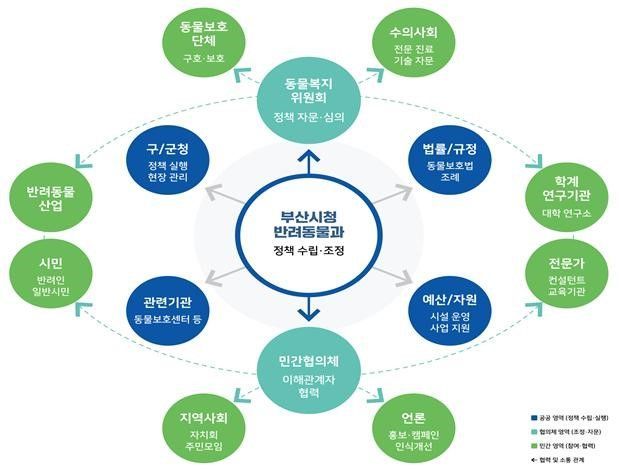
In particular, the report proposes a "Busan-type integrated animal welfare model" based on collaborative governance involving the public sector, private sector, and civil society.
This model consists of a four-stage roadmap: establishing governance, revitalizing grassroots organizations, building a cyclical system of rescue-temporary care-adoption-settlement, and promoting an adoption culture linked to the city's identity.
The report emphasizes the need to move away from administration-centered protection policies toward coexistence-oriented welfare policies created together with citizens. To this end, it highlights the importance of raising awareness through educational, cultural, and festival programs, as well as fostering an inclusive urban culture where both pet owners and non-pet owners can participate.
Jang Jihyun, a research fellow at the Busan Institute of Urban Affairs, stated, "Animal welfare is no longer a concern for just a few, but a shared value for all citizens," adding, "Through the Busan-type integrated model, which begins with the protection of abandoned animals, we must establish a sustainable urban foundation where people and animals can coexist."
© The Asia Business Daily(www.asiae.co.kr). All rights reserved.

















