Supreme Court: "Imposing Water Supply Facility Contribution Fees in Redevelopment Zones Is Justified"
Incheon City has achieved a final victory in a seven-year legal battle with Korea Land and Housing Corporation (LH) over the imposition of water supply facility contribution fees within redevelopment zones.
On October 13, the city announced that it had won the Supreme Court appeal in the lawsuit filed by LH seeking to cancel the imposition of water supply facility contribution fees. This Supreme Court ruling is expected to serve as an important precedent, clearly establishing that, under the Urban Renewal Act, the project implementer is responsible for the costs of installing water supply facilities within redevelopment zones, thereby recognizing the legitimacy of facility contribution fees imposed by local governments.
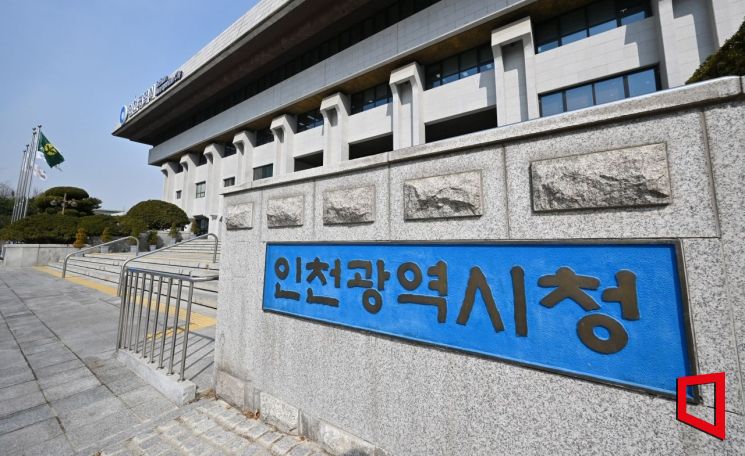
The lawsuit began in October 2018 when Incheon City imposed facility contribution fees on LH, the implementer of a residential environment improvement project, and LH filed a lawsuit to cancel the imposition.
In the first trial, the city prevailed. However, in the second trial, the court accepted LH's argument that "since the project implementer directly installed water supply facilities within the redevelopment zone, this is equivalent to paying the causative party contribution under Article 71 of the Water Supply Act, and thus, imposing an additional facility contribution fee constitutes double imposition," resulting in a loss for the city.
Concerned that, if the second trial ruling became final, all facility contribution fees previously imposed on development project zones would be recognized as "double imposition," causing significant financial losses, the city appealed to the Supreme Court. The Supreme Court overturned the lower court's ruling and remanded the case to the Seoul High Court, siding with the city.
The Supreme Court stated, "For the installation of water supply facilities within redevelopment zones, the Urban Renewal Act takes precedence over the Water Supply Act," and further explained, "When the project implementer installs water supply facilities on the site, this fulfills a unique obligation stipulated by the Urban Renewal Act, and cannot be regarded as payment of the causative party contribution." Therefore, the court ruled that even if the local government imposes a separate facility contribution fee, it does not constitute double imposition.
An official from Incheon City commented, "This ruling reaffirms the 'beneficiary pays principle,' under which project implementers who benefit from development must share the costs of public infrastructure. We believe it will serve as an important legal standard for similar lawsuits involving local governments nationwide."
© The Asia Business Daily(www.asiae.co.kr). All rights reserved.
![Clutching a Stolen Dior Bag, Saying "I Hate Being Poor but Real"... The Grotesque Con of a "Human Knockoff" [Slate]](https://cwcontent.asiae.co.kr/asiaresize/183/2026021902243444107_1771435474.jpg)















