Amnesty International Investigates Cambodia for 18 Months
Identifies 53 Job Scam Detention Facilities... Interviews with Victims
"They Kept Beating Them with Electric Shock Batons"
"Job seekers across Asia and beyond are lured by promises of well-paid employment, only to end up in hellish labor camps run by tightly organized criminal syndicates. There, they are forced to commit fraud under the very real threat of violence." <Agn?s Callamard, Secretary General of Amnesty International>
Following the discovery of a South Korean university student who died of cardiac arrest caused by torture in Cambodia, a recent human rights report on Cambodia released by Amnesty International has drawn significant attention.
According to Amnesty International on October 12, the organization identified 53 fraudulent facilities in Cambodia over an 18-month investigation and published a 240-page report containing interviews with 58 survivors from eight countries, including nine children. The victims who participated in the interviews had either escaped or been rescued from these facilities, or had been released after their families paid ransom.
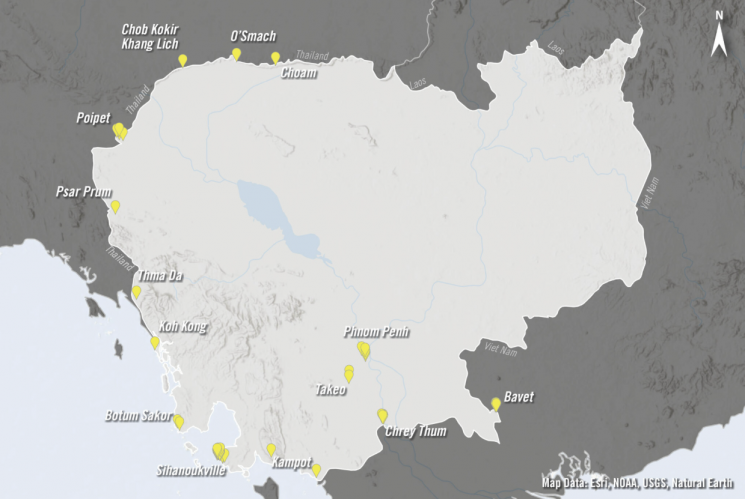 A map showing the locations of 53 fraudulent facilities recorded by Amnesty International. Amnesty International website
Amnesty International visited all but one of the 53 fraudulent facilities located in 16 towns and cities across Cambodia, as well as 45 additional locations strongly suspected of being similar scam operations. Many of these buildings had previously operated as casinos and hotels, but the report states that after Cambodia banned online gambling in 2019, criminal organizations-most of them Chinese-run-repurposed these sites.
Barbed Wire and Surveillance Cameras... Buildings Designed for Detention
The facilities are believed to have been designed for confinement, with surveillance cameras, barbed wire surrounding the outer walls, and numerous security personnel stationed on site. The report notes, "Security staff were armed with electric shock batons and, at times, firearms."
According to survivor testimonies, the majority of victims detained in these facilities were lured to Cambodia by job advertisements posted on social media platforms such as Facebook and Instagram. After being trafficked, they were forced to use these platforms to contact people and initiate conversations intended to defraud them.
They reported being coerced into so-called "pig-butchering" scams, which involve building trust with victims through romance scams, investment opportunities, or product sales, and then exploiting them financially through psychological manipulation.
The report states, "All but one of the survivors interviewed were victims of human trafficking, and every respondent was forced to perform labor under threat of violence." It concludes, "Amnesty International determined that in 32 cases, the survivors were victims of enslavement as defined by international law."
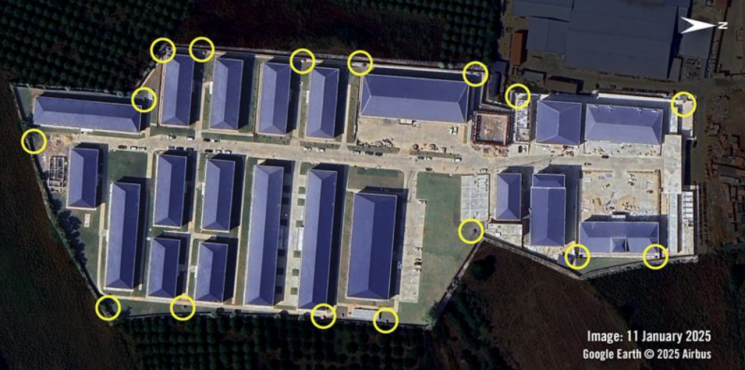 Locations suspected to be fraudulent facility buildings and guard posts (highlighted with yellow circles). Amnesty International website
"Locked in Dark Rooms and Tortured... Beaten with Electric Batons Until Bruised"
Of the 58 survivors, 40 testified that they suffered torture and mistreatment at the hands of facility managers. Some facilities reportedly had special rooms known as "dark rooms," designed to torture those who refused to work, failed to meet targets, or contacted authorities.
These survivors also frequently mentioned "deaths" occurring inside or near the facilities. One survivor said, "I saw a Vietnamese person being beaten by the facility bosses for about 25 minutes. They kept hitting him with electric batons until his body was completely bruised. They continued until he couldn't scream or get up." Amnesty International also confirmed that a Chinese child died inside one of the facilities.
Amnesty International: "Cambodian Authorities Turn a Blind Eye"... Possibility of Collusion Raised
The report suggests that more than two-thirds of the scam facilities identified by Amnesty International continued to operate even after police raids and "rescues," indicating possible involvement by Cambodian authorities. The report states, "In the case of a facility located in Botum Sakor, despite widespread media coverage of human trafficking and multiple police interventions to rescue victims, the facility remains open."
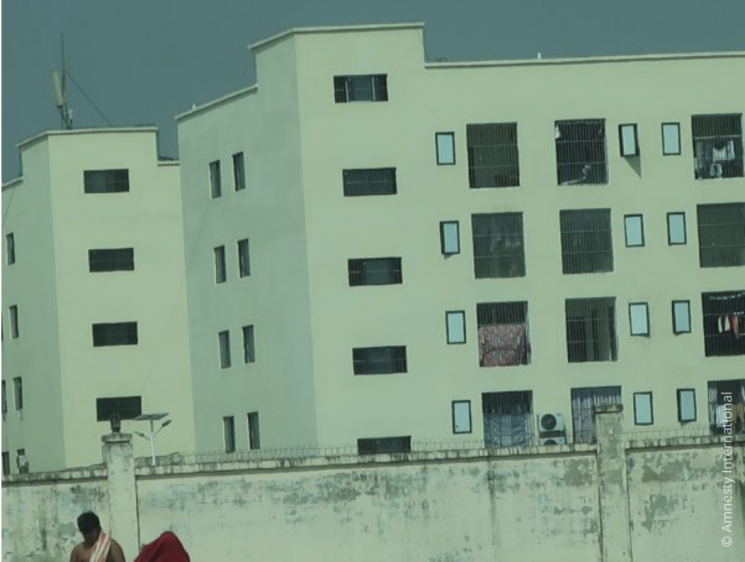 Behind the high walls of the detention facility, which are triple-layered with barbed wire or sharp metal fragments attached to iron wires, there are windows fitted with iron bars. International Amnesty homepage
It goes on to reveal, "Police failures to crack down are due to cooperation or collusion with the heads of scam facilities. For example, during multiple 'rescue' operations, police would often simply meet with managers or security guards at the facility entrance instead of conducting investigations inside."
The report notes that some survivors were discovered and beaten while secretly contacting the police for help. In particular, Cambodian authorities have reportedly targeted and suppressed those who speak out publicly about the scam facilities. Human rights organizations and journalists covering these facilities have been arrested, and the media outlet 'Voice of Democracy' was shut down in 2023.
Montse Ferrer, Regional Researcher at Amnesty International, stated, "The Cambodian government could have put an end to these abuses but chose not to. The documented police interventions appear to be little more than a 'show.' Cambodian authorities must ensure that no more job seekers are lured to this country by human traffickers to face torture, enslavement, and other human rights abuses."
© The Asia Business Daily(www.asiae.co.kr). All rights reserved.
![Clutching a Stolen Dior Bag, Saying "I Hate Being Poor but Real"... The Grotesque Con of a "Human Knockoff" [Slate]](https://cwcontent.asiae.co.kr/asiaresize/183/2026021902243444107_1771435474.jpg)


















