"Export Controls on Rare Earths Are Legitimate Measures"
U.S.-China Trade Tensions Flare Up Again
The Chinese government has issued a warning regarding the United States' move to impose additional sanctions, stating, "We do not seek confrontation, but if the U.S. insists, we will take corresponding measures."
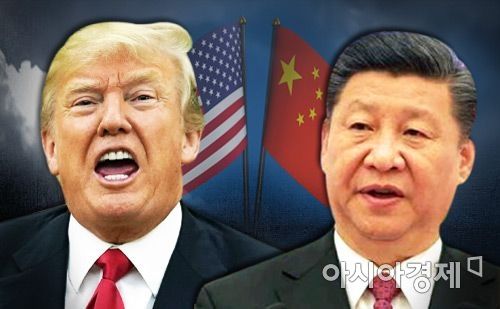 President Donald Trump of the United States (left) and President Xi Jinping of China
On October 12, the Ministry of Commerce of China released a statement in a Q&A format on its website, saying, "Recently, the United States has been continuously strengthening sanctions against China," and added, "China does not want a trade war, but we are not afraid of one either."
The Ministry of Commerce asserted, "China's export controls on strategic resources such as rare earths are legitimate measures in accordance with international norms," while criticizing, "In contrast, the United States has abused export controls under the pretext of national security and has unilaterally expanded its jurisdiction to cover numerous items, including semiconductors, equipment, and software."
The Ministry further pointed out, "The U.S. control list includes more than 3,000 items, whereas China’s export control list covers only about 900 items," and argued, "Such double standards undermine trust in negotiations."
The Ministry also stated, "Barely 20 days after the China-U.S. Madrid meeting in September, the United States added numerous Chinese companies to its sanctions list and invoked Section 301 of the Trade Act against the shipping and shipbuilding industries," claiming, "This disregards China’s concerns and goodwill."
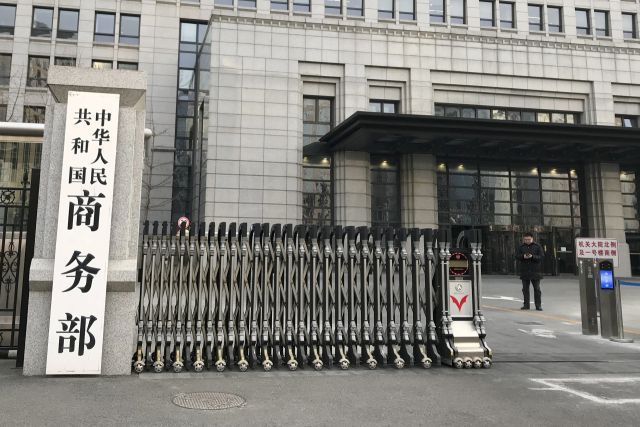
The Ministry emphasized, "The United States should respect the outcomes of negotiations and continue constructive dialogue in line with the direction agreed upon by the two heads of state during their phone call," and warned, "If not, China will respond firmly to defend its legitimate rights and interests."
Previously, China announced a suspension of imports of U.S. soybeans and, on October 9, unveiled strengthened export controls on rare earth alloys. Furthermore, starting October 14, China plans to impose a 'special port service fee' of 400 yuan (approximately 80,000 won) per ton on U.S.-related vessels.
In response, U.S. President Donald Trump stated on October 10 (local time) that he would impose an additional 100% tariff on top of the existing average 55% tariff on Chinese products, and stressed that key software export control measures would be implemented simultaneously.
President Trump had considered holding talks with Chinese President Xi Jinping at the Asia-Pacific Economic Cooperation (APEC) summit scheduled for later this month in Gyeongju, South Korea, but indicated the possibility of canceling the meeting, saying, "At this point, there is no reason to meet."
Since July, the United States and China have continued high-level negotiations to ease trade tensions, but with reciprocal sanctions being imposed, the level of tension is once again escalating.
© The Asia Business Daily(www.asiae.co.kr). All rights reserved.
![Clutching a Stolen Dior Bag, Saying "I Hate Being Poor but Real"... The Grotesque Con of a "Human Knockoff" [Slate]](https://cwcontent.asiae.co.kr/asiaresize/183/2026021902243444107_1771435474.jpg)
















