Italy's Ruling Party Moves to Ban Muslim Burqa and Niqab
Full-Body Garments Covering Women from Head to Toe Targeted
Bans Spread Across Europe Since France First Enacted Law in 2011
The ruling party in Italy is pushing for a bill that would ban Muslim women from wearing body-covering garments in public places. On October 8 (local time), Yonhap News cited Politico Europe, reporting that the Brothers of Italy (FdI), the ruling party led by Prime Minister Giorgia Meloni, plans to introduce a bill prohibiting the wearing of body or face coverings such as the burqa and niqab in public places nationwide.
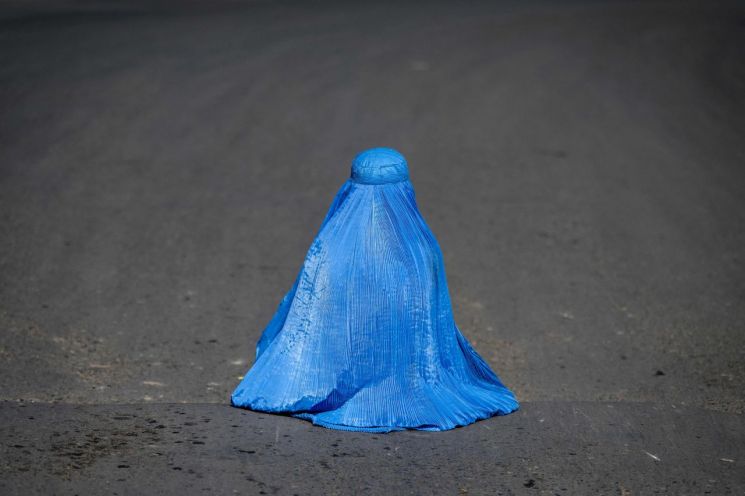 A photo of a woman wearing a burqa in Afghanistan to help understand the article. Photo by AFP Yonhap News
The burqa is a full-body garment worn by Muslim women that covers from head to toe, with a mesh screen over the eyes. The niqab is a veil that covers the face but leaves the eyes exposed. Violators of this law could face a fine of up to 3,000 euros (approximately 4.9 million Korean won).
This bill is reportedly aimed at countering Islamic separatism. Sara Kelani, the FdI official in charge of immigration, explained at a press conference, "Essentially, it addresses the regulation of mosque funding, bans the use of full-face veils, and emphasizes legal regulations against forced marriage." Andrea Delmastro, one of the bill's sponsors, stated on social media, "Freedom of religion is sacred, but it must be exercised publicly with full respect for our constitution and the principles of the Italian state."
Delmastro explained, "The inspiration for the bill came from France, which in 2011 became the first European country to implement a full ban on the burqa," and added, "It is based on a deep conviction that no foreign funding should undermine our sovereignty or civilization."
Previously, starting with France, several European countries including Belgium, Denmark, and Switzerland have implemented either full or partial bans on Islamic women's attire. During the presidency of Nicolas Sarkozy, France enacted a law in 2010 prohibiting the wearing of face-covering garments such as the burqa and niqab by Muslim women in public places, and began enforcing it in 2011. Public places included most locations where people gather, such as government offices, post offices, courthouses, public transportation, hospitals, schools, department stores, general shops, and entertainment facilities.
Although the legislation sparked significant controversy within Europe at the time of its enactment, it was upheld as constitutional by France's highest judicial authority, the Constitutional Council. Later, the law was challenged at the European Court of Human Rights (ECHR) on the grounds of violating religious freedom, but the court ruled it was lawful.
© The Asia Business Daily(www.asiae.co.kr). All rights reserved.
![Clutching a Stolen Dior Bag, Saying "I Hate Being Poor but Real"... The Grotesque Con of a "Human Knockoff" [Slate]](https://cwcontent.asiae.co.kr/asiaresize/183/2026021902243444107_1771435474.jpg)
















