Scrub Typhus Cases Surge in October and November
Avoid Grassy Areas and Wear Long Sleeves and Pants
Gwangju City announced on October 9 that it is urging citizens to take special precautions against tick-borne infectious diseases during the autumn season. As the weather becomes cooler and outdoor activities such as hiking and camping increase, the risk of contracting tick-borne diseases, including scrub typhus, is rising, making it imperative for citizens to remain vigilant.
In particular, scrub typhus is an illness transmitted when a person is bitten by the larva of a chigger mite carrying the Orientia tsutsugamushi bacterium. These mites begin to appear after laying eggs in the summer, becoming most active from late September, and reaching their peak activity around mid-October, which significantly increases the risk of infection. Typically, after being bitten by a tick, there is an incubation period of one to three weeks, after which symptoms such as high fever, chills, headache, and muscle pain may develop. A characteristic sign is the appearance of a black scab (eschar) at the bite site.
According to statistics from the Korea Disease Control and Prevention Agency, of the 6,268 cases of scrub typhus reported nationwide last year, 4,077 cases-accounting for 65%-occurred between October and November. In Gwangju, 176 out of a total of 219 cases (80.4%) were also concentrated during the same period, demonstrating the high risk of tick-borne infectious diseases in autumn.
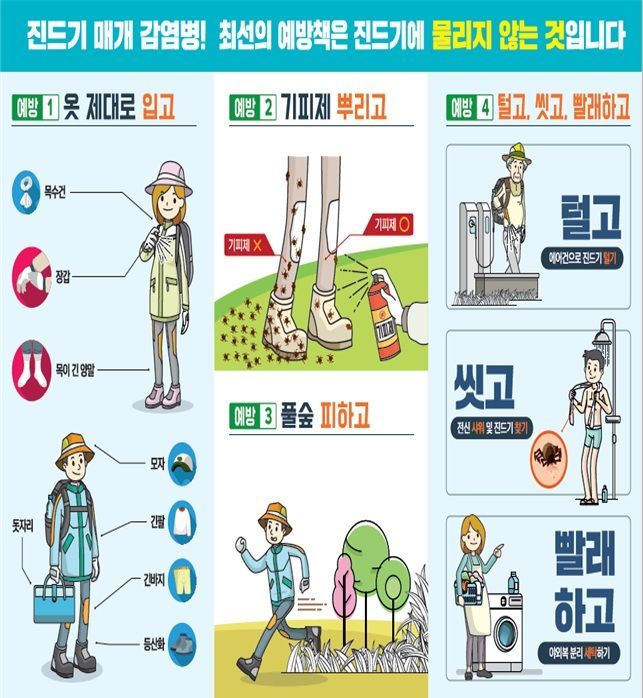
For scrub typhus, prevention-specifically, avoiding tick bites-is of utmost importance. Preventive measures include: ▲ wearing long sleeves and long pants during outdoor activities ▲ applying tick repellent to clothing and skin ▲ avoiding grassy or bushy areas and not sitting or leaving clothes on the ground ▲ showering after outdoor activities and shaking out and washing worn clothes ▲ checking for bite marks or suspicious symptoms.
Kang Yunseon, head of the Public Health and Medical Services Division, stated, "To prevent tick-borne infectious diseases, it is important to follow individual preventive guidelines and to visit a medical institution for treatment if symptoms such as fever, vomiting, or diarrhea occur after outdoor activities."
© The Asia Business Daily(www.asiae.co.kr). All rights reserved.
![Clutching a Stolen Dior Bag, Saying "I Hate Being Poor but Real"... The Grotesque Con of a "Human Knockoff" [Slate]](https://cwcontent.asiae.co.kr/asiaresize/183/2026021902243444107_1771435474.jpg)















