Sustained Demand Driven by Meal Replacement Culture
South Korea May Lead the World in Ramen Consumption by Weight
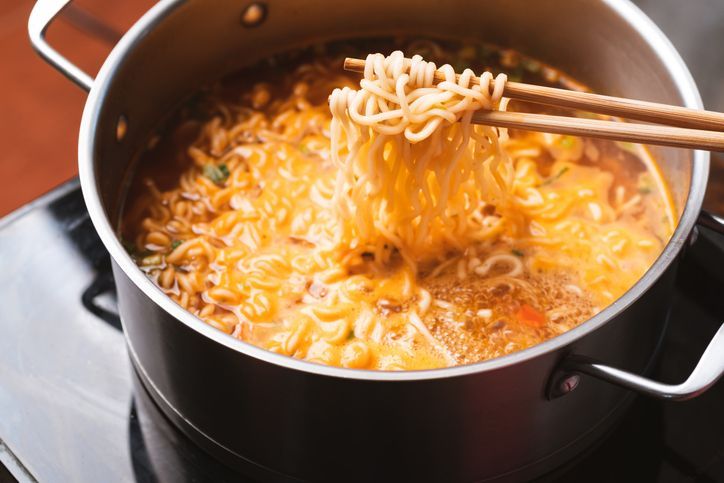
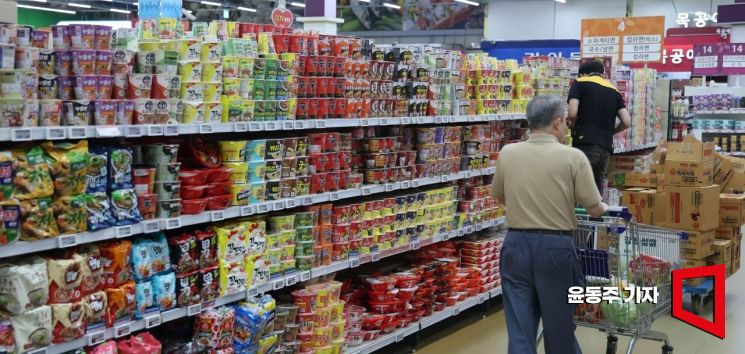
The annual ramen consumption per capita in Korea has once again ranked among the highest in the world. As of 2024, Koreans consumed an average of 79 servings of ramen per person, the second highest figure globally.
According to data released by the World Instant Noodles Association (WINA) on October 9, the total ramen consumption in Korea last year reached 4.1 billion servings. This figure ranks eighth in the world in terms of total consumption. In the same year, Korea’s total population was approximately 51.75 million, meaning that each person consumed about 79.2 servings of ramen. This is an increase of six servings compared to 73 servings in 2021, marking a three-year consecutive rise.
Looking at the figures by year, domestic consumption was 3.79 billion servings in 2021, rose to 3.95 billion in 2022, and reached 4.04 billion last year, representing a 1.4% increase from the previous year. However, this still falls short of the 4.13 billion servings recorded in 2020 during the COVID-19 pandemic.
Meanwhile, Vietnam has maintained its position as the world’s top country for per capita ramen consumption for three consecutive years. Last year, each Vietnamese person consumed about 81 servings of ramen, with a total consumption of 8.14 billion servings, ranking fourth globally. Although the per capita figure has decreased from 88 servings in 2021, it remains at the top.
Following Korea and Vietnam, countries with high per capita ramen consumption include Thailand (57 servings), Nepal (54 servings), Indonesia (52 servings), Japan and Malaysia (47 servings each), Taiwan (40 servings), the Philippines (39 servings), and China and Hong Kong (31 servings). The dominance of Asian countries is attributed to the prevalence of noodle-based food culture in the region.
In European countries, instant ramen consumption is relatively low. In some countries, the annual per capita consumption does not even reach 10 servings.
The ramen industry explains that in Korea, ramen has long been established as an affordable meal substitute, while in some Southeast Asian countries, ramen is often eaten lightly and frequently as a snack, leading to higher per capita consumption. However, when measured by weight, Korea is likely the world’s largest consumer.
Globally, demand for ramen continues to rise. Last year, global ramen consumption reached 123.07 billion servings, a 2.4% increase from the previous year and an all-time high.
Ramen, known for its cost-effectiveness, is gaining attention worldwide as an alternative food amid inflation.
In terms of total national consumption, the combined market of China and Hong Kong topped the list with 43.8 billion servings, which is about 10.7 times the size of Korea’s market. They were followed by Indonesia (14.37 billion servings), India (8.32 billion servings), Vietnam (8.14 billion servings), Japan (5.9 billion servings), the United States (5.15 billion servings), the Philippines (4.49 billion servings), Korea (4.1 billion servings), Thailand (4.08 billion servings), and Nigeria (3 billion servings). India and Indonesia, in particular, are cited as representative markets where ramen consumption is rapidly increasing alongside population growth.
At the same time, ramen consumption is gradually increasing in major European countries as well.
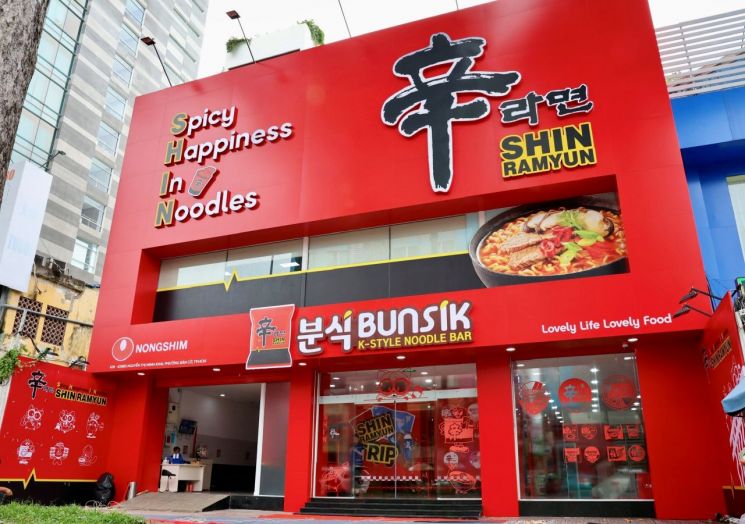
Global interest in Korean ramen continues to rise. From January to September this year, ramen exports reached USD 1.116 billion (about KRW 1.6 trillion), a 24.7% increase compared to the same period last year.
The industry expects that as the global popularity of K-Food and Korean pop culture continues, demand for Korean ramen will also steadily increase. Accordingly, the status of Korean ramen in the global market is expected to rise even further.
© The Asia Business Daily(www.asiae.co.kr). All rights reserved.
![Clutching a Stolen Dior Bag, Saying "I Hate Being Poor but Real"... The Grotesque Con of a "Human Knockoff" [Slate]](https://cwcontent.asiae.co.kr/asiaresize/183/2026021902243444107_1771435474.jpg)

















