Part of the 2025 Royal Palace Culture Festival
A Variety of Exhibitions, Performances, Hands-on Activities, and Educational Programs
President Lee Won Honors Artists with Developmental Disabilities and Students from Multicultural Families
Awards for Contributions and Honorary Certificates Presented
"100 Years of Time and Scenery at Nakseonjae," one of the events of the 2025 Royal Palace Culture Festival in autumn, opened on the 8th.
The Korean Imperial Culture Institute (President Lee Won) held the opening ceremony for "100 Years of Time and Scenery at Nakseonjae" at 2:30 PM on the same day in the front yard of Nakseonjae, Changdeokgung Palace, Jongno-gu, Seoul.
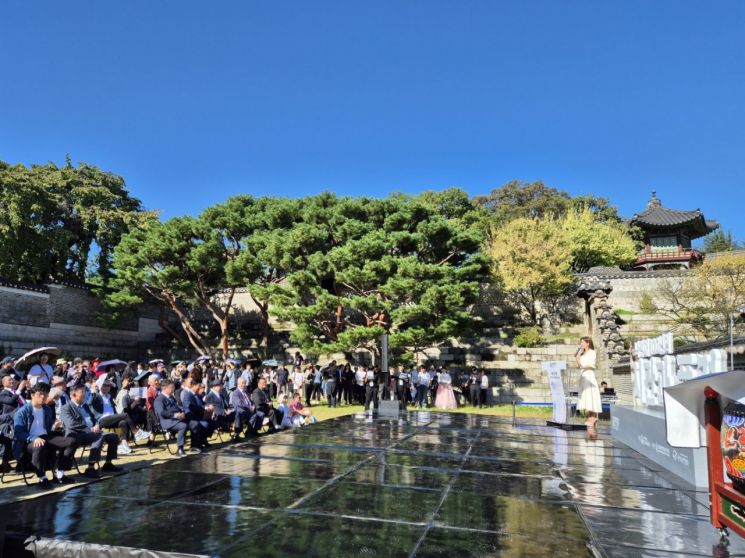 The opening ceremony of "100 Years of Time and Scenery at Nakseonjae," an event of the 2025 Royal Palace Culture Festival, was held at 2:30 PM on the 8th in the front yard of Nakseonjae, Changdeokgung Palace, Jongno-gu, Seoul. Korean Imperial Culture Center
In his welcoming speech, President Lee Won said, "This event is a meaningful occasion that demonstrates the significance of the culture of the Joseon royal family and the Korean Empire imperial family that has continued to this day."
In his congratulatory address, Lee Guiyeong, President of the National Heritage Promotion Institute, stated, "This event will be a valuable opportunity to look back on 100 years of Nakseonjae's history and to re-examine the lives of those who lived there from a contemporary perspective."
The opening ceremony featured performances by Hwadong Jeongjae Arts Troupe, a group dedicated to preserving and passing down royal court music, including "Abak Hyangbal Hapseol," "Chunaengjeon," "Geommu," "Daegeum Solo," and "Mugo," all of which received enthusiastic responses from the audience.
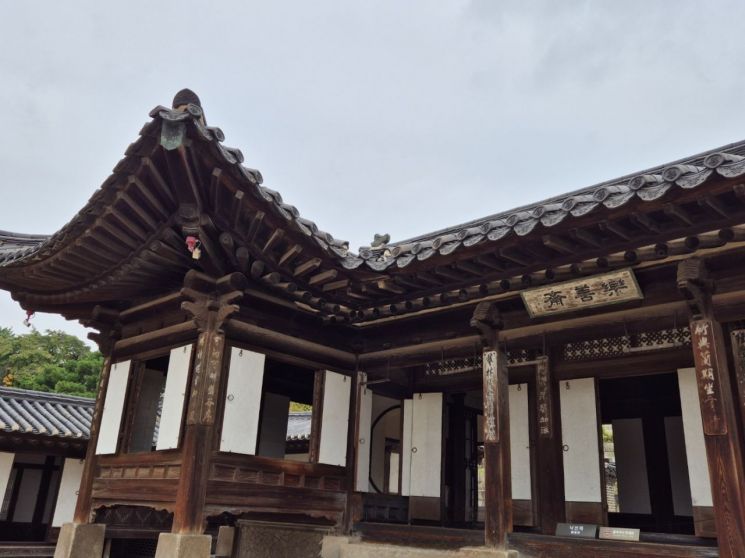
Nakseonjae is a palace building constructed in Changdeokgung Palace in 1847 by King Heonjong of the late Joseon Dynasty as a study and resting place. It is famous as the place where royal family members, including the last empress, Empress Sunjeonghyo, spent their final years.
This event, hosted by the Royal Palaces and Tombs Center of the National Heritage Administration and co-organized by the National Heritage Promotion Institute and the Korean Imperial Culture Institute, focuses on highlighting the significance of Nakseonjae in modern history over the past 100 years, spanning the Korean Empire, Japanese colonial period, liberation, and the Korean War, as well as the lives and spirits of three imperial women who lived in Nakseonjae: Empress Sunjeonghyo, Crown Princess Uimin (Madame Lee Bangja), and Princess Deokhye.
The event, which runs from the 8th to the 12th, takes place at three locations within the Nakseonjae complex: Nakseonjae, Seokbokheon, and Sugangjae.
At Nakseonjae, in honor of Crown Princess Uimin's lifelong devotion to education and care for people with disabilities through the establishment of Myunghwiwon, Jahenghoe, and Jaehye School, her calligraphy, paintings, and personal artifacts such as a watch, glasses, and a cloisonn? hairpin are on display, commemorating her "warm love."
Additionally, in tribute to Crown Princess Uimin's love for people with disabilities, works by four artists with developmental disabilities are also being exhibited.
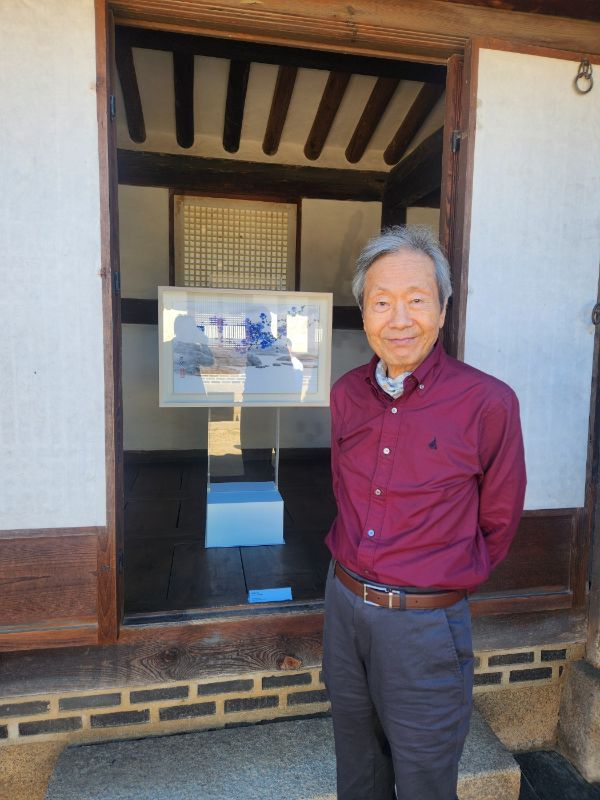 Painter Bin Seokju standing in front of his work "Sangnyeom." This piece, installed at Seokbokheon, depicts 100 years of time and has received great acclaim from visitors. Daehan Royal Culture Institute
At Seokbokheon, the spirit and royal culture of Empress Sunjeonghyo, who maintained "dignified composure" as the matriarch of the Korean Empire imperial family even amidst turbulent times, are expressed through Korean painting, contemporary art, mother-of-pearl lacquerware, moon jars, and sculpture.
At Sugangjae, photos of Princess Deokhye as a kindergartener, transferred onto traditionally dyed fabric, and her portraits are on display, reflecting her "kind heart" and dreams.
Princess Deokhye also makes a surprise appearance as an exhibition docent through an AI-recreated voice. By scanning the QR codes installed at Nakseonjae, Seokbokheon, and Sugangjae, visitors can listen to explanations by Princess Deokhye on their smartphones.
Meanwhile, the festival also features performances and hands-on activities that express the unique significance of Nakseonjae's time and space.
On the opening day, the 8th, at 2:30 PM in the front yard of Nakseonjae, Changdeokgung Palace, the Hwadong Jeongjae Arts Troupe will perform royal court dances and music, including "Abak Hyangbal Hapseol," "Chunaengjeon," "Geommu," and "Daegeum Solo."
At the experience zone set up in the front yard of Nakseonjae, visitors can participate in activities such as making flat knot bracelets, playing the seven-piece puzzle game, watching cloisonn? craft demonstrations, and trying royal court hair braiding.
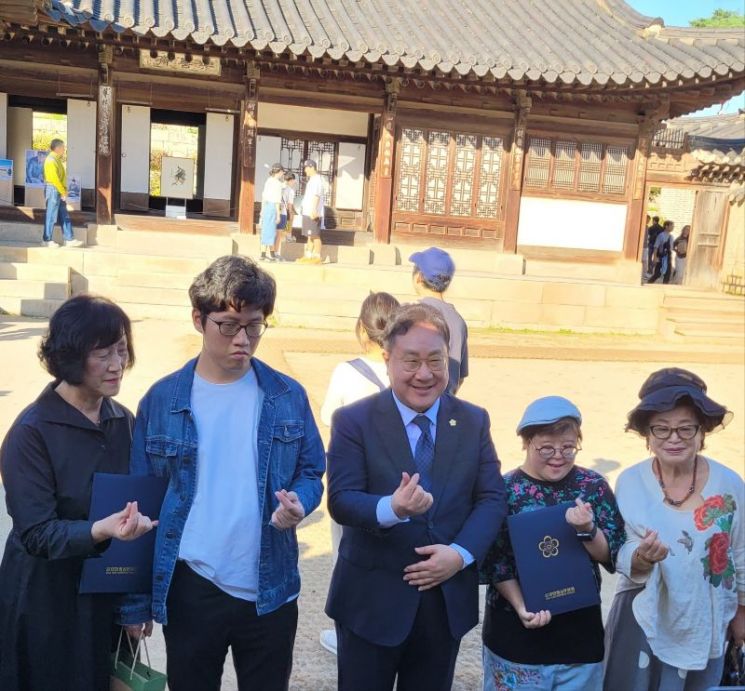 On the first day of the event, the 8th, Lee Won, president of the Korean Imperial Culture Institute (center), added significance by presenting merit awards and honorary certificates of completion to artists with developmental disabilities and students from multicultural families at Nakseonjae, where Crown Princess Ui-min, who practiced lifelong care and love, resided. The photo shows a commemorative photo with the awardees after the ceremony. Korean Imperial Culture Institute
In addition, educational programs are being offered, inviting about 20 students and parents from Jaehye School, a special school in Suwon, Gyeonggi Province, as well as about 60 children and parents from multicultural families, to attend the exhibition and participate in hands-on activities.
The Korean Imperial Culture Institute is an organization established to restore the historical significance and preserve the spirit of the Joseon royal family and the Korean Empire imperial family, and has been promoting a variety of Korean cultures, including royal culture (K-Royal Culture), both domestically and internationally.
Meanwhile, the 2025 Royal Palace Culture Festival in autumn will feature a variety of events not only at "100 Years of Time and Scenery at Nakseonjae," but also at palaces and Jongmyo, including Gyeongbokgung Palace, Changdeokgung Palace, Deoksugung Palace, and Changgyeonggung Palace.
© The Asia Business Daily(www.asiae.co.kr). All rights reserved.
![Clutching a Stolen Dior Bag, Saying "I Hate Being Poor but Real"... The Grotesque Con of a "Human Knockoff" [Slate]](https://cwcontent.asiae.co.kr/asiaresize/183/2026021902243444107_1771435474.jpg)

















