Takaichi's Fiscal Expansion Expected to Boost Japanese Stocks
Concerns Over Medium- to Long-Term Inflation and Fiscal Burden
Sanae Takaichi, President of the Liberal Democratic Party and often referred to as the "female Abe," is expected to continue the fiscal expansion and accommodative monetary policies of former Prime Minister Shinzo Abe's "Abenomics." While her aggressive fiscal stance could drive a short-term rally in the stock market and stimulate the economy, concerns have been raised that, in the medium to long term, it may lead to price instability and currency imbalances.
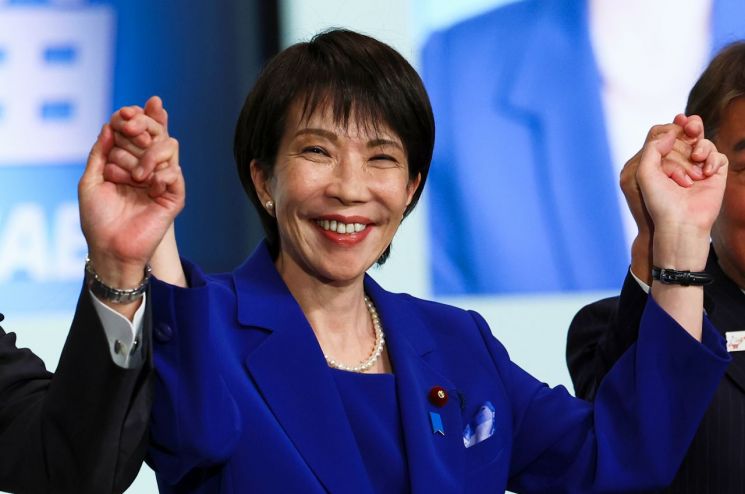
Takaichi, a staunch conservative known for her far-right views and former Minister for Economic Security, was elected as the first female president of the ruling Liberal Democratic Party on October 4. In the runoff for the 29th LDP presidential election, she secured 185 votes, defeating Shinjiro Koizumi, Minister of Agriculture, Forestry and Fisheries, by a margin of 29 votes (Koizumi received 156 votes).
During the election, President Takaichi pledged "responsible aggressive fiscal policy" and vowed to pursue bold fiscal expansion to revive the Japanese economy. She has stated that the government should set the direction of monetary policy, and that the central bank should choose the means to realize it, suggesting the possibility of curbing the Bank of Japan's independent interest rate policy. Indeed, she expressed a critical stance toward interest rate hikes last year.
Experts predict that President Takaichi's policy direction will delay the timing of interest rate hikes by the Bank of Japan. Izuru Kato, a researcher at Dotan Research, forecast that with Takaichi's election, the timing of rate increases could be pushed back. This implies that a low interest rate environment may persist, reducing corporate borrowing costs and improving profitability for export-oriented companies, which could have a positive effect on the Japanese stock market.
The Japanese stock market responded immediately after Takaichi's victory. On October 7, the Nikkei 225 Index climbed to an intraday high of 48,527, setting a new record. The market has dubbed this phenomenon the "Takaichi Trade," and there is growing anticipation that the upward trend will continue in the short term. The Nikkei newspaper reported that after Shigeru Ishiba was elected LDP president in September last year, the Nikkei Index fell 4.8% on the first trading day, but after Takaichi's election, it surged 4.8% on the first trading day.
Some point out that the current environment facing the Japanese economy differs from when Abenomics was first implemented in 2012, and that the economic effects of following Abe's policies may not meet expectations. At that time, Japan was in a deflationary period with falling prices amid an economic downturn. Now, however, since the outbreak of the war in Ukraine in 2022, surging commodity prices and a weaker yen have kept inflation above 2%. The Nikkei newspaper warned, "Adopting Abenomics policies during an inflationary phase risks contradicting measures to curb high prices."
There are also concerns that if the yen continues to weaken, President Donald Trump of the United States may raise the issue as a case of currency manipulation. If President Takaichi's policies further weaken the yen, it could escalate into a trade conflict between the United States and Japan. In this context, President Trump claimed in March that Japan and China have been deliberately weakening their currencies, stating, "When they devalue their currencies, it results in highly unfair disadvantages for us."
© The Asia Business Daily(www.asiae.co.kr). All rights reserved.
![Clutching a Stolen Dior Bag, Saying "I Hate Being Poor but Real"... The Grotesque Con of a "Human Knockoff" [Slate]](https://cwcontent.asiae.co.kr/asiaresize/183/2026021902243444107_1771435474.jpg)















