Turning to Overseas Markets Amid Domestic Slowdown
Securing Price Competitiveness Through Local Production
Moving Early to Capture Surging Office Demand in Vietnam
Fursys is set to make a full-scale push into the Southeast Asian market. This move comes as the company seeks to overcome stagnant sales caused by a slump in the domestic furniture market. Fursys aims to secure price competitiveness against global furniture brands by leveraging its local production base.
According to Fursys on October 10, the company recently opened a showroom and office in Ho Chi Minh City, Vietnam, officially launching local operations. Located in a prime business district, the 330-square-meter showroom is designed as an "experiential working showroom," allowing visitors to directly experience premium office furniture.
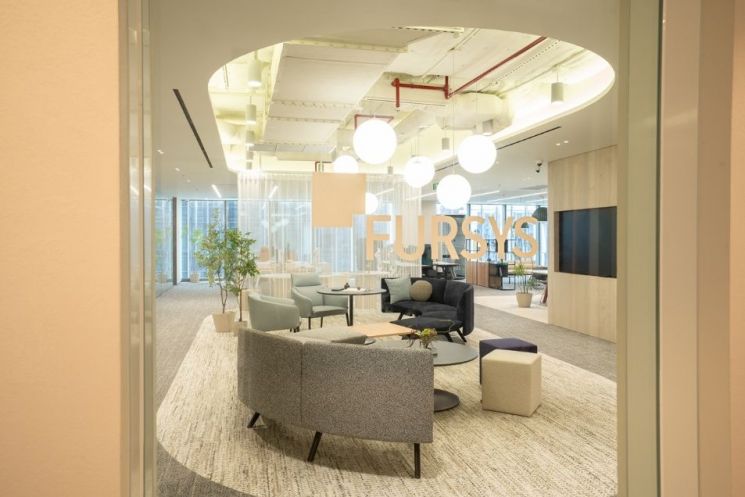
Through this new base, Fursys plans to expand its dealer network and distribution partnerships across Vietnam. At the same time, the company will introduce a customized product lineup tailored to local customer needs. Focusing on bench-type and independent desks as well as ergonomic chairs, Fursys will provide products optimized for the local market in terms of design, specifications, and pricing.
Vietnam is home to Fursys's key production base. In the first half of this year alone, Fursys invested 15.4 billion won in its Vietnamese subsidiary-an amount nearly three times its operating profit of 5.3 billion won for the same period. Despite worsening performance, the company continues to invest aggressively, driven by a sense of urgency that it cannot secure long-term growth without reducing its reliance on the domestic market.
The majority of revenue for domestic furniture companies comes from the local market. In the first half of this year, 94.3% of Fursys's revenue was generated domestically. Although there was a temporary increase in sales due to higher demand for office furniture after COVID-19, the company could not avoid the impact of a prolonged domestic economic downturn. In the first half of this year, sales fell 3.7% year-on-year to 186.1 billion won, while operating profit plunged by 69.4% compared to the first half of last year (17.3 billion won).
However, overseas business performance has also been challenging. In the first half of the year, sales in North America and Asia-which account for a significant portion of Fursys's overseas revenue-declined by nearly half. The growth trend previously seen in overseas subsidiaries has slowed, and the company's growth momentum in international markets appears to be weakening.
Fursys's acceleration of its Southeast Asian strategy, starting with Vietnam, is closely related to these circumstances. As growth in existing overseas markets has slowed, the company sees the rapidly increasing demand for new office spaces in Southeast Asia as a breakthrough. Industry experts also note that, with the recent surge in foreign investment and urbanization in Vietnam, demand for office space is soaring and the potential of the office furniture market is significant.
Fursys believes it can secure price competitiveness in the Southeast Asian market. The company plans to leverage fast product supply and high quality through local production in Vietnam, as well as offer prices that are 20-30% more competitive than major global furniture brands. A Fursys representative said, "Vietnam is a market where we can fully demonstrate Fursys's high-quality products and space solution capabilities. Based on our achievements here, we plan to expand throughout the entire Southeast Asian market."
© The Asia Business Daily(www.asiae.co.kr). All rights reserved.

















