Launch of Task Force for Evaluation and Innovation of Elected Officials
Nomination System Development Begins
Stronger Assessment of Parliamentary Activities
Expansion of Legislative Activity Data Considered
The People Power Party will begin full-scale preparations for next year’s local elections after the Chuseok holiday. The party has completed appointments for the organization that will establish candidate nomination criteria and is set to begin formulating concrete strategies.
According to political sources on October 8, the People Power Party will select a company to operate the evaluation system for elected officials on October 12 and officially begin building its nomination system.
On September 29, the party launched its Task Force for Evaluation and Innovation of Elected Officials. The task force is chaired by Assemblyman Jeong Jeom-sik of the People Power Party, with Assembly members Kim Seon-kyo, Yoo Sang-beom, and Park Su-min, as well as Seo Jeong-hyeon, the party chapter head for Ansan, Gyeonggi Province, serving as members. The task force plans to establish the items and detailed criteria for nomination screening.
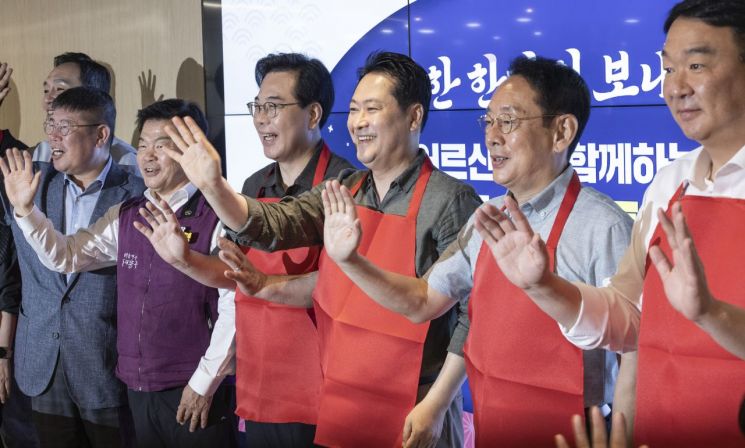
Various indicators of legislative activity, such as participation in the general assembly or plenary sessions, standing committee work, and contributions to outdoor rallies, are expected to be reflected in the nomination review. People Power Party leader Jang Dong-hyuk stated, “Those who work diligently in line with the party’s direction should be given priority,” adding, “We intend to accumulate data on who has worked hard and reflect this in the nomination process.”
The People Power Party, which had previously been relatively lax in evaluating legislative performance, has recently strengthened its assessment of parliamentary activities. A notable example is tracking and announcing attendance and reasons for absence of party members at events such as the general assembly. The party is also considering expanding the scope of legislative activity data to include not only public activities like meetings, forums, and seminars at the National Assembly, but also other forms of legislative work. There is also discussion of utilizing this data in the future nomination process.
The party is also accelerating its organizational restructuring. On October 1, the People Power Party’s Special Committee for Organizational Reinforcement began accepting applications for party chapter leadership in regions considered “problematic.” Currently, 36 out of the 254 party chapters nationwide have vacant leadership positions, with 21 of these concentrated in the Seoul metropolitan area. Jeong Hee-yong, Secretary-General of the People Power Party and chair of the special committee, stated, “We will swiftly complete the reorganization of problematic chapters so that these regions can be ready to respond quickly in the local elections.”
Having become the opposition party after losing the presidential election, the People Power Party considers next year’s local elections a critical battleground. Although the elections will take place early in the Lee Jaemyung administration-an advantage for the ruling party-the People Power Party’s strategy is to defend as many of the 12 metropolitan mayoral and gubernatorial seats it won in the 2022 local elections as possible. In particular, Seoul and Busan are seen as key battlegrounds that must be held at all costs.
At a press briefing just before the Chuseok holiday, leader Jang emphasized, “If we do not inspire the public more than the Democratic Party through our nominations, the election will not be easy. While we must fight against the ruling party, we can also win over moderates by proposing better policies as the opposition.”
© The Asia Business Daily(www.asiae.co.kr). All rights reserved.
![Clutching a Stolen Dior Bag, Saying "I Hate Being Poor but Real"... The Grotesque Con of a "Human Knockoff" [Slate]](https://cwcontent.asiae.co.kr/asiaresize/183/2026021902243444107_1771435474.jpg)
















