Researcher Contributes to Liberation Army Daily
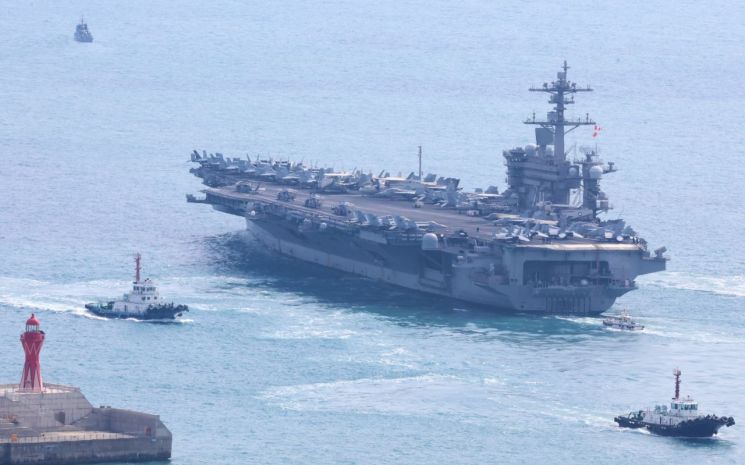
Amid the recent strengthening of joint military exercises among South Korea, the United States, and Japan, voices of caution are emerging within the Chinese military regarding U.S. intervention in the region, according to reports on October 2.
Ji Cheng, a researcher at the Chinese Academy of Military Sciences, argued in a recent contribution to the Liberation Army Daily, the official newspaper of the Central Military Commission of the Communist Party of China, that the South Korea-U.S.-Japan drills "have already gone beyond the scope of traditional military cooperation and have become an important means for external forces to disrupt the regional security landscape."
The Chinese Academy of Military Sciences is the top military research institution and a core think tank of the People's Liberation Army (PLA).
Ji Cheng mentioned the South Korea-U.S. "Ulchi Freedom Shield" and "Iron Mace" exercises, the U.S.-Japan "Resolute Dragon," and the South Korea-U.S.-Japan "Freedom Edge" joint drills, noting that not only the frequency and scale of these exercises, but also their scope and domains, are expanding.
He pointed out that the Freedom Edge and Iron Mace exercises have each been held three times since last year, and unlike previous South Korea-U.S.-Japan exercises, which mainly focused on maritime and aerial domains, this year's Freedom Edge included cyber defense training for the first time.
He also highlighted that during Resolute Dragon, the U.S. deployed its Typhon mid-range missile system to Japan for the first time, and that South Korea introduced domestically developed generative artificial intelligence (AI) technology in the Ulchi Freedom Shield exercise for the first time.
Ji Cheng assessed that "through these exercises, South Korea, the United States, and Japan are attempting to blur the geographic boundaries of relevant hotspots (regions with intense disputes) and create a multi-layered, networked military deterrence system targeting major adversaries."
He stated, "Behind the intensive South Korea-U.S.-Japan exercises lie each country's shallow calculations," and argued, "The United States is seeking to turn South Korea and Japan into front-line outposts in strategic competition by strengthening defense cooperation with both countries."
He further claimed that through this, "South Korea and Japan are being made to bear greater security costs and obligations, and the United States is attempting to use this model to draw more regional allies into the framework of its Indo-Pacific strategy."
Regarding South Korea, he said, "Although the new administration has advocated a pragmatic, national interest-oriented diplomatic approach, it still bases its policy on the South Korea-U.S. alliance and is working to improve relations with Japan, thereby strengthening trilateral cooperation among South Korea, the United States, and Japan." He predicted that short-term security dependence on the United States would continue.
On Japan, he commented, "Japan continues to insist on playing the role of America's 'agent,'" and interpreted that "Japan is seeking to overcome the constraints of its pacifist constitution, pave the way for overseas activities by the Self-Defense Forces, and develop offensive military capabilities."
He added, "South Korea, the United States, and Japan are striving to exaggerate external threats and strengthen bilateral and trilateral ties through joint exercises," warning that "this could deepen the risk of bloc confrontation in the regional security structure."
© The Asia Business Daily(www.asiae.co.kr). All rights reserved.
![Clutching a Stolen Dior Bag, Saying "I Hate Being Poor but Real"... The Grotesque Con of a "Human Knockoff" [Slate]](https://cwcontent.asiae.co.kr/asiaresize/183/2026021902243444107_1771435474.jpg)











