Expanding Soybean Imports and Easing Rare Earth Controls
Accelerating Efforts to Reduce US Dependence
Korea Should Seize Niche Opportunities with Semiconductor Equipment Exports
"Given China's characteristics, negotiations will continue until a settlement is reached that appears to be a mutual exchange, rather than a concession by one side."
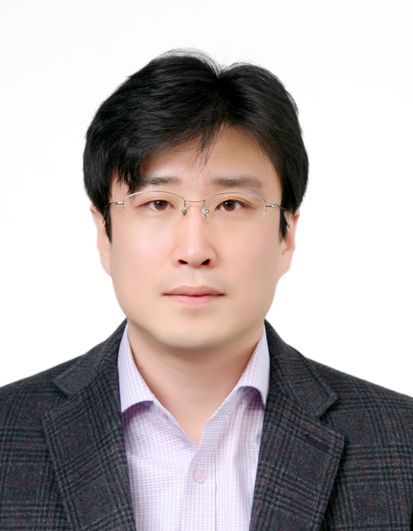 Jaeduk Kim, Director of Beijing Support Office (Research Fellow) at the Korea Institute for Industrial Economics and Trade
Jaeduk Kim, Director of the Beijing Support Office (Research Fellow) at the Korea Institute for Industrial Economics and Trade, stated this in a recent interview with Asia Economy. He predicted, "It will likely take the form of reciprocal exchanges, such as easing rare earth export controls and stabilizing supply chains in return for relaxing sanctions on Chinese companies."
The US-China trade negotiations remain tense, not only due to high tariffs but also because of the ongoing struggle for technological supremacy. Both countries have prolonged the negotiation phase by imposing retaliatory tariffs, rare earth controls, and corporate sanctions in response to each other's tariffs and semiconductor restrictions.
Recently, China's move to launch an antitrust investigation and restrict AI chip purchases targeting Nvidia is interpreted in the same context. Analysts see this as a strategy to bring US sanctions back to the negotiating table, as well as a calculated measure to foster its own semiconductor ecosystem.
Going forward, the two countries are expected to pursue a 'give-and-take compromise,' exchanging measures such as expanding imports of agricultural products like soybeans, easing technology and tariff restrictions, stabilizing rare earth supply chains, and relaxing corporate sanctions. However, if the conflict drags on, it is expected that China will reduce its dependence on the US, strengthen solidarity with the Global South, and utilize multilateral platforms such as the Regional Comprehensive Economic Partnership (RCEP) and the Asia-Pacific Economic Cooperation (APEC), while still avoiding an extreme confrontation.
Meanwhile, President Trump reaffirmed a US-China summit, stating on the 1st that he would meet with Chinese President Xi Jinping at the APEC summit in Gyeongju, South Korea, at the end of this month to discuss the suspension of soybean imports. He emphasized that he would make the soybean issue a key agenda item at the meeting, saying, "I will not stand by while farmers suffer from China's suspension of soybean purchases." As this has a significant impact on the US agricultural sector, attention is focused on whether China will resume soybean imports.
Director Kim advised that although China controls most of the advanced technology supply chain, it does not have a complete monopoly, so Korean companies should seize opportunities in these gaps. A representative example is the recent increase in Korean semiconductor equipment exports to China amid the boom in China's semiconductor industry. He also said that the government needs to restore and expand the reduced channels for cooperation with China and policy resources to strengthen networks in advanced industrial sectors.
The following is a Q&A with Jaeduk Kim, Director of the Beijing Support Office (Research Fellow) at the Korea Institute for Industrial Economics and Trade.
- How does China evaluate the US tariff policy? Please explain the perspectives of the government, industry, and public opinion separately.
▲ Of course, China views the US tariff policy toward China and the world negatively. Unlike during Trump's first term, the Chinese government has responded immediately to US tariff measures with corresponding actions such as retaliatory tariffs, rare earth export controls, corporate sanctions, and filing complaints with the WTO. These actions were unexpected by the US and are a factor in why trade negotiations have lasted so long. The Chinese industry, especially sectors directly hit by tariffs, has strongly opposed them and is believed to be attempting indirect exports through the ASEAN region.
However, indirect exports have limitations in terms of scale and product categories. Meanwhile, China has already been diversifying its export structure toward ASEAN, Europe, Africa, and other regions, so the proportion of exports to the US continues to decline. For items where exports to the US have decreased, China is pushing low-priced exports domestically and to other countries, worsening domestic deflationary trends and causing harm to similar industries in third countries. Given China's characteristics, public opinion is not particularly different from the stance of the government and companies.
- President Trump stated on the 18th that trade negotiations with China are nearing a settlement and that the two countries will continue their tariff truce. However, the current situation suggests a difference in tone between President Trump's remarks and China's position. Does China internally see a settlement as imminent? If there is a difference in tone, what are the key issues?
▲ The difference in tone has always existed. Due to the nature of both countries, I believe the difference lies more in how the negotiation process and content are disclosed than in the specifics of the settlement. China does not disclose details or express opinions externally until specific negotiation issues are resolved and officially announced. The key issues remain tariff rates, advanced technology restrictions such as semiconductors, corporate sanctions, and rare earth supply chains, and I believe these have not yet been concretely resolved.
- Recently, China raised antitrust issues and imposed AI chip purchase restrictions on Nvidia. What are the intentions, goals, and expected effects?
▲ The US has banned the export of AI chips, especially the H20, which was previously allowed for export to China. However, China has continuously pursued technological self-sufficiency in semiconductors, mainly through Huawei and other advanced technology companies. Although there are still shortcomings in terms of yield and corporate profitability, China is now producing AI chips with higher specifications than the H20. In this respect, the resumption of H20 exports by the US would have little real impact on China. Conversely, I believe China's sanctions on Nvidia will have the following effects:
First, it gives China a favorable negotiating position regarding US semiconductor chip restrictions. This measure will put the lifting of restrictions on higher-spec chips, not just the H20, on the negotiating table. Second, it will increase domestic demand for Chinese chips and help build an independent ecosystem. The increase in domestic chip demand will improve suppliers' cash flow and profitability, contributing to economies of scale and improved yields. Huawei has already announced plans for mass production of the successor to the 910c chip, and Alibaba has also announced the development of its own chip.
- Will China continue to resist US tariff pressure? If it compromises, what will it concede and what will it try to protect?
▲ Based on the current stance, China is expected to maintain a negotiating attitude without resorting to extreme resistance or breaking off negotiations. However, given China's characteristics, negotiations will continue until a settlement is reached that appears to be a mutual exchange, rather than a concession by one side.
For example, China may increase imports from the US (such as soybeans and other agricultural products) in exchange for partial easing of technology restrictions and tariff rates, or ease rare earth export controls and stabilize supply chains in return for relaxing sanctions on Chinese companies. It will take the form of reciprocal exchanges.
- If the US-China tariff conflict continues, what options does China have to counter the US? Also, will the prolonged conflict have any impact on the economy? Does China have the economic strength to sustain such tensions?
▲ In the short term, China will respond with measures such as rare earth controls and substituting imports from the US. Regardless of the tariff conflict, the Chinese government will continue to pursue a strategy of reducing dependence on the US. So far, the US economy, especially employment indicators, has remained strong despite inflationary pressures. I believe the US has more economic strength (than I expected). However, if negative economic indicators such as serious fiscal deficits, a slowdown in manufacturing investment (which has recently driven employment), and worsening inflation intensify, there are concerns about an economic slowdown.
- After the recent demonstration of closer ties between North Korea, China, and Russia, does China believe it is more important to strengthen solidarity with countries other than the US, or to restore relations with the US?
▲ As mentioned earlier, China will continue to reduce its dependence on the US. In this regard, China is strengthening economic cooperation and political solidarity, especially with Global South countries. The recent moves to strengthen ties among North Korea, China, and Russia can also be seen as another message to the US. However, China will still avoid an extreme US-China confrontation.
- There are also opinions that China should seek alternatives through globalization excluding the US, such as utilizing APEC, RCEP, and CPTPP. What are your thoughts on this?
▲ I generally agree with the need to utilize global multilateral cooperation platforms such as APEC, RCEP, and CPTPP. China will strengthen economic cooperation and political solidarity with Global South countries. However, many Global South countries, such as India, do not line up unilaterally with either the US or China, but instead pursue their own interests, making this a difficult process.
Also, while the WTO has become largely ineffective, it still had more binding force than other multilateral cooperation bodies. RCEP is a trade agreement with low binding force and openness, and APEC is a multilateral dialogue channel with weak enforceability.
- What are your prospects for future US-China relations, and what should Korean companies do to prepare right now?
▲ Given the structure of Korean industry, it is difficult to give a simple answer because Korea is so intricately intertwined with both the US and China. Some companies have decided to expand investment in the US, but many are likely to hold off due to continued uncertainty in US policy.
Meanwhile, in supply chains, Korea is deeply integrated with China, and the recent rise in competitiveness of Chinese companies presents both threats and opportunities. China is becoming a battleground for advanced technology. Global tech companies are also taking a renewed interest in China. While the US remains important as a market, it is also necessary to closely monitor trends in advanced technology sectors in China and seek opportunities. For this, I believe Korea should increase its interest and investment in the Chinese market, which had been reduced in recent years.
- If US-China tensions ease or relations are restored, how should the Korean government and companies adjust their strategies for US export controls, China risk management, and supply chain realignment? Especially in key industries such as semiconductors and batteries, what are the biggest opportunities and core risks?
▲ Even just the easing of US-China tensions would reduce a great deal of uncertainty and have positive effects. Strategies will depend on the specifics of any settlement. However, I believe it is more important to prepare for underlying trends that are ongoing regardless of the outcome of US-China negotiations. In particular, China is surpassing Korea's competitiveness in semiconductors and batteries due to its advanced technology development. The commercialization of sodium batteries by CATL and the development of HBM in China mean that China is catching up and overtaking Korea in areas where Korea previously had a relative advantage, and the range of fields is expanding. In areas such as AI and robotics, it is no exaggeration to say that Korea is falling behind in all sectors. However, since China still does not control the entire supply chain in these fields, Korean companies must find opportunities in these gaps.
For example, amid the boom in China's semiconductor sector, Korean semiconductor equipment exports to China are increasing. In this way, it is important to capture opportunities in parts of the supply chain. Recently, there have been some changes in Korean companies' perspectives and approaches to China, and although it is late, this is a positive development. The government should also strengthen market research and policy monitoring in advanced technology and future industry sectors that are growing in China and globally. The previous administration reduced cooperation channels with China and drastically cut policy resources. The government should start by restoring these areas, and not just restore, but expand them to strengthen networks with China.
© The Asia Business Daily(www.asiae.co.kr). All rights reserved.
![Clutching a Stolen Dior Bag, Saying "I Hate Being Poor but Real"... The Grotesque Con of a "Human Knockoff" [Slate]](https://cwcontent.asiae.co.kr/asiaresize/183/2026021902243444107_1771435474.jpg)















