Financial Authorities Issue Guidelines on Precautions for Illegal Private Lending
Following the enforcement of the revised Lending Business Act in July, financial authorities have provided important guidelines that must be known regarding illegal private lending crimes.
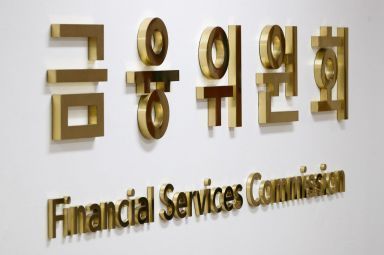
The Financial Services Commission announced on October 3 that, in the two months following the enforcement of the revised Lending Business Act, the number of reports and consultations regarding damages from illegal private lending reached 3,652 cases, a 33.1% increase compared to the two months prior to enforcement (2,744 cases).
During the same period, the number of applicants for the debtor representative system was 668, up 22.6% from 545 before the enforcement. Among these, the number of applicants for consultations on lawsuits to invalidate anti-social illegal lending contracts was 507, a 37.8% increase from 368 prior to enforcement.
The most frequent inquiries concerned illegal debt collection. Many people reported that, even after being informed that they had no obligation to repay interest or principal, they continued to receive calls and messages via phone and social media.
By applying for the free debtor representative support system, victims can receive free legal consultations from Korea Legal Aid Corporation lawyers, and measures are taken to prevent illegal lenders from contacting victims directly for collection purposes.
Additionally, by applying for the free debtor representative support system, victims can receive free legal consultations from Korea Legal Aid Corporation lawyers, and measures are taken to prevent illegal lenders from contacting victims directly for collection purposes.
If an illegal private lender spreads personal information, such as personal details or loan contracts, on social media, this may constitute a violation of the Personal Information Protection Act. In such cases, it is possible to block the posts by submitting evidence or URLs through the Financial Supervisory Service website under 'Complaints & Reports → Illegal Financial Activities Reporting Center → Report Cyber Illegal Financial Activities,' or by email.
If money has already been repaid to an illegal private lender, it can be recovered. This is because the revised Lending Business Act provides a legal basis for restricting the validity of illegal lending contracts.
Victims of anti-social lending contracts that occurred before the enforcement of the revised act can also file lawsuits to invalidate such contracts. In fact, in May, the first ruling was issued recognizing the full refund of principal and interest (8.9 million won) and damages (2 million won) for an anti-social illegal lending contract. As similar rulings have continued, victims can seek recovery with the help of financial authorities.
Even if a written contract was not received and only a handwritten promissory note was prepared, its evidentiary value is recognized in civil lawsuits.
All interactions with the other party-such as loan contracts (promissory notes or social media messages), call and text records, phone numbers, social media IDs, account numbers, and details of principal and interest transfers-can serve as evidence of damages, so they should be recorded and preserved in detail.
Above all, if principal and interest are repaid in cash or transferred through an account under someone else’s name, making it impossible to prove transactions between the parties, it may be difficult to prove damages.
Therefore, it is necessary to secure as much evidence as possible related to the other party and to clearly document the details of principal and interest transfers.
Even if one agrees not to object to illegal debt collection, any special agreement that violates the law is invalid, and there is no obligation to comply. Victims can seek assistance through remedies such as lawsuits to invalidate anti-social illegal lending contracts.
If an illegal private lender does not disclose the annual interest rate, it is calculated according to the law. Whether a contract constitutes an ultra-high-interest anti-social lending contract exceeding an annual interest rate of 60%, and whether it violates the law, is determined based on the annual interest rate. Even for short-term transactions, such as those with a one-week repayment period, the interest rate must be calculated by converting the repayment period to one year.
In particular, if an illegal private lender unfairly deducts advance interest or similar charges when disbursing a loan, the principal that the debtor is responsible for is the actual amount received, excluding any advance interest or similar deductions.
Any money provided to an illegal private lender under names other than interest must also be included in the calculation of the actual interest rate borne by the debtor.
The Financial Services Commission stated, "To ensure that the revised Lending Business Act is effectively enforced in the field-such as the invalidation of principal and interest in anti-social lending contracts and the invalidation of interest agreements with illegal private lenders-we will strengthen law enforcement through close cooperation with relevant agencies, and will continue to identify and implement additional policy measures, such as the rapid blocking of fraudulent bank accounts, to eradicate illegal private lending."
© The Asia Business Daily(www.asiae.co.kr). All rights reserved.
![Clutching a Stolen Dior Bag, Saying "I Hate Being Poor but Real"... The Grotesque Con of a "Human Knockoff" [Slate]](https://cwcontent.asiae.co.kr/asiaresize/183/2026021902243444107_1771435474.jpg)















