Apple Faces National Audit and Lawsuits, States Its Position
"30% Fee Only Imposed on Major Developers"
"EU DMA Regulations Hinder Innovation and IP"
Apple, ahead of the upcoming National Assembly audit, stated regarding in-app purchase fees that "85% of applications registered on the App Store do not pay any fees to Apple."
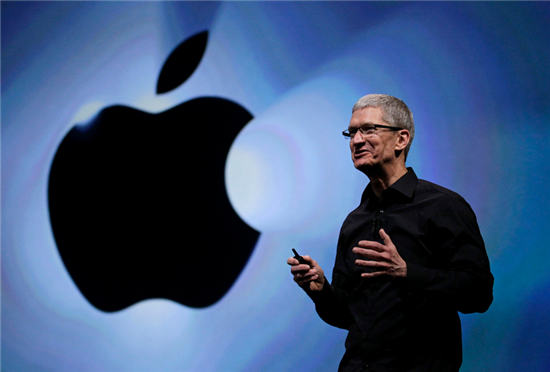 Tim Cook Apple CEO
According to the National Assembly on October 2, the Science, ICT, Broadcasting and Communications Committee has selected Mark Lee, CEO of Apple Korea, as a witness for the National Assembly audit scheduled for October 14. Lawmakers from both ruling and opposition parties are expected to question Apple about its enforcement of in-app purchases and excessive fees, as well as other market-dominating practices by big tech companies. Domestic game companies have argued that Apple forces the use of its in-app purchase system and charges fees of up to 30% on related sales.
Apple, in a virtual briefing held the previous day to present its position, stated, "Of the 1.8 million apps registered on the App Store, 85% do not pay any fees to Apple," and added, "For apps that do pay fees, those with annual sales of $1 million or less only pay a 15% fee under a program for small businesses."
Additionally, Apple explained that for subscription services, a 30% fee is charged in the first year, but from the second year onward, a 15% fee is continuously applied. Apple further noted, "Typically, the 30% fee is limited to large developers or companies with multi-billion-dollar revenues."
In relation to this, the Korean Publishers Association, the Korea Electronic Publishing Association, and game company Pangsky filed a class action lawsuit in the U.S. District Court for the Northern District of California this past May. They have taken legal action, claiming that Apple's emphasis on using its in-app purchase system and imposing fees of up to 30% is unfair. They also argued that Google and Apple's in-app purchase fees alone cause annual damages of 60 to 80 billion won (approximately 45 to 60 million dollars) in the publishing sector.
Apple emphasized that in-app purchases are a safe and reliable payment method for protecting users' personal information and security. Apple stated, "In-app purchases protect consumers from unfair practices or fraud, such as displaying a different price in advertisements than the actual payment amount," and added, "Without in-app purchases, users would be burdened with having to seek help directly if any issues arise during transactions."
Apple claimed to have prevented potential fraud damages amounting to 2 billion dollars in advance, and blocked more than 4.7 million stolen credit cards from being used for payments. Apple also explained that it rejected upload requests for more than 1.9 million apps that did not meet standards for personal information protection, security, or content.
 The European Union's Digital Markets Act (DMA) imposes strict regulations to prevent 'gatekeeper' companies like Apple, Google, and Meta from monopolizing the market.
However, recent regulatory trends in Europe are moving toward promoting fairness and competition in the market, leading to changes in the App Store's monopolistic position. The European Union's Digital Markets Act (DMA) is requiring Apple to allow users to freely download apps from third-party app markets and use external payment systems.
The Digital Markets Act upholds the principle of 'interoperability,' which requires opening up services and features to be compatible across different platforms in order to broaden consumer choice and encourage fair competition in the digital ecosystem.
In response, Apple expressed concerns that apps not reviewed through the App Store could pose risks such as malware or personal information leaks, and that users could be exposed to harmful content. In fact, in Europe, controversy arose when an adult app called 'Hottub' appeared through an alternative app market.
Apple also reported that due to European regulations, the launch or availability of many features in the European market has been delayed or canceled. These features include iPhone mirroring, map functions such as visited places and preferred routes, and real-time translation for AirPods.
Apple stated, "Apple wants every customer to have the same experience," adding, "Regulations are hindering innovation and intellectual property, delaying the release of features, increasing privacy risks, and making it more difficult to protect Apple users."
© The Asia Business Daily(www.asiae.co.kr). All rights reserved.
![Clutching a Stolen Dior Bag, Saying "I Hate Being Poor but Real"... The Grotesque Con of a "Human Knockoff" [Slate]](https://cwcontent.asiae.co.kr/asiaresize/183/2026021902243444107_1771435474.jpg)















