Ministry of Agriculture, Food and Rural Affairs Announces Results of Preliminary Social Enterprise Designation for Agricultural and Rural Sectors
Five companies, including Konggangaji, which operates a healing farm, and Seomjingang Bidam, a traditional liquor manufacturer, have been newly designated as agricultural and rural-type preliminary social enterprises.
The Ministry of Agriculture, Food and Rural Affairs announced the results of the selection of these agricultural and rural-type preliminary social enterprises on October 2, 2025.
An agricultural and rural-type preliminary social enterprise is a company that meets the minimum requirements for a social enterprise and is recognized by the Minister of Agriculture, Food and Rural Affairs for contributing to strengthening the competitiveness of agriculture or alleviating rural disparities in areas such as income, employment, education, and health.
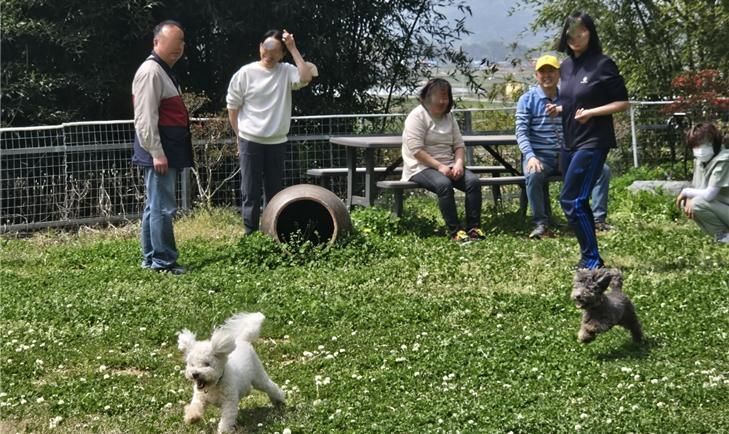 The newly designated agricultural and rural-type preliminary social enterprise, "Konggangaji," operates a healing farm that interacts with animals and provides care and educational services for vulnerable groups.
Since introducing the designation system for agricultural and rural-type preliminary social enterprises in 2012, the Ministry has designated a cumulative total of 210 preliminary social enterprises. Of these, 42 have been certified and are operating as social enterprises. Notable examples include Handemi Agricultural Cooperative Corporation in Danyang, North Chungcheong Province, which is building sustainable village models through eco-friendly experiential tourism, and Gongsimchae Agricultural Corporation in Jeju, which has been a leader in creating jobs for multicultural marriage migrant women through eco-friendly subtropical vegetables grown in Jeju.
The newly designated agricultural and rural-type preliminary social enterprises include Konggangaji, an agricultural corporation that operates a healing farm interacting with animals and provides care and educational services for vulnerable groups; Rowa, which aims to develop Korean-style alternative coffee using domestic agricultural and by-products; Seomjingang Bidam, a company specializing in traditional liquor manufacturing and educational experiences; Ogonghaebom, which operates rural experiences and healing agriculture programs; and Save the Farms, which produces eco-friendly fertilizer using oyster shells. In total, five companies have been designated.
Preliminary social enterprises retain their status for three years after designation and are eligible to participate in various public projects promoted by the Ministry of Employment and Labor and local governments. They can also receive support to gradually build competitiveness and achieve independence and growth through business consulting, market development, and access to office space provided by specialized support organizations.
The government has officially included the social solidarity economy as a national policy task, aiming to strengthen the institutional foundation for its activation. Efforts are underway to enhance the sector through expanding social finance (investment and loans), promoting priority purchasing by the public sector, and reducing rent for national and public properties.
Accordingly, the Ministry of Agriculture, Food and Rural Affairs plans to encourage various social and economic actors in rural areas to enhance their capabilities through inter-ministerial cooperation and to contribute to agricultural and rural innovation by participating in diverse policy projects.
Park Sungwoo, Director-General of Rural Policy at the Ministry, stated, "The importance of the social solidarity economy is being highlighted again as we respond to rural needs such as care, housing, energy transition, and employment promotion. In order to overcome the crisis of local extinction and create a 'happy rural community for all,' we will actively cooperate with the social solidarity economy."
© The Asia Business Daily(www.asiae.co.kr). All rights reserved.
![Clutching a Stolen Dior Bag, Saying "I Hate Being Poor but Real"... The Grotesque Con of a "Human Knockoff" [Slate]](https://cwcontent.asiae.co.kr/asiaresize/183/2026021902243444107_1771435474.jpg)















