Caution for Grave Visitors and Hikers:
Risk of Poisoning from Mushrooms Resembling Pine Mushrooms
Beware of AI-Generated Information:
Cases of Poisonous Mushrooms Mistakenly Introduced as Edible
With the Chuseok holiday approaching, which sees an increase in visitors to ancestral graves and hikers, a warning has been issued regarding poisoning accidents caused by consuming poisonous mushrooms that closely resemble edible pine mushrooms. Recently, more people have been checking mushroom information online or through artificial intelligence (AI), but there have also been cases where poisonous mushrooms are mistakenly introduced as edible or medicinal, so caution is advised.
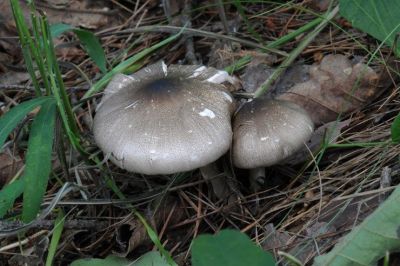 Phylloporus pelletieri. It looks similar to the edible pine mushroom but is poisonous. National Institute of Forest Science
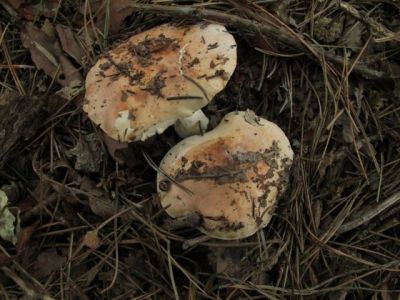
On October 1, the National Institute of Forest Science announced that most wild mushroom poisoning accidents that occur each year are due to the inability to accurately distinguish between edible and poisonous mushrooms. In particular, some poisonous mushrooms such as Phylloporus pelletieri and Brown Ganoderma are very similar in appearance and scent to edible pine mushrooms, making them easy to confuse.
Phylloporus pelletieri can be distinguished from edible pine mushrooms by its characteristic of turning yellow when the stem is injured. Brown Ganoderma, on the other hand, turns brown when the cap is scratched. In addition, mushrooms such as Golden Ganoderma, Halmi Ganoderma, and Poison Ganoderma also closely resemble pine mushrooms in appearance but are poisonous, so extra caution is necessary.
Recently, there have been increasing cases of people checking mushroom information online or through AI-generated content, but reports have emerged of poisonous mushrooms being incorrectly introduced as edible or medicinal. Experts warn against carelessly collecting or consuming wild mushrooms based on incorrect information.
The National Institute of Forest Science advised that if symptoms such as vomiting, abdominal pain, or diarrhea appear following mushroom poisoning, one should immediately visit a hospital. For an accurate diagnosis, they also recommend bringing any leftover mushrooms or vomit to the hospital.
Park Eungjun, head of the Forest Microorganism Utilization Research Division at the National Institute of Forest Science, emphasized, "When you see wild mushrooms in the mountains, enjoy them only with your eyes, and make sure to purchase edible mushrooms only from reliable sources."
Meanwhile, according to the Rural Development Administration, there are currently a total of 2,292 species of mushrooms native to Korea, but only 416 species (about 18%) have been confirmed as edible. There are 248 species of poisonous mushrooms, and the edibility of the remaining 1,550 or so species has yet to be determined.
In particular, autumn is a season when mushrooms grow rapidly due to large temperature differences between day and night and high rainfall, increasing opportunities to encounter wild mushrooms. However, poisonous mushrooms often resemble edible ones in appearance and frequently grow in the same places, making them difficult to distinguish without expert knowledge. The commonly known methods for distinguishing between poisonous and edible mushrooms are not scientifically based, and since there are so many types of poisonous mushrooms, it is impossible to easily classify them by a consistent standard. For this reason, experts advise that the safest approach is to avoid eating wild mushrooms altogether, regardless of whether they are believed to be edible or poisonous.
© The Asia Business Daily(www.asiae.co.kr). All rights reserved.
![Clutching a Stolen Dior Bag, Saying "I Hate Being Poor but Real"... The Grotesque Con of a "Human Knockoff" [Slate]](https://cwcontent.asiae.co.kr/asiaresize/183/2026021902243444107_1771435474.jpg)
















