Import Quota Already Cut Once, Now Likely to Be Halved Again
Concerns Mount for South Korean Steel?13% of Exports Went to EU Last Year
Seen as Both a Move to Restrain China and a Bargaining Chip with the US
The European Union (EU) is reportedly moving to significantly strengthen its steel import regulations. While these measures are seen as aligning with the United States' high tariff actions and specifically targeting Chinese steel, there is growing concern that the South Korean steel industry-which relied on Europe for 13% of its steel exports last year-will also be directly affected.
According to reports from Bloomberg and other foreign media on October 1, the new policy package from the European Commission, set to be released on October 7, is expected to include tariffs of up to 50% on imported steel products. The European Commission serves as the EU's executive body. In addition, it is expected to further reduce the existing duty-free import quota-already cut once before-by up to half.
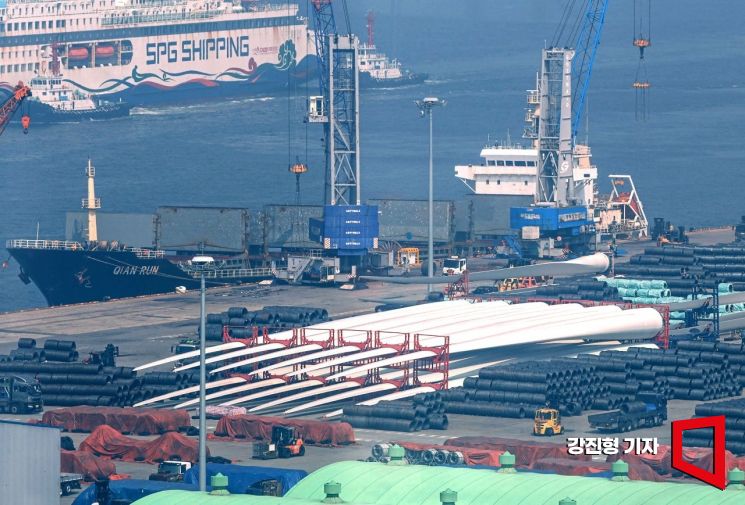 Steel products are piled up at the export yard of Pyeongtaek Port, Gyeonggi Province, on July 8, 2025. Photo by Kang Jinhyung
The European Commission explains that this measure is intended to replace the current "steel safeguard" system, which is set to expire in June 2026. The safeguard was introduced in response to the United States' high tariffs in 2018, allowing duty-free imports up to a country-specific quota, with a 25% tariff applied to any excess. However, due to oversupply from China and the U.S. introduction of a 50% tariff, the EU appears to have concluded that the current system is insufficient.
Some observers view this latest EU decision as a "negotiation card" in talks with the United States. The EU is currently subject to the U.S. 50% steel tariff, but unlike other countries, the U.S.-EU agreement allows for the possibility of a tariff-rate quota (TRQ) system. The EU is demanding that European steel be subject to the TRQ in follow-up negotiations. Thus, the push for higher tariffs is seen as a move to strengthen the EU's bargaining position.
The problem is that South Korean steel is also within the scope of these measures. In April, the EU already reduced South Korea's quota by up to 14% through a safeguard adjustment. If the quota is further reduced and high tariffs are imposed, it is expected that South Korean steel exports to Europe will face even greater challenges.
© The Asia Business Daily(www.asiae.co.kr). All rights reserved.
![Clutching a Stolen Dior Bag, Saying "I Hate Being Poor but Real"... The Grotesque Con of a "Human Knockoff" [Slate]](https://cwcontent.asiae.co.kr/asiaresize/183/2026021902243444107_1771435474.jpg)















