U.S. Confirms Legality of Business Trips Using B-1 Visas and ESTA
Dedicated Visa Desk to Be Established at the U.S. Embassy in Seoul
Concerns Remain Over Ongoing Uncertainties in U.S. Policy
At the first meeting of the visa working group formed by South Korea and the United States following the detention incident involving Korean workers in Georgia, the two countries confirmed the legitimacy of using B-1 visas and the Electronic System for Travel Authorization (ESTA). With the visa issue temporarily resolved, Korean companies operating in the United States plan to begin preparations to normalize their business operations.
However, some point out that this measure does not represent a fundamental institutional improvement, but rather resolves controversy over specific issues. As a result, uncertainties regarding local investment and business operations remain.
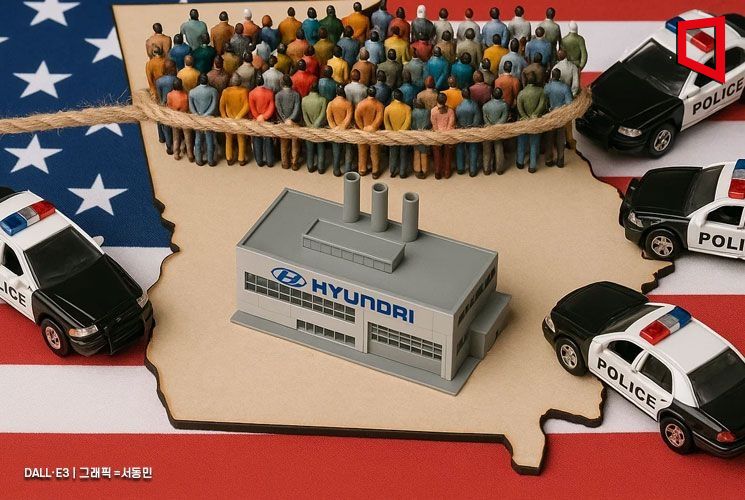
On October 1, LG Energy Solution released a statement expressing gratitude for the government's swift support and pledged to thoroughly prepare and work towards normalizing the construction and operation of its factories in the United States in accordance with the agreement between the two countries. During the meeting, the U.S. government confirmed that B-1 short-term business visas and ESTA could be used for activities such as installing, inspecting, and maintaining overseas purchased equipment, which are necessary for Korean companies' investments in the United States.
The industry believes that this meeting acknowledged the legitimacy of using B-1 visas and ESTA for such activities and established a foundation to prevent a recurrence of the detention incident. In addition, various measures will be implemented, such as setting up a dedicated desk at the U.S. Embassy in Korea to serve as a communication channel for Korean companies investing in the United States regarding visa issues. This will allow Korean business travelers to the United States to work with greater peace of mind.
Companies must quickly restore their local operations, which have faced disruptions since the detention incident. Hyundai Motor Group needs to increase its local production ratio to offset the burden of automobile tariffs, and it must also expedite the construction of an electric arc furnace steel plant in Louisiana, which is planned to have an annual capacity of 2.7 million tons.
For LG Energy Solution, normalizing local factory construction is urgent in order to supply batteries to Hyundai Motor in a timely manner.
Hyundai Motor plans to revise its internal procedures to ensure that employees receive the appropriate visa according to their work and length of stay. A Hyundai Motor representative stated, "We will closely review the announced details and update our guidelines accordingly."
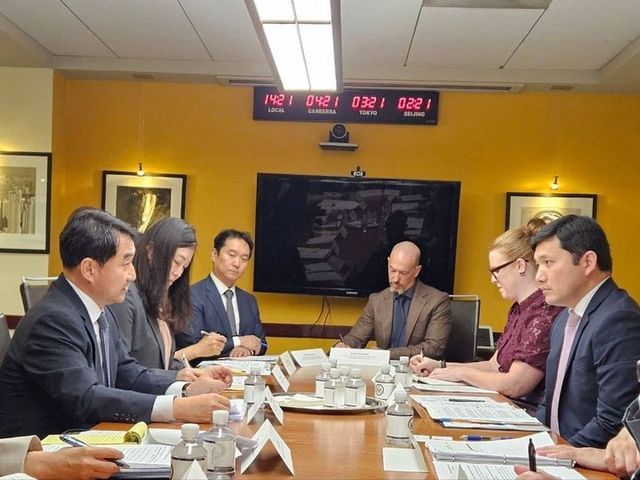 The government delegations of South Korea and the United States held the first meeting of the "Korea-US Commercial Visit and Visa Working Group" on the 30th of last month (local time) in Washington DC, USA. Ministry of Foreign Affairs
Semiconductor companies investing in the United States may also revise their visa guidelines following these measures. Samsung Electronics is building a foundry (semiconductor contract manufacturing) plant in Texas with an investment of 37 billion dollars. SK Hynix is also preparing a back-end fabrication facility in Indiana for the production of next-generation high-bandwidth memory (HBM).
Previously, after the visa-related detention incident, Samsung Electronics announced, "There have been frequent cases of entry being denied during U.S. business trips using ESTA," and advised, "For business trips to the United States using ESTA, the maximum duration per trip should be within two weeks, and if it exceeds two weeks, please consult the overseas HR manager for your organization."
A representative from the semiconductor industry explained, "We do not see any dramatic changes in the current system," and added, "Since further discussions remain, we are reviewing the measures between the two governments and discussing how to respond."
Some in the industry point out that uncertainties persist. The Korea-U.S. negotiations have only just begun, and with additional discussions still ahead, there are concerns that the situation could change at any time. Since the Georgia detention incident was also the result of an abrupt measure unique to the Trump administration, there are calls for urgent and fundamental institutional improvements.
During this working group meeting, no conclusion was reached regarding the expansion of L-1 visas for expatriates or the quota for H-1B visas for professionals. Despite the Korean government's requests for institutional improvements, the United States did not accept them, citing legislative constraints.
An industry representative commented, "While it is encouraging to see progress in Korea-U.S. consultations, there are still lingering questions about the direction of U.S. immigration policy," and added, "Concerns about business trips to the United States remain as well."
© The Asia Business Daily(www.asiae.co.kr). All rights reserved.
![Clutching a Stolen Dior Bag, Saying "I Hate Being Poor but Real"... The Grotesque Con of a "Human Knockoff" [Slate]](https://cwcontent.asiae.co.kr/asiaresize/183/2026021902243444107_1771435474.jpg)

















